• Skip to primary navigation
  • Skip to main content

HRMorning

  • FREE RESOURCES
  • PREMIUM CONTENT
  • HR DEEP DIVES
  • PODCASTS
    • VOICES OF HR
    • WOMEN’S LEADERSHIP TODAY
  • LOGIN
  • SIGN UP FREE
  • Employment Law
  • Benefits
  • Recruiting
  • HR Technology
  • Payroll
  • Management
  • Women’s Leadership
  • More
    • Talent Management
    • Performance Management
    • Leadership & Strategy
    • Compensation
    • Policy & Procedures
    • Wellness
    • Staff Departure
    • HR Career & Self-Care
    • Health Care
    • Retirement Plans
  • Employment Law

Accommodation mistakes – 3 companies paid big to settle ADA claims

Carol Warner
By: Carol Warner
  • Share on

About the Author

For nearly two decades, Carol Warner has analyzed the legal and financial realities behind workplace decisions, covering employment law, benefits, payroll and HR technology. She translates complex legal updates, regulatory shifts and vendor claims into plain language that HR teams can act on. Her focus is simple: What does this mean for employers, and what should they do next? Connect with her on LinkedIn.

Show Less
Last Updated: November 29, 2023
4 minute engagement
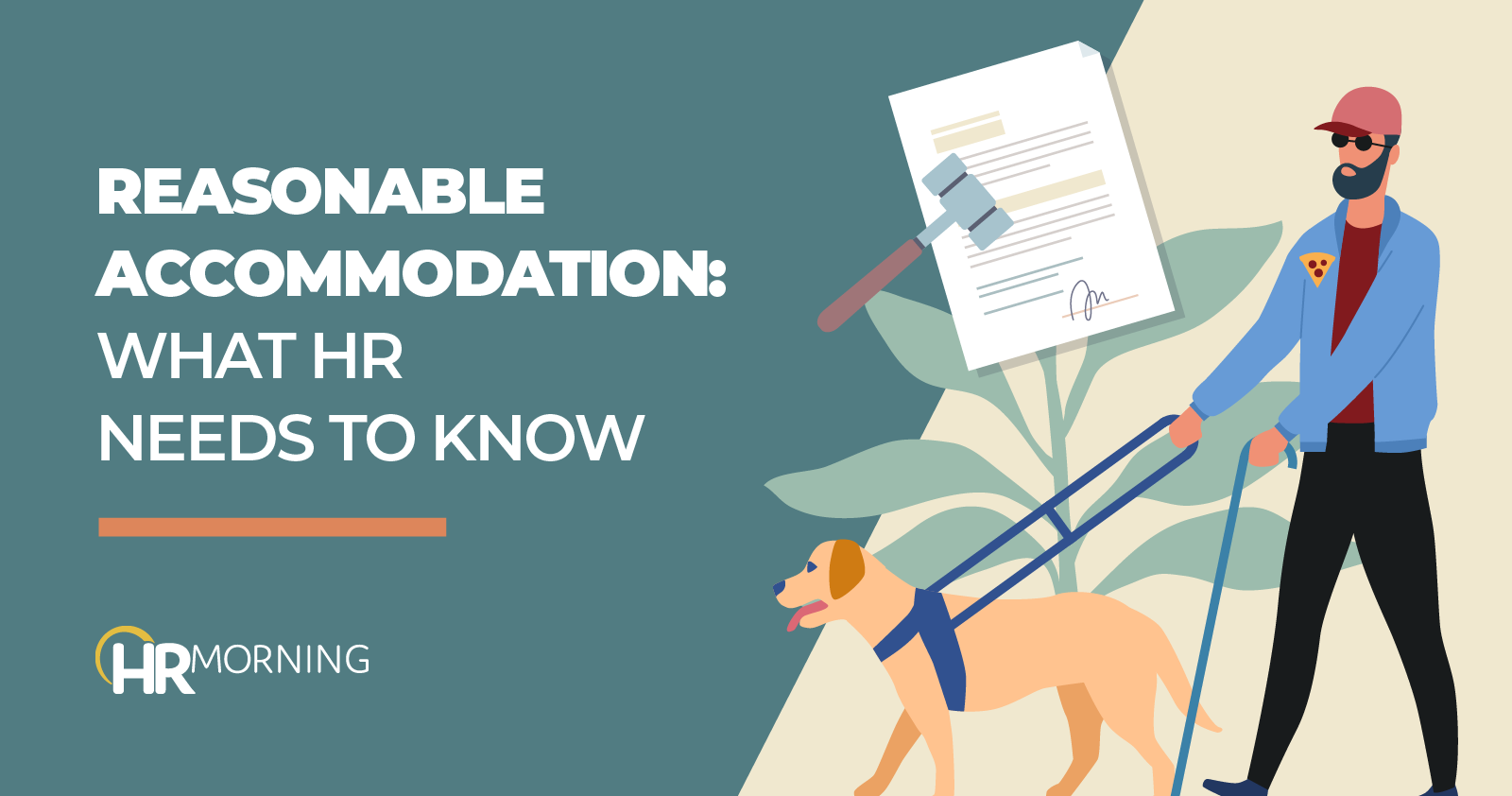
Reasonable accommodation: What HR needs to know

The EEOC filed 48 disability accommodation lawsuits in FY 2023, almost doubling the 27 ADA cases it filed the previous year, according to employment attorneys at Seyfarth.  

And if the EEOC steps into an ADA dispute, the cost of noncompliance can be pretty steep, as these three recent cases show.  

1. Restaurant forks over $175K after denying accommodation  

A visually impaired employee in Georgia was fired from his job at an international pizza chain before working a single shift.

An EEOC lawsuit claimed Papa John’s discriminated against the new hire, a legally blind individual, based on his disability in violation of the ADA. Specifically, the EEOC alleged the worker sought an accommodation – to bring his service dog to work, as he was reliant on the animal for his commute. The company denied the employee’s accommodation request and fired him before he worked a single shift, the EEOC said.  

Ultimately, the company settled the lawsuit, agreeing to pay $175,000 to the worker. It also agreed to provide ADA training, revise its employment policies and submit to EEOC monitoring.  

“Not allowing blind and visually impaired people to travel to and from work in the way that affords them confidence and independence is akin to telling sighted workers who rely on the flexibility and independence of driving that they may not travel to work by car,” the EEOC’s general counsel Karla Gilbride said in a press release. “We are glad that Papa John’s has agreed to provide training to its employees and hope that in the future, no other job applicant who uses a service dog will experience the discrimination that [the employee] faced.”

2. Accommodation request: No calls from angry customers

A call center employee in Rhode Island was forced to resign after his accommodation request was denied, according to the EEOC.  

The call center employee was working at Citizens Bank, N.A. when he developed an anxiety disorder. He then asked to be transferred to a position that didn’t require him to field calls from aggravated customers.  

The employer refused to reassign the employee or “discuss alternative accommodations until he returned to his job at the call center, the same position his disability prevented him from performing,” the EEOC asserted, even though the company “had hundreds of nearby job openings.” As a result, the employee said he felt he had no choice but to resign.  

To resolve the EEOC’s complaint, the company agreed to pay $100,000 to the former employee. It also agreed to revise its accommodation policy, train its employees and HR department and appoint an internal compliance monitor to ensure compliance with the consent decree.    

“An employer cannot refuse to engage in the interactive process until an employee returns to the same job that the employee’s disability precludes him or her from performing,” EEOC New York District Office Regional Attorney Jeffrey Burstein said in a press release. “Transferring a qualified employee to a vacant position is a reasonable accommodation under the ADA.”          

3. Company denies use of crutches as accommodation  

In South Carolina, a Black employee was fired from her job at a title loan company after she complained about racial harassment and then took time off for a disability-related surgery.  

According to an EEOC lawsuit, Community Loans of America, Inc. and its subsidiary, Carolina Title Loans, Inc. discriminated against the worker based on her race and disability. Specifically, the suit alleged a branch manager subjected the employee to racial slurs, including the N-word. The employee complained to on-site managers and a company hotline, but no action was taken, the EEOC asserted.  

When the employee took time off work for a disability-related surgery, she was not allowed to return to work on crutches. The employer denied the accommodation. Instead of being allowed to use crutches at work, she was forced to remain on unpaid leave until she was fired.  

To settle the lawsuit, the company agreed to pay $60,000 to the former worker. It will also revise policies and implement training to prevent race- and disability-based harassment at its branches located in South Carolina.  

“The EEOC appreciates that it was able to work with this employer to achieve a just resolution for the aggrieved employee and to secure broad relief for the employer’s South Carolina workforce through training and oversight,” Melinda C. Dugas, regional attorney for the EEOC’s Charlotte District, said in a press release. “Employers can avoid situations like this by taking effective action to eliminate racially hostile conduct in the workplace when they become aware of it and by providing reasonable accommodations to employees with disabilities when they are able to do so without undue hardship.”

Help for HR: Guidance on the interactive process

Earlier this year, we told you about the guidance provided by the Job Accommodation Network (JAN). The tool aims to help employers navigate the interactive process when discussing reasonable accommodations with employees and applicants.  

Among other things, JAN’s guidance provides helpful suggestions for:

  • Streamlining the process of requesting accommodations
  • Exploring, choosing and implementing accommodations
  • Monitoring the effectiveness of accommodations, and
  • Adjusting accommodations when necessary.
Filed under
  • Employment Law
  • Share on

Get the HRMorning Newsletter

With HRMorning arriving in your inbox, you will never miss critical stories on labor laws, benefits, retention and onboarding strategies.

  • This field is for validation purposes and should be left unchanged.
  • This field is hidden when viewing the form
  • This field is hidden when viewing the form
  • This field is hidden when viewing the form
  • This field is hidden when viewing the form
  • This field is hidden when viewing the form
  • This field is hidden when viewing the form
  • This field is hidden when viewing the form
  • This field is hidden when viewing the form
  • This field is hidden when viewing the form
  • This field is hidden when viewing the form
  • This field is hidden when viewing the form
  • This field is hidden when viewing the form
  • This field is hidden when viewing the form
  • This field is hidden when viewing the form
  • This field is hidden when viewing the form
  • This field is hidden when viewing the form
  • This field is hidden when viewing the form
  • This field is hidden when viewing the form
  • This field is hidden when viewing the form
  • This field is hidden when viewing the form
  • This field is hidden when viewing the form
  • This field is hidden when viewing the form
  • This field is hidden when viewing the form
  • This field is hidden when viewing the form
  • This field is hidden when viewing the form
  • This field is hidden when viewing the form
  • This field is hidden when viewing the form
  • This field is hidden when viewing the form
  • This field is hidden when viewing the form
  • This field is hidden when viewing the form
  • This field is hidden when viewing the form
  • This field is hidden when viewing the form
  • This field is hidden when viewing the form
  • This field is hidden when viewing the form
  • This field is hidden when viewing the form
  • This field is hidden when viewing the form
  • This field is hidden when viewing the form
  • This field is hidden when viewing the form
  • This field is hidden when viewing the form
  • This field is hidden when viewing the form
  • This field is hidden when viewing the form
  • This field is hidden when viewing the form
  • This field is hidden when viewing the form
  • This field is hidden when viewing the form
  • This field is hidden when viewing the form
  • This field is hidden when viewing the form
  • This field is hidden when viewing the form
  • This field is hidden when viewing the form
  • This field is hidden when viewing the form
  • This field is hidden when viewing the form
  • This field is hidden when viewing the form
  • This field is hidden when viewing the form
  • This field is hidden when viewing the form
  • This field is hidden when viewing the form
  • This field is hidden when viewing the form
  • This field is hidden when viewing the form

Free Training & Resources

White Papers

Payroll Automation: The Key to Compliance And Efficiency

Provided by Paypro

Webinars

AON – Talent Assessment 2020: Impactful Business Responses in the Context of Current Events

Webinars

ZESTFUL Page – Reignite Collaboration and Morale in Your Remote Workers

Webinars

Unlock Employee Satisfaction and Loyalty: The ROI of Fertility Benefits

SPONSORED CONTENT

HR Technology

sponsored content
The Best AI Software for HR Automation

Courtesy of G-P

Talent Management

sponsored content
Powerful Employee Retention Strategies for 2025: How to Keep Your Best People

Courtesy of PEOPLEGURU

Benefits

Health Care

Wellness

sponsored content
Proven Results: 5 Ways Teladoc Health Chronic Condition Management Transforms HR Outcomes

Courtesy of TELADOC HEALTH

Further Reading

  • Employment Law
How Broad Is The ADA’s Ban on Retaliation? Court Weighs In

A new decision from a federal appeals court has an important message for HR pros about the scope of the ADA’s ban on retaliation. The...

  • Employment Law
Worker Death: OSHA Points Finger at Employer

A worker death led to a finding by the Occupational Health and Safety Administration (OSHA) that an employer should pay $177,453 in penalti...

  • Employment Law
Court Warns: Lax TPA Oversight Can Trigger FMLA Liability

When employers outsource Family and Medical Leave Act (FMLA) administration to a third-party administrator (TPA), compliance responsibility...

  • Employment Law
When Clients Harass Employees, Is the Employer Liable? Court Rules

It’s a relatively uncommon type of Title VII claim, but it happens: An employee sues their employer based on alleged harassment not by a ...

  • Employment Law
What is job ‘fractioning’ – and why should you care?

An unpublished court ruling says that “employers may not circumvent Title VII protections by ‘fractioning’ an employee’s job....

  • Employment Law
Workers Exposed to Deadly Fall Hazards Twice in 2 Months

A recent study found that falls are among the costliest workplace injuries. In fact, they’re in the top three workplace injuries with...

Get the latest from HRMorning in your inbox PLUS immediately access 10 FREE HR guides.

I WANT MY FREE GUIDES
HR Morning Logo
  • Facebook
  • Linked In
  • ABOUT HRMORNING
  • ADVERTISE WITH US
  • WRITE FOR US
  • CONTACT
  • Employment Law
  • Benefits
  • Recruiting
  • Talent Management
  • Performance Management
  • HR Technology
  • Leadership & Strategy
  • Compensation
  • Policy & Procedures
  • Wellness
  • Staff Departure
  • HR Career & Self-Care
  • Health Care
  • Retirement Plans
  • DEI

HRMorning, part of the Rover Insights Network, provides the latest HR and employment law news for HR professionals in the trenches of small-to-medium-sized businesses. Rather than simply regurgitating the day's headlines, HRMorning delivers actionable insights, helping HR execs understand what HR trends mean to their business.

Powered By Rover Insights
Privacy Policy | Terms of Service
Copyright© 2026 Rover Insights
HRMorning Logo

WELCOME BACK!

Enter your username and password below to log in

Forget Your Username or Password?

Reset Password

Lost your password? Please enter your username or email address. You will receive a link to create a new password via email.

Log In

Why do we need your credit card for a free trial?

We ask for your credit card to allow your subscription to continue should you decide to keep your membership beyond the free trial period.  This prevents any interruption of content access.

Your card will not be charged at any point during your 21 day free trial
and you may cancel at any time during your free trial.

During your free trial, you can cancel at any time with a single click on your “Account” page.  It’s that easy.