• Skip to primary navigation
  • Skip to main content

HRMorning

  • FREE RESOURCES
  • PREMIUM CONTENT
  • HR DEEP DIVES
  • PODCASTS
    • VOICES OF HR
    • WOMEN’S LEADERSHIP TODAY
  • LOGIN
  • SIGN UP FREE
  • Employment Law
  • Benefits
  • Recruiting
  • HR Technology
  • Payroll
  • Management
  • Women’s Leadership
  • More
    • Talent Management
    • Performance Management
    • Leadership & Strategy
    • Compensation
    • Policy & Procedures
    • Wellness
    • Staff Departure
    • HR Career & Self-Care
    • Health Care
    • Retirement Plans
  • Leadership & Strategy

Navigating workplace change: 6 strategies to minimize employee resistance

Vanessa Gennarelli, HR Expert Contributor
By: Vanessa Gennarelli, HR Expert Contributor
  • Share on

About the Author

Vanessa Gennarelli is the author of Surviving Change At Work and is the principal of Fortuna, a change management firm, and the chief operating officer for Workbrew. She has led cross-functional teams at rapidly growing organizations, including GitHub Education through its acquisition by Microsoft. While at one of the largest tech companies on the planet, she learned how to navigate cultural differences, integrate new processes, and help direct reports thrive through change.

Show Less
Last Updated: November 13, 2023
4 minute engagement
Get through workplace change

Workplace change is inevitable. No matter what industry you are in, or what you do for work. This can be a significant challenge because, ultimately, change is painful. It hurts. Even seemingly minor changes like a new process, a fresh product feature or adding a new team member can be hard for most of us.

While often constructed to bring about positive change, initiatives like this can quickly veer off course if not everyone is on board. In fact, McKinsey tells us that a staggering 70% of change programs fail, and much of this failure can be attributed to employee resistance.

With the need to move fast, leaders have to balance pushing changes through quickly while keeping teams motivated. This can be a delicate balance, and it’s critical that they understand where employees’ fear and resistance around change come from. 

Why workplace change is challenging

Harvard Business School scholar Rosabeth Moss Kanter has dedicated her career to studying the psychology of change in the workplace. She has identified several core reasons why change can be so agonizing:
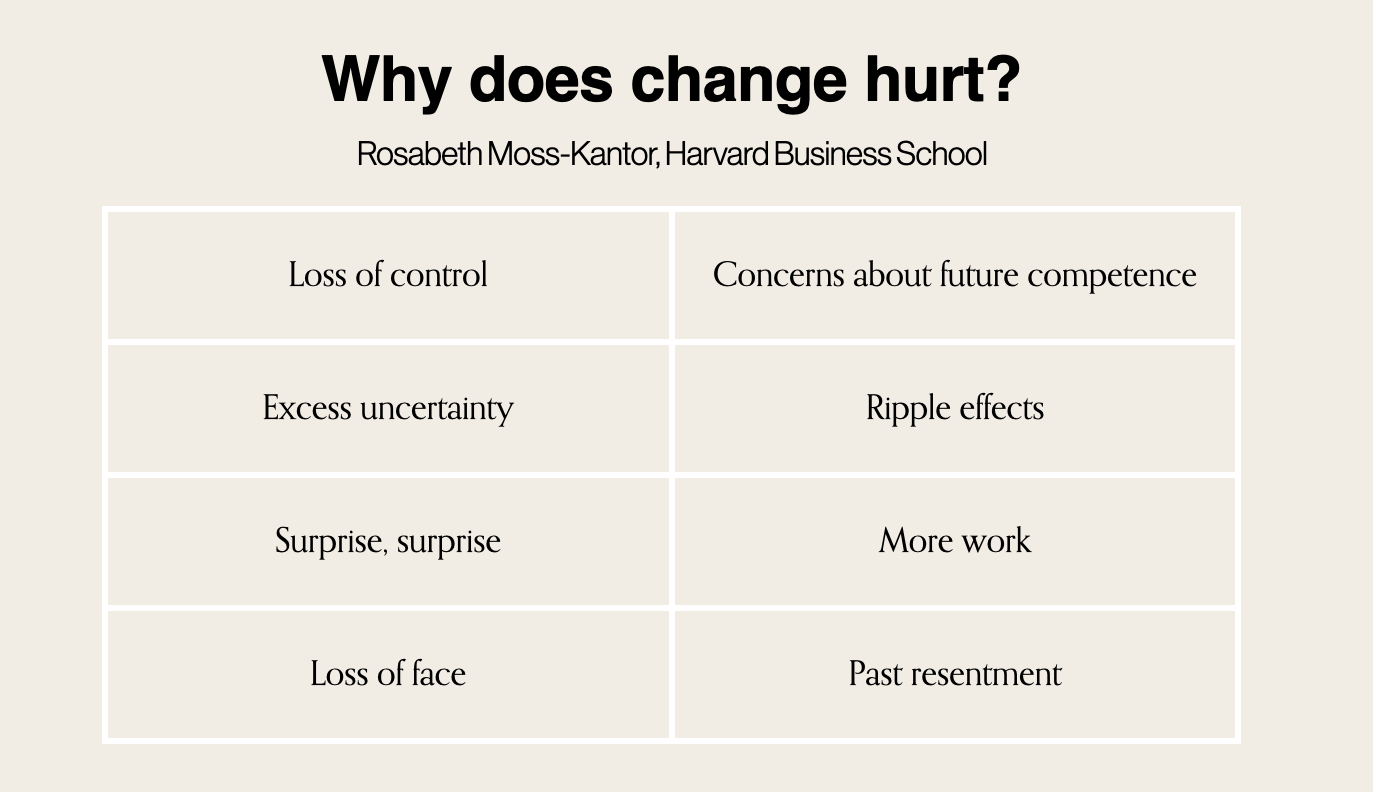
  • Loss of control: For many individuals, autonomy is a driving force. Changes that disrupt their sense of control can trigger strong resistance.
  • Excess uncertainty: No one enjoys being left in the dark. When changes are shrouded in uncertainty, it can lead to anxiety and resistance.
  • Surprises: Shocking decisions or news can provoke defensive reactions, making it difficult for employees to embrace change.
  • Loss of face: Some employees perceive change as a criticism of their work or as a personal failure, causing them to resist it.
  • Concerns about future competence: Anxiety about one’s ability to excel in a new environment, with new tools and methods, can be a significant source of resistance.
  • Ripple effects: Changes can have external consequences, such as displacing current projects, teams or job roles, which can provoke resistance.
  • More work: While some thrive on innovation and are willing to put in extra effort, others may resist change because it requires revising, adapting and learning new ways of working, which can be time-consuming.
  • Past resentment: Sometimes, changes unearth long-standing grievances, becoming the final straw that triggers strong resistance.

The resistance resulting from one or many of these core foundations can manifest in many ways. Team members can exhibit protective or secretive behavior, repetitive questioning, public expressions of frustration or friction around decision-making processes. 
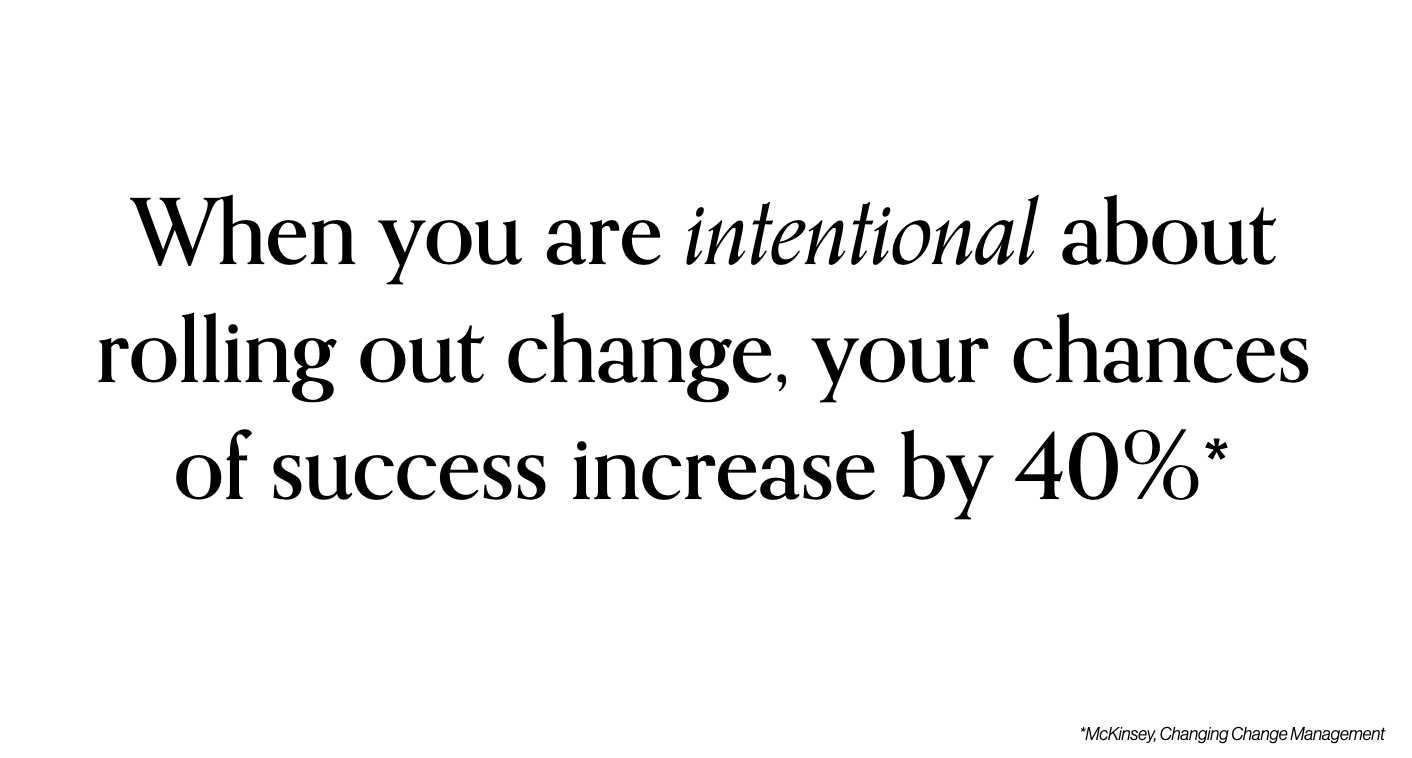
No one wants to work in an organization where these feelings and behaviors manifest. But leadership can absolutely get ahead of changes to prevent their teams from falling too deeply into this cycle of change resistance. 

Make change amicable, approachable 

In response to — and in preparation for — any major or minor change initiative, leaders can prioritize employee agency and autonomy. With years of experience leading teams, consulting and research with numerous respected leaders, I found that a specific formula works incredibly well for teams faced with this challenge: AMICUS — Assess, Metrics, Incremental, Communication, Us, Share: 
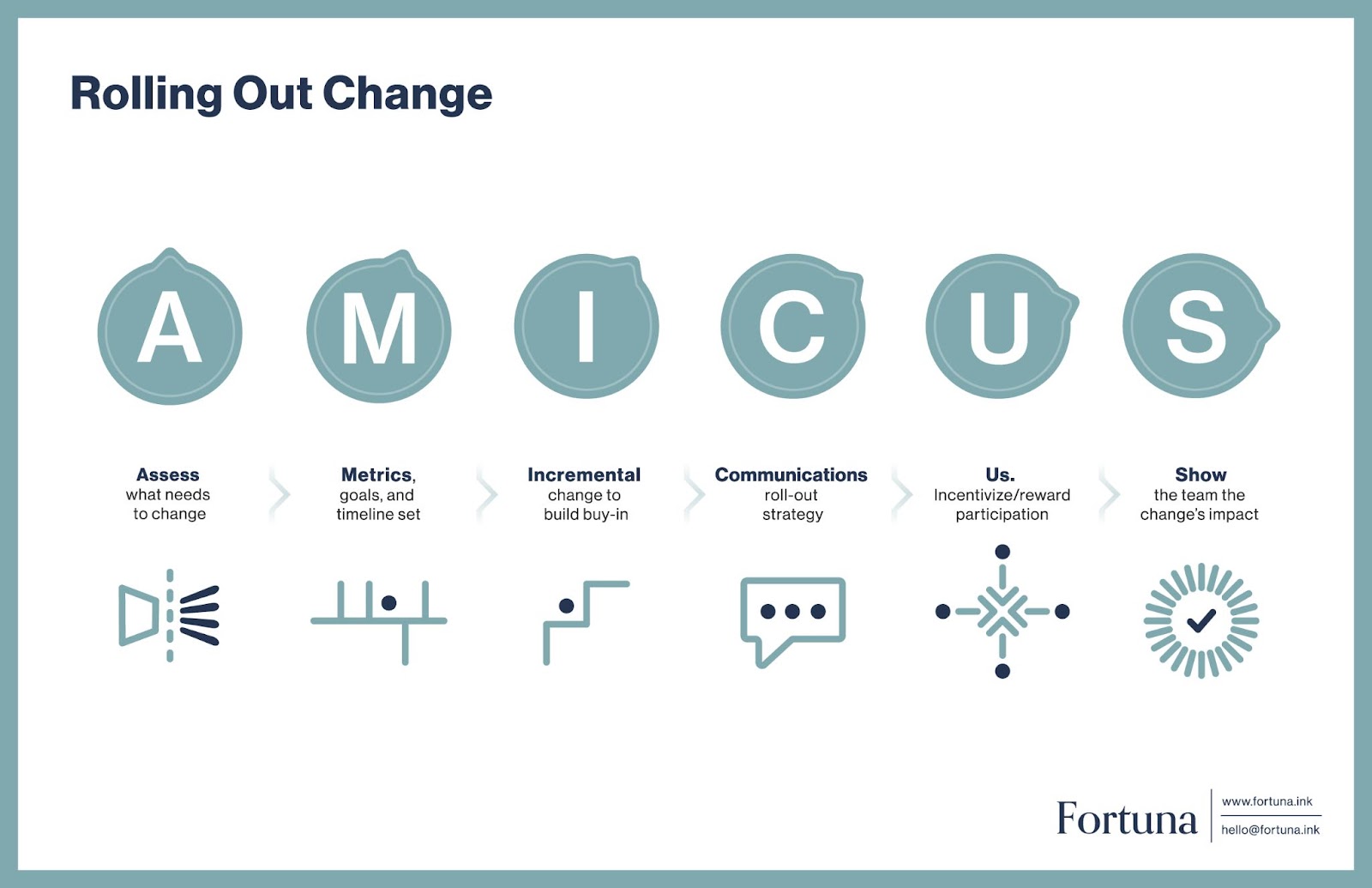
Assess what needs to change

Before embarking on any change initiative, it’s essential to thoroughly assess the situation. What exactly needs to change, and why? Understanding the root causes is crucial.

Set Metrics, goals, timeline

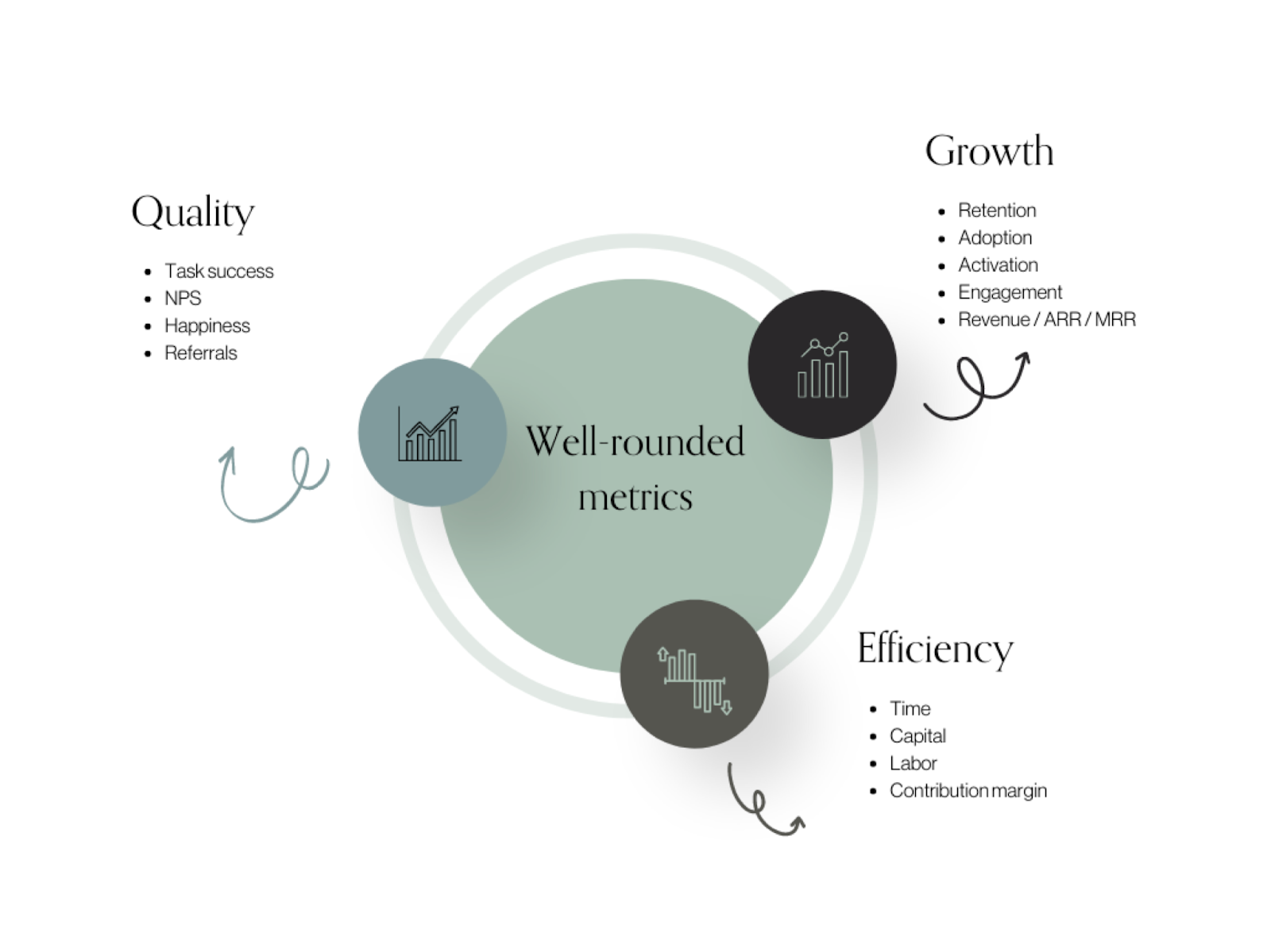
Establish clear metrics, goals and a timeline for the change – and make sure to share it with the team. This provides a sense of direction and helps employees see the path ahead.
Build buy-in with Incremental change

Instead of implementing radical changes all at once, introduce them incrementally.

This allows employees to adjust gradually and build confidence along the way.

Create a Communication plan

Effective communication is key. Develop a comprehensive communication plan that keeps everyone informed, addresses concerns and provides regular updates on progress.

Incentivize, reward Us

Acknowledge and reward employees for their contributions to the change process.

This can be done through recognition, incentives or career development opportunities.

Show the Impact

Finally, demonstrate the positive impact of the change. When employees see tangible benefits and improvements resulting from their efforts, they are more likely to embrace future changes.

By implementing the AMICUS framework, organizations can transform the painful process of change into a more collaborative and positive experience. When employees are given a voice, opportunities for growth, and a clear vision of the future, resistance naturally diminishes. And the path to success becomes far more attainable.

In any industry where change is truly constant, mastering this art of change management is not just a skill, it’s a necessity for sustainable growth and success.

Filed under
  • Leadership & Strategy
  • Share on

Get the HRMorning Newsletter

With HRMorning arriving in your inbox, you will never miss critical stories on labor laws, benefits, retention and onboarding strategies.

  • This field is for validation purposes and should be left unchanged.
  • This field is hidden when viewing the form
  • This field is hidden when viewing the form
  • This field is hidden when viewing the form
  • This field is hidden when viewing the form
  • This field is hidden when viewing the form
  • This field is hidden when viewing the form
  • This field is hidden when viewing the form
  • This field is hidden when viewing the form
  • This field is hidden when viewing the form
  • This field is hidden when viewing the form
  • This field is hidden when viewing the form
  • This field is hidden when viewing the form
  • This field is hidden when viewing the form
  • This field is hidden when viewing the form
  • This field is hidden when viewing the form
  • This field is hidden when viewing the form
  • This field is hidden when viewing the form
  • This field is hidden when viewing the form
  • This field is hidden when viewing the form
  • This field is hidden when viewing the form
  • This field is hidden when viewing the form
  • This field is hidden when viewing the form
  • This field is hidden when viewing the form
  • This field is hidden when viewing the form
  • This field is hidden when viewing the form
  • This field is hidden when viewing the form
  • This field is hidden when viewing the form
  • This field is hidden when viewing the form
  • This field is hidden when viewing the form
  • This field is hidden when viewing the form
  • This field is hidden when viewing the form
  • This field is hidden when viewing the form
  • This field is hidden when viewing the form
  • This field is hidden when viewing the form
  • This field is hidden when viewing the form
  • This field is hidden when viewing the form
  • This field is hidden when viewing the form
  • This field is hidden when viewing the form
  • This field is hidden when viewing the form
  • This field is hidden when viewing the form
  • This field is hidden when viewing the form
  • This field is hidden when viewing the form
  • This field is hidden when viewing the form
  • This field is hidden when viewing the form
  • This field is hidden when viewing the form
  • This field is hidden when viewing the form
  • This field is hidden when viewing the form
  • This field is hidden when viewing the form
  • This field is hidden when viewing the form
  • This field is hidden when viewing the form
  • This field is hidden when viewing the form
  • This field is hidden when viewing the form
  • This field is hidden when viewing the form
  • This field is hidden when viewing the form
  • This field is hidden when viewing the form
  • This field is hidden when viewing the form

Free Training & Resources

Webinars

Employee Engagement, Motivation and Recognition in the Age of COVID-19

Webinars

Insider’s Look: Launching Specialty Care Benefits with DICK’s Sporting Goods

Provided by Lantern

White Papers

State of Women’s and Family Health Benefits 2026

Provided by Maven Clinic

White Papers

Employee Discount Program Buyer’s Guide

Provided by Perkspot

SPONSORED CONTENT

HR Technology

sponsored content
The Best AI Software for HR Automation

Courtesy of G-P

Talent Management

sponsored content
Powerful Employee Retention Strategies for 2025: How to Keep Your Best People

Courtesy of PEOPLEGURU

Benefits

Health Care

Wellness

sponsored content
Proven Results: 5 Ways Teladoc Health Chronic Condition Management Transforms HR Outcomes

Courtesy of TELADOC HEALTH

Further Reading

  • Leadership & Strategy
CEO: 4 Keys to Being a Great Place to Work

What employer wouldn’t brag about making the Great Place To Work Best Workplaces list? In a presentation during the latest BambooHR V...

  • Leadership & Strategy
How to Navigate the Death of a Colleague: 4 Important Strategies

Why does it feel so taboo to talk about death? It’s one of the only certainties in life, yet conversations about death, especially in the...

  • HR Technology
  • Leadership & Strategy
LMS Strategy: How HR Expectations Are Changing

Learning Management System (LMS) platforms were originally designed to manage required employee training. Today, that definition is startin...

  • Leadership & Strategy
5 solutions for the global employee disengagement crisis

Employee engagement is one of the most important metrics for any company. Engaged employees are more productive, satisfied and loyal, and h...

  • Leadership & Strategy
International Women’s Day: 5 Best Practices for Equity

Companies, HR pros and employees around the world can use International Women’s Day as a catalyst for workplace equity. The annual rec...

  • Leadership & Strategy
Are You a New Boss? 5 Ways to Get Off on the Right Foot

Everybody wants to start off on the right foot with a new boss — especially if you’re the new boss. But it’s often dif...

Get the latest from HRMorning in your inbox PLUS immediately access 10 FREE HR guides.

I WANT MY FREE GUIDES
HR Morning Logo
  • Facebook
  • Linked In
  • ABOUT HRMORNING
  • ADVERTISE WITH US
  • WRITE FOR US
  • CONTACT
  • Employment Law
  • Benefits
  • Recruiting
  • Talent Management
  • Performance Management
  • HR Technology
  • Leadership & Strategy
  • Compensation
  • Policy & Procedures
  • Wellness
  • Staff Departure
  • HR Career & Self-Care
  • Health Care
  • Retirement Plans
  • DEI

HRMorning, part of the Rover Insights Network, provides the latest HR and employment law news for HR professionals in the trenches of small-to-medium-sized businesses. Rather than simply regurgitating the day's headlines, HRMorning delivers actionable insights, helping HR execs understand what HR trends mean to their business.

Powered By Rover Insights
Privacy Policy | Terms of Service
Copyright© 2026 Rover Insights
HRMorning Logo

WELCOME BACK!

Enter your username and password below to log in

Forget Your Username or Password?

Reset Password

Lost your password? Please enter your username or email address. You will receive a link to create a new password via email.

Log In

Why do we need your credit card for a free trial?

We ask for your credit card to allow your subscription to continue should you decide to keep your membership beyond the free trial period.  This prevents any interruption of content access.

Your card will not be charged at any point during your 21 day free trial
and you may cancel at any time during your free trial.

During your free trial, you can cancel at any time with a single click on your “Account” page.  It’s that easy.
