
What’s driving employee disillusionment – and how can HR help?
By
Rising cost of living. Recession fears. Political conflict.
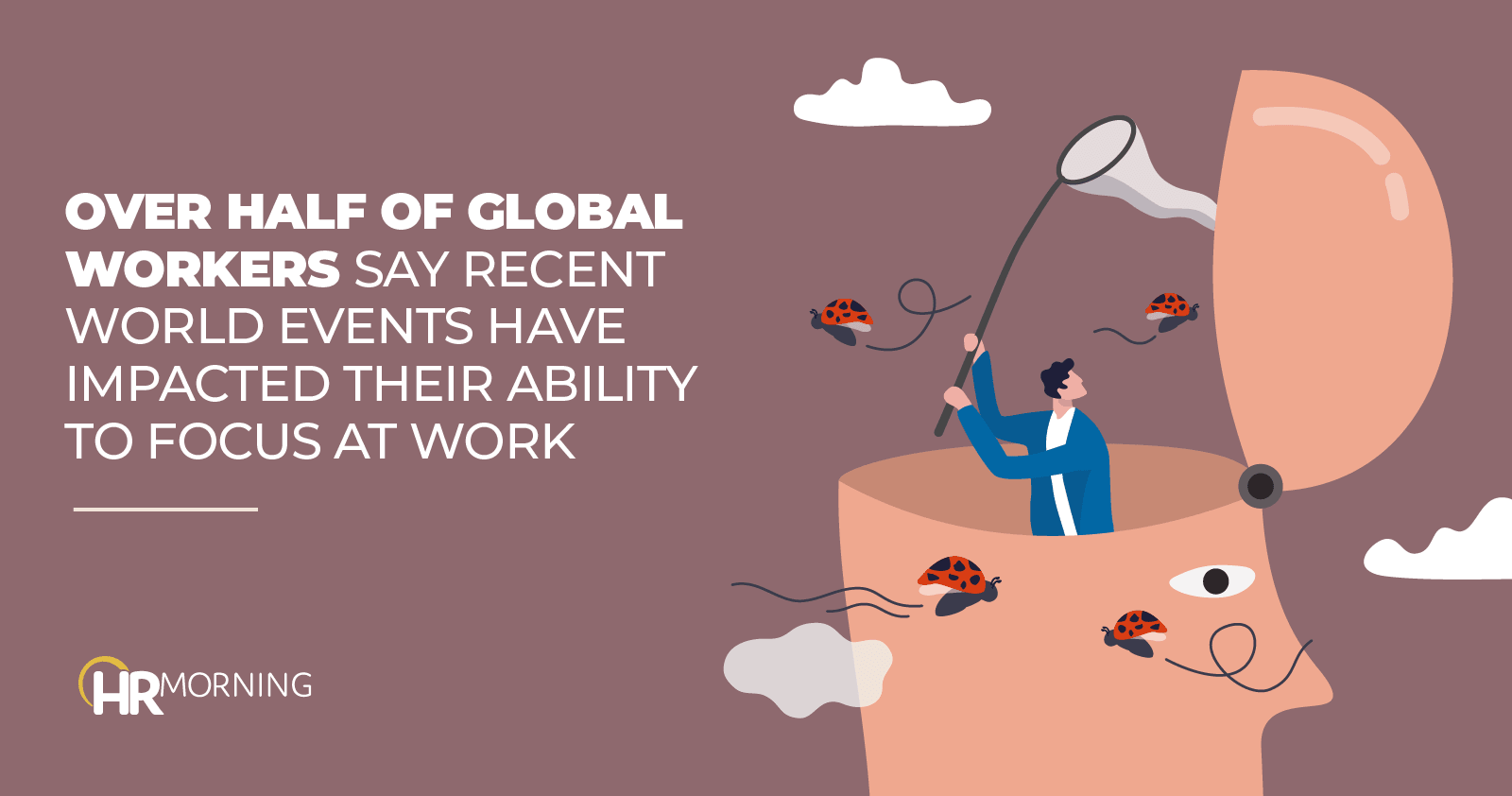
Across the world, collective social, economic and political instability is rampant, leaving many feeling overwhelmed, burned out and disillusioned. And this disillusionment is especially prevalent at work, as 54% of respondents in a new report from Oyster say the current state of the world has made it hard for them to do work and stay focused within the past 12 months.
So how can you keep your employees focused and engaged when they feel like they’re watching the world burn down around them? Here are the top concerns plaguing employees right now – and how HR can help battle employee disillusionment.
Cost-of-living crisis and economic downturn
It’s no secret that inflation has put a financial strain on many, especially as salaries fail to keep up with the rising cost of living, so it’s no wonder that economic hardship is contributing to disillusionment. In fact, nearly three-quarters (74.6%) of workers say that the cost-of-living crisis has made it harder to focus at work. Fifty-five percent of workers noted that the economic downturn was also impacting their work.
White Papers
Building an Adoption-Friendly Workplace: Benefits That Help Families Grow and Employees Stay
What’s more, cost-of-living concerns were disproportionately higher for Black workers, with 60% struggling with the current cost of living, compared to 30% of White workers, 46% of Hispanic workers and 39% of Asian workers.
Younger generations are also more affected by the cost of living compared to their older counterparts.
What HR can do: For most workers, finances are inherently intertwined with their job, so it’s no surprise that financial concerns are rampant among workers. While HR can’t single-handedly fix the issue, they can help support workers throughout economic instability by:
- Keeping salary raises consistent with the current cost of living when possible
- Providing more financial education and financial resources, and
- Implementing cost-saving benefits and perks, such as discounts through an Employee Assistance Program.
Global health concerns
Since the pandemic, health concerns have been a much more prominent part of everyone’s lives. So it’s no surprise that global health concerns are top of mind when it comes to what employees are worried about.
Oyster’s report found that over half (60%) of knowledge workers say that global health concerns make it harder for them to stay focused at work.
The number of those affected stayed fairly consistent across generations, but the report again found a disparity between Black workers and White counterparts. Forty-two percent of Black workers reported being affected by global health concerns, compared to 15% of White workers.
Advertisement
What HR can do: Even as COVID-19 precautions are lifted, many workers are still feeling the effects of the global emergency and the lasting impact of COVID-19. Not to mention the health concerns that have popped up since then, such as Monkeypox. To battle disillusionment and help employees worried about global health concerns, by:
- Offering flexibility for those immunocompromised or otherwise worried about getting sick, such as working from home or an office space that’s a safe distance away from others
- Educating employees on preventive health benefits and encouraging them to get annual wellness visits to stay on top of their health, and
- Acknowledging the impact COVID-19 has had on employees’ well-being and giving support when needed.
Further Reading
4 Ways HR Leaders Can Prepare Managers To Handle Mental Health Disclosures
The right resources for mental well-being help everyone, including managers. The National Alliance on Mental Illness (NAMI) 2026 Workplace Mental Health Poll found that 73% of managers without company-provided mental health resources feel burned out, compared to 45% of managers with them. Responding to Mental Health Disclosures How a manager responds to formal mental health […]
Employee Recognition: 5 Keys to Sustained Employee Motivation
Keeping employees motivated isn’t getting easier. Lean teams, competing priorities, and rising expectations mean HR leaders are being asked to do more with less, while still driving performance, engagement, and retention. The truth is, motivation fuels results. And one of the most effective ways to strengthen it is also one of the most overlooked: meaningful […]
Overlooked Tool to Help with Mental Well-Being | 2-Minute Video
When employees struggle with burnout or any other mental well-being issues, they can’t do their jobs on-point. That’s why you want to help them stay healthy. And the sooner you can help them recover from — or avoid — issues, the better. What’s Up in This Episode: Mental Well-Being Help Fortunately, in this episode of […]
7 Ways Employers Can Reduce Stress in the Workplace
Workplace stress is a big source of day-to-day turmoil for many employees, which is why it’s important employers take an active role to reduce stress. Even better, you can target specifically each year during Stress Awareness Month in April, helping employees identify issues and hopefully manage or overcome them. Good business outcomes depend, in part, […]
Employee Mental Health: 6 Solutions to HR’s Big Challenge This Year
Employee mental health will be one of HR’s biggest challenges this year. But HR professionals have hope that they can help their employees navigate their well-being. The challenge is real: Nearly a third of employees say mental health is their No. 1 safety concern at work, according to Pie Insurance’s newest Employee Voice on Workplace […]
Why ‘Boreout’ Could Cost You as Much as Burnout — and 9 Ways to Fix It
Employees may complain they’re burned out. But they might actually suffer from “boreout.” They’re both damaging, according to new research: Boreout rivals burnout in terms of its financial loss to companies. The study, “The Health and Economic Burden of Employee Burnout to U.S. Employers,” points to the mental-health toll: Disengaged employees — that’s their clinical […]