
Majority of Americans are opposed to using AI in hiring decisions, according to study
By
The conversation around Artificial Intelligence (AI) and what its effect on the workplace will be has been increasing throughout the years but has seemed to skyrocket since the launch of ChatGPT and similar generative AI tools.
Despite the many benefits of AI, there are still some concerns. Specifically, the use of AI in hiring and recruiting is often debated due to fear of bias from AI, prompting some to create rules and regulations such as the recent New York City law that limits AI in hiring, recruiting or promotion until the tool has been audited for bias.
Despite many companies beginning to use AI in their hiring efforts – like Unilever – a new study from the Pew Research Center reveals that a majority of Americans are opposed to the use of AI in hiring.
Americans are opposed to AI in hiring
The Pew Research Center’s study found that 71% of Americans are against using AI in final hiring decisions. Only 7% of respondents favored it, while 22% were unsure. Forty-one percent of respondents opposed using AI to review job applications.
Over half (55%) opposed using information collected and analyzed by AI about job performance to make a decision about whether an employee should be fired.
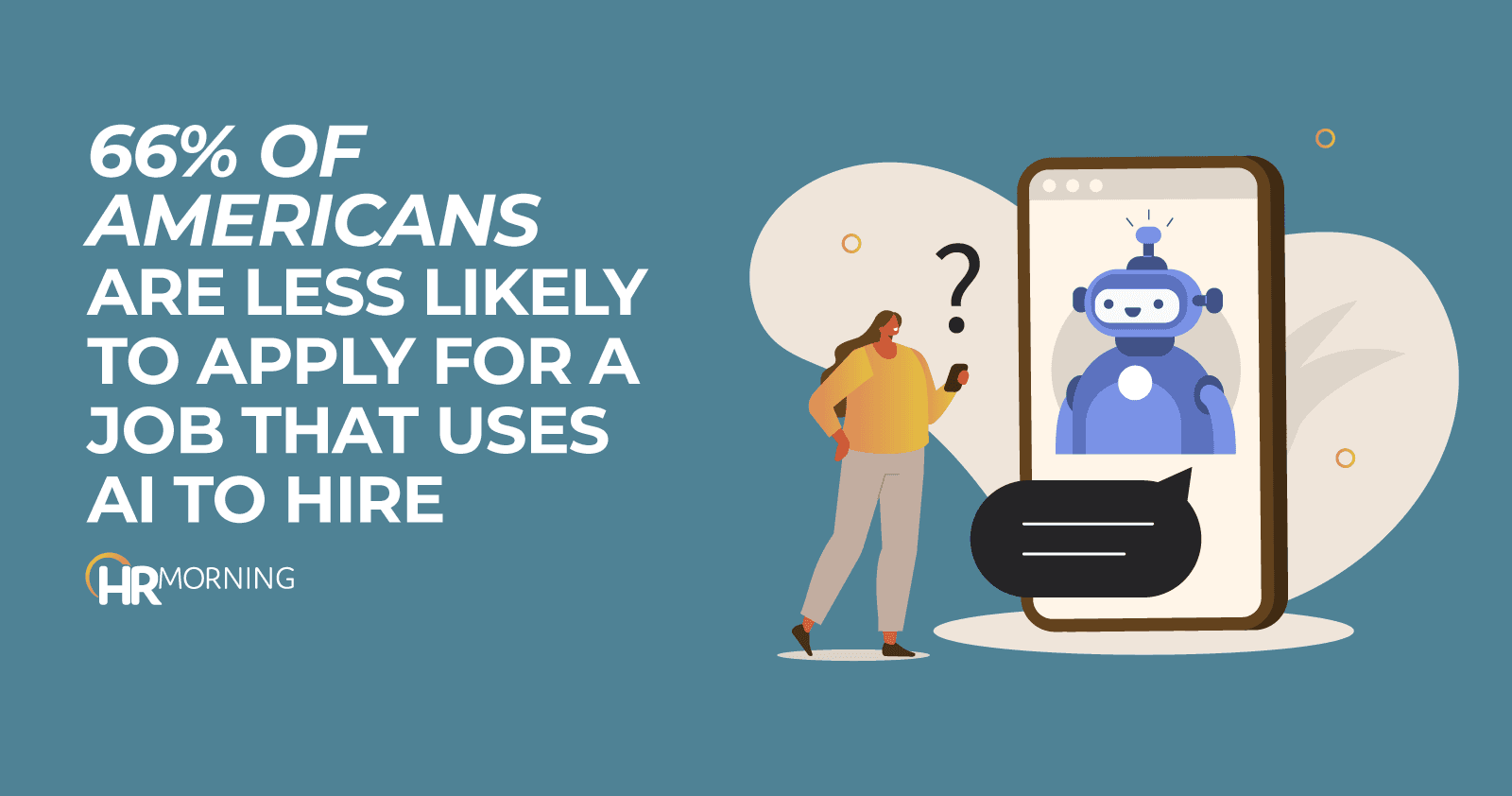
Along with the general opposition to AI in hiring, about two-thirds of respondents (66%) were less likely to apply for a job that uses AI to hire. When asked why, respondents reported reasons such as AI lacked a human touch, it can’t capture everything about a candidate and it can add its own biases.
Respondents who reported that they would apply for a job that used AI to hire said that AI can be less prejudiced or can see things humans might miss.
The study contained other major findings, such as:
- About half (47%) felt that AI would be better at treating all candidates the same
- About half (44%) think AI would be worse at seeing a candidate’s potential, and
- A little less than half (43%) think AI would be worse at figuring out which job applicants would work well with co-workers.
Best practices for using AI in hiring
As more companies consider using AI as a hiring tool, recruiters may struggle with deciding if AI in hiring will cause more harm than good.
Advertisement
To ensure that AI is being used effectively – and ethically – consider these best practices to ensure that it is helping rather than harming the hiring process:
- Assign someone to spot-check any decisions AI comes to for accuracy
- Eliminate any biased behavior before deploying AI to avoid biased decision-making, and
- Be transparent with all candidates about your use of AI throughout the process.
Further Reading
Which HR Tasks Should Never Be Fully Replaced by AI?
AI is now a bigger part of everyday operations, including taking over some HR tasks. Automating resume screening, scheduling interviews, workforce analytics, and performance reporting genuinely frees HR teams to spend more time where it matters most. For organizations trying to move faster and operate more efficiently, these tools have real value. But there is […]
Connecticut Joins States Regulating Workplace AI: 7 Compliance Steps
Connecticut is putting employers on notice over workplace AI. Effective Oct. 1, 2026, SB 5 clarifies that Connecticut employers facing a discrimination claim can’t blame the artificial intelligence (AI) tools they use to make hiring, promotion, discipline or termination decisions. Other changes that kicked in the same day: And there’s more coming. The law’s second […]
AI Helps and Hinders, but Employees Can Get the Most Out of It With These 6 Skills
AI helps employees do their jobs: On average, they spend an hour and a half each day using AI. But it’s not all good productivity: Employees spend about half an hour of that time troubleshooting AI errors and on prompt iteration, according to BambooHR’s report, Redesigning Work: AI’s Performance Review. This hasn’t stopped employees’ enthusiasm […]
California’s New Workplace AI Laws: 8 Takeaways for HR
California is again the testing ground for workplace technology rules. On Sept. 30, 2026, Gov. Gavin Newsom signed a group of laws that limit how employers use artificial intelligence (AI) to monitor, evaluate and lay off workers. Together, they reach discipline, surveillance and reductions in force, three areas where HR decisions increasingly run through software. […]
3 Ways HR Can Co-Author Your AI Strategy, Not Just React to It
Most organizations approach their AI strategy the same way they approach every major technology rollout: They build the system, train the users and measure adoption before finally moving on. But AI is fundamentally different. It changes how work gets done, how teams make decisions, and shifts what skills matter most for long-term success. That requires […]
FLSA Compliance Guide 2026: Wage and Hour Rules for HR
The Department of Labor’s Wage and Hour Division recovered more than $259 million in back wages for nearly 177,000 employees in fiscal year 2025, the most since 2019. The lion’s share – more than $184 million – involved violations of the Fair Labor Standards Act (FLSA). Federal wage-and-hour policy changed this year, too, affecting exemption […]