• Skip to primary navigation
  • Skip to main content

HRMorning

  • FREE RESOURCES
  • PREMIUM CONTENT
  • HR DEEP DIVES
  • PODCASTS
    • VOICES OF HR
    • WOMEN’S LEADERSHIP TODAY
  • LOGIN
  • SIGN UP FREE
  • Employment Law
  • Benefits
  • Recruiting
  • HR Technology
  • Payroll
  • Management
  • Women’s Leadership
  • More
    • Talent Management
    • Performance Management
    • Leadership & Strategy
    • Compensation
    • Policy & Procedures
    • Wellness
    • Staff Departure
    • HR Career & Self-Care
    • Health Care
    • Retirement Plans
  • Health Care

Substance use in the workplace reaches a crisis point: HR’s role in tackling addiction issues

Alison Roller
By: Alison Roller
  • Share on

About the Author

Alison Roller is passionate about engaging and informative storytelling through writing and social media. She has been writing since 2018 on a range of topics: politics, higher education, leadership, workplace culture, and diversity, equity, & inclusion. She holds a Master's of Communication with a focus on journalism from Syracuse University's Newhouse School. When she’s not working, you can find her hanging out with her cat, knitting, and scrolling TikTok.

Show Less
Last Updated: June 9, 2023
3 minute engagement
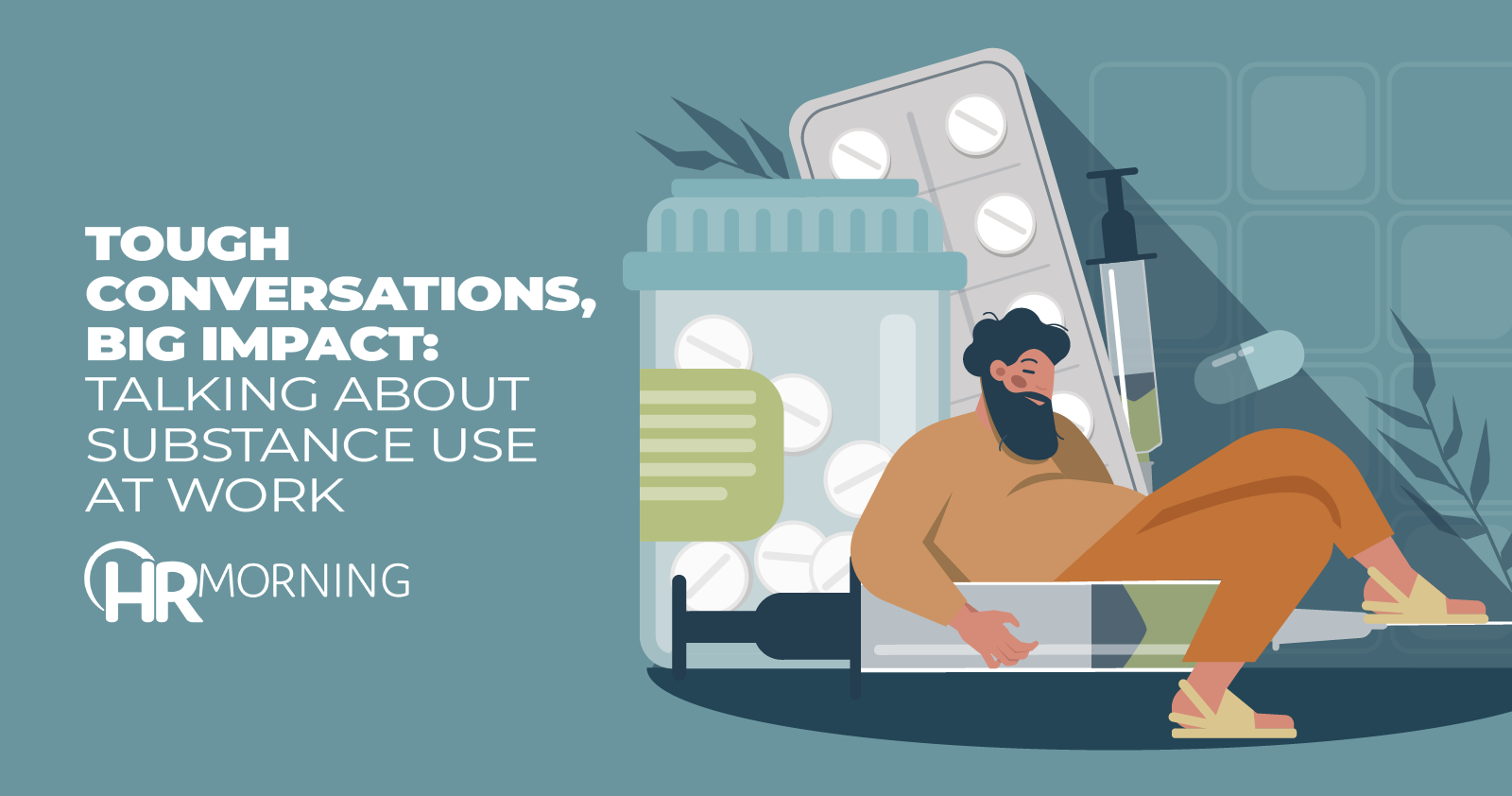
Tough conversations, big impact: Talking about substance use at work

Substance use can be a tough topic to broach in the workplace. But it’s an essential one. 

Recent years have caused emotional turmoil for many and forced many workers to find new ways to cope with a chaotic and unpredictable world. In fact, data from Senate.gov found that drug overdose deaths in the U.S. increased by nearly 30% in the first year of the pandemic.

Substance use and alcoholism can permeate every part of someone’s life, including the workplace – and that can have real impacts on your business. In fact, substance use costs workplaces an annual minimum of $15,640 per affected employee enrolled in employer-sponsored insurance, totaling $35 billion, recent data found.  

While HR can’t control what workers choose to do, they can show up for employees struggling with addiction by offering resources and treatment options when employees are ready to begin recovery. 

Substance use in the workplace

Substance use has more of an impact on the workplace than many may think. In fact, 70% of those with a substance use disorder – 13.6 million workers – are employed, according to the CDC.

Even if an employee isn’t struggling with addiction themselves, the issue may still permeate their lives through family or friends. 

In fact, almost half of workers (46%) have experienced personal or family substance or alcohol misuse issues, according to a new study from Pelago. What’s more, one in six reported missing work due to a personal substance or alcohol use problem.

“These results show that substance use has reached a crisis point in the workplace; it is no longer simply a personal issue, but one that can – and must – be managed at the organizational level,” said Dr. Yusuf Sherwani, CEO & co-founder of Pelago. 

Despite the severity of this problem, the topic is still considered taboo, especially at work. Pelago’s report found that very few workers (7%) felt that they can go to their employers for help with substance use, and less than half (43%) feel they can ask for help in general. 

And 58% of those who are uncomfortable asking for help for substance or alcohol problems cite “shame or humiliation” as a reason for not asking for help. Nearly half (48%) are also afraid of losing their job if they ask for help with substance use or alcohol misuse.

“There are millions of workers right now silently struggling with substance use that can’t get the support they need due to stigma or lack of benefits,” said Sherwani. 

HR’s role in supporting workers with substance use

Pelago’s report found that a majority of workers (62%) believe their employer should offer support for substance or alcohol use management, but only 17% report that their workplace actually has this benefit.

“Substance use is widely misunderstood, but there is research to support that employers have an advantage in successfully initiating treatment rather than friends or family,” said Sherwani. “The time is now for employers to realize that they have a unique opportunity to offer their employees the right benefits and break the long-held stigmas around substance use that have kept many from getting the help they need.”

It’s clear that the workforce is facing a crisis – but what can HR do about it? Here are some best practices to support workers battling substance use:

  • Provide education to employees: Pelago’s study found that many employees are misinformed about many aspects of addiction, with the majority (75%) saying there are no effective medications to treat addiction and over one-third (39%) believing that rehab is the only way to treat substance use.
  • Keep a pulse on your employees’ well-being and mental health: Substance or alcohol misuse is intrinsically linked with mental health, so regularly checking in with employees who are struggling with their mental health or experiencing high levels of stress can help them find the support they need, and
  • Ensure employees know all their options when it comes to addiction treatment: Not all treatment options are accessible for all employees, so it’s a good idea to have a multitude of resources available to help employees choose the best option for them.
Filed under
  • Health Care
  • Share on

Get the HRMorning Newsletter

With HRMorning arriving in your inbox, you will never miss critical stories on labor laws, benefits, retention and onboarding strategies.

  • This field is for validation purposes and should be left unchanged.
  • This field is hidden when viewing the form
  • This field is hidden when viewing the form
  • This field is hidden when viewing the form
  • This field is hidden when viewing the form
  • This field is hidden when viewing the form
  • This field is hidden when viewing the form
  • This field is hidden when viewing the form
  • This field is hidden when viewing the form
  • This field is hidden when viewing the form
  • This field is hidden when viewing the form
  • This field is hidden when viewing the form
  • This field is hidden when viewing the form
  • This field is hidden when viewing the form
  • This field is hidden when viewing the form
  • This field is hidden when viewing the form
  • This field is hidden when viewing the form
  • This field is hidden when viewing the form
  • This field is hidden when viewing the form
  • This field is hidden when viewing the form
  • This field is hidden when viewing the form
  • This field is hidden when viewing the form
  • This field is hidden when viewing the form
  • This field is hidden when viewing the form
  • This field is hidden when viewing the form
  • This field is hidden when viewing the form
  • This field is hidden when viewing the form
  • This field is hidden when viewing the form
  • This field is hidden when viewing the form
  • This field is hidden when viewing the form
  • This field is hidden when viewing the form
  • This field is hidden when viewing the form
  • This field is hidden when viewing the form
  • This field is hidden when viewing the form
  • This field is hidden when viewing the form
  • This field is hidden when viewing the form
  • This field is hidden when viewing the form
  • This field is hidden when viewing the form
  • This field is hidden when viewing the form
  • This field is hidden when viewing the form
  • This field is hidden when viewing the form
  • This field is hidden when viewing the form
  • This field is hidden when viewing the form
  • This field is hidden when viewing the form
  • This field is hidden when viewing the form
  • This field is hidden when viewing the form
  • This field is hidden when viewing the form
  • This field is hidden when viewing the form
  • This field is hidden when viewing the form
  • This field is hidden when viewing the form
  • This field is hidden when viewing the form
  • This field is hidden when viewing the form
  • This field is hidden when viewing the form
  • This field is hidden when viewing the form
  • This field is hidden when viewing the form
  • This field is hidden when viewing the form
  • This field is hidden when viewing the form

Free Training & Resources

White Papers

9 questions to determine if it’s time to reboot your employee savings program.

Provided by Perkspot

White Papers

Employee Recognition Playbook

Provided by Inspirus

White Papers

Building an Incident Management Program? Start With These Four Fundamentals

Provided by Navex

White Papers

The Business Case for Maven Clinic

Provided by Maven Clinic

SPONSORED CONTENT

HR Technology

sponsored content
The Best AI Software for HR Automation

Courtesy of G-P

Talent Management

sponsored content
Powerful Employee Retention Strategies for 2025: How to Keep Your Best People

Courtesy of PEOPLEGURU

Benefits

Health Care

Wellness

sponsored content
Proven Results: 5 Ways Teladoc Health Chronic Condition Management Transforms HR Outcomes

Courtesy of TELADOC HEALTH

Further Reading

  • Benefits
  • Health Care
Proven Results: 5 Ways Teladoc Health Chronic Condition Management Transforms HR Outcomes

Teladoc Health Chronic Condition Management is revolutionizing how HR professionals support employees with long-term health concerns. Wheth...

  • Health Care
Cost-effective comprehensive health care already in your pocket: 9 tips to maximize core benefits

The concept of comprehensive health care has evolved rapidly in the past few years and now means more than just ensuring the physical healt...

  • Health Care
The Importance of Supporting Mental Health in the Workplace

The U.S. Department of Health and Human Services (HHS) defines mental health as a person’s “emotional, psychological and social well-be...

  • Benefits
  • Employee Services
Retention strategy: More than 60% of employers plan to expand their family health benefits

Employers must follow the PUMP Act and Pregnant Workers Fairness Act. But it may take offering family health benefits – and going bey...

  • Health Care
  • Wellness
‘Smiling depression’ can lead to suicide: What to look for in employees

First the pandemic brought suicide prevention to the forefront. Then the recent death of Stephen “Twitch” Boss, TV personality, dancer ...

  • Benefits
  • Health Care
Aligning your employee health benefits strategy for a positive, productive work environment

Employee health benefits – including well-being – are often a major hook for attracting and retaining top talent. But if you...

Get the latest from HRMorning in your inbox PLUS immediately access 10 FREE HR guides.

I WANT MY FREE GUIDES
HR Morning Logo
  • Facebook
  • Linked In
  • ABOUT HRMORNING
  • ADVERTISE WITH US
  • WRITE FOR US
  • CONTACT
  • Employment Law
  • Benefits
  • Recruiting
  • Talent Management
  • Performance Management
  • HR Technology
  • Leadership & Strategy
  • Compensation
  • Policy & Procedures
  • Wellness
  • Staff Departure
  • HR Career & Self-Care
  • Health Care
  • Retirement Plans
  • DEI

HRMorning, part of the Rover Insights Network, provides the latest HR and employment law news for HR professionals in the trenches of small-to-medium-sized businesses. Rather than simply regurgitating the day's headlines, HRMorning delivers actionable insights, helping HR execs understand what HR trends mean to their business.

Powered By Rover Insights
Privacy Policy | Terms of Service
Copyright© 2026 Rover Insights
HRMorning Logo

WELCOME BACK!

Enter your username and password below to log in

Forget Your Username or Password?

Reset Password

Lost your password? Please enter your username or email address. You will receive a link to create a new password via email.

Log In

Why do we need your credit card for a free trial?

We ask for your credit card to allow your subscription to continue should you decide to keep your membership beyond the free trial period.  This prevents any interruption of content access.

Your card will not be charged at any point during your 21 day free trial
and you may cancel at any time during your free trial.

During your free trial, you can cancel at any time with a single click on your “Account” page.  It’s that easy.
