Zombie Projects: 6 Solutions to a Big Productivity Drain in Your Workplace

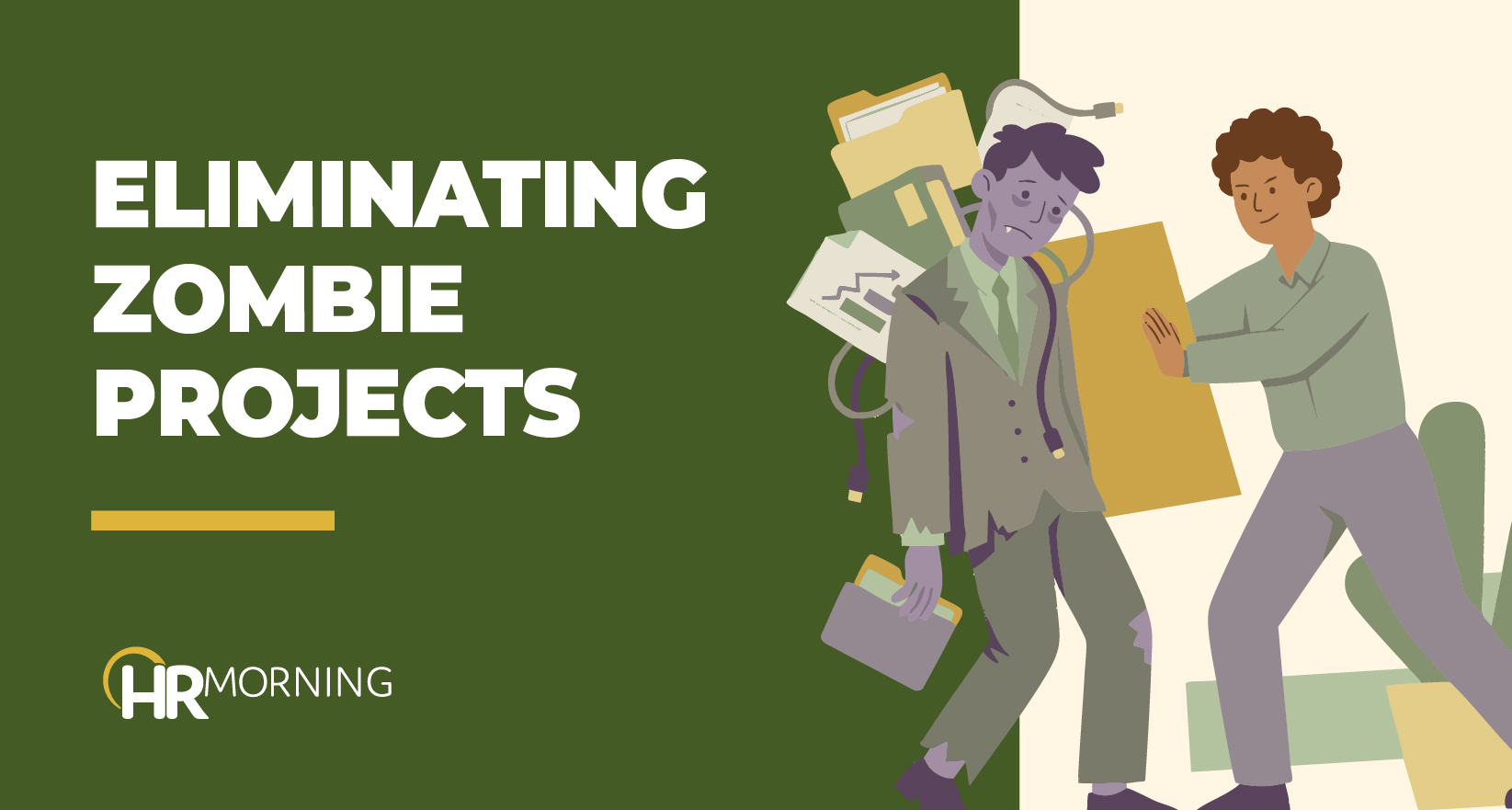
They’re walking dead in your workplace and draining the life out of people and productivity: Zombie Projects.
The problem probably runs deeper than you imagined. And you’ll want to stop it.
Nearly 45% of employees say they came into 2026 weighed down by a Zombie Project, according to a large-scale study by Atlassian. And 90% of those employees say it’s causing them issues already this year.
What are Zombie Projects
So what’s this dead weight? Zombie Projects are menacing, slow- or non-moving projects that still suck energy, time and money but aren’t solving problems.
First coined in the Harvard Business Review a decade ago, researchers then said Zombie Projects “fail to fulfill their promise and yet keep shuffling along, sucking up resources without any real hope of having a meaningful impact on the company’s strategy or revenue prospects.”
The projects made sense when they kicked off. But somewhere along the line, something went sideways — the tech didn’t work out, the timeline got off track, the team broke up or customers didn’t react as expected.
The project lost momentum. No one pulled the plug. Nor did anyone see it through.
The Drain of Zombie Projects
Meanwhile, it’s still a mental and physical drain on employees and a financial drain on the organization. Specifically, the Atlassian study found:
- 37% of employees are stressed or overwhelmed by dormant work
- 32% of them say it impacts their productivity.
- 32% of teams worry Zombie Projects put them on a fast track to burnout, and
- 31% of teams say they gobble up valuable team resources.
Why Zombie Projects Don’t Die
With that kind of mental and financial drain going on, you’d think somebody would pull the plug. But Zombie Projects live on for a variety of reasons, according to the researchers:
- A third of employees said they don’t want the boss to perceive the project as a failure, so they just keep it going.
- Another third said the problem lies in a “decision gap.” The team lacks clarity on who has the authority to call it quits on the project. No one can kill it, so it lives on.
- And the other third said they’ve put too much into the project and don’t want to waste what they’ve done. They’re caught in the “sunk cost” fallacy: It’s better to leave it open-ended and hope the time will be right to kick it up again.
Fixing the Productivity Drain
Zombie Projects seem to linger in the background, but that doesn’t mean they don’t loom large over employees. Employees still think about what needs to be done — or what hasn’t been done. They still have to meet the minimum expectations for each project because someone somewhere set up a monitoring tool when the project was important.
And perhaps what’s most draining is figuring out how to make it look like they’re working on something that should be dead.
That’s why you want to identify and eliminate Zombie Projects. Here’s help:
1. Give Yourself Permission to Kill More Projects
Antonio Nieto-Rodriguez is the author of Powered by Projects and Harvard Business Review Project Management Handbook. Some might call him the project guru. His livelihood is about projects, and he thinks companies should do fewer of them!
So his first piece of advice in getting rid of Zombie Projects: Kill more projects. Of course, that’s easier said than done. That’s why the rest of his advice is essential. It’ll help you stop bad projects.
2. Decide to Defend Every Project
Eliminate project updates and reviews to leadership. Replace them with requiring team leads to answer this pointed question: “If you had to defend this project to the board (CEO, CFO — or any major decision maker), would you still recommend it?”
This forces the team, or its leader, to think like leaders who have to consider cost and effectiveness. That’s when they might consider if it’s actually building a greater good.
3. Create Tradeoffs
Nieto-Rodriguez offered this tip from a telecommunications company he worked with: project trading. Unit leaders had to stop or “sell” an existing project of equal value if they wanted to launch a new one.
In their sessions, they had to publicly justify why one project was more valuable than the other. Their colleagues helped them figure out the top priorities.
4. Limit Project Time
Long projects naturally lose steam. Try to set structured times — three- or six-month limits — on projects, with limited potential for continuation at the end of the cycle.
Nieto-Rodriguez found that made it easier for leaders to pivot or stop without fallout.
5. Reward Leaders Who Stop
This will seem like a counterintuitive tip: Reward leaders and teams for ending projects that aren’t working or are low-value initiatives.
We’re used to rewarding people for launching and landing projects that succeed. But there’s success in recognizing what’s not working and stopping it before it sucks the life out of people and productivity. Strategic judgment should count for something.
6. Find a Landing Spot
In his research, Nieto-Rodriguez found that leaders sometimes didn’t pull the plug on low-value projects because they feared layoffs in the wake.
Instead, that’s the time to spread good people to other good projects. End marginal projects and find a landing spot where team members can share their skills and learn from others, too.
- Share on


Free Training & Resources
White Papers
Provided by HealthEquity
White Papers
Provided by Conifer Health

Resources
Premium Articles
The Cost of Noncompliance
Case Studies


