
A Communication Plan That Wins Employee Buy-In | 2-Minute Video
By
Whether it’s a big or little change ahead that will impact employees, the first thing you need to do is this: Make a communication plan.
A good one will almost ensure employee buy-in for the change. Even better, you might gain champion changemakers.
What’s Up in This Episode: A Communication Plan that Works
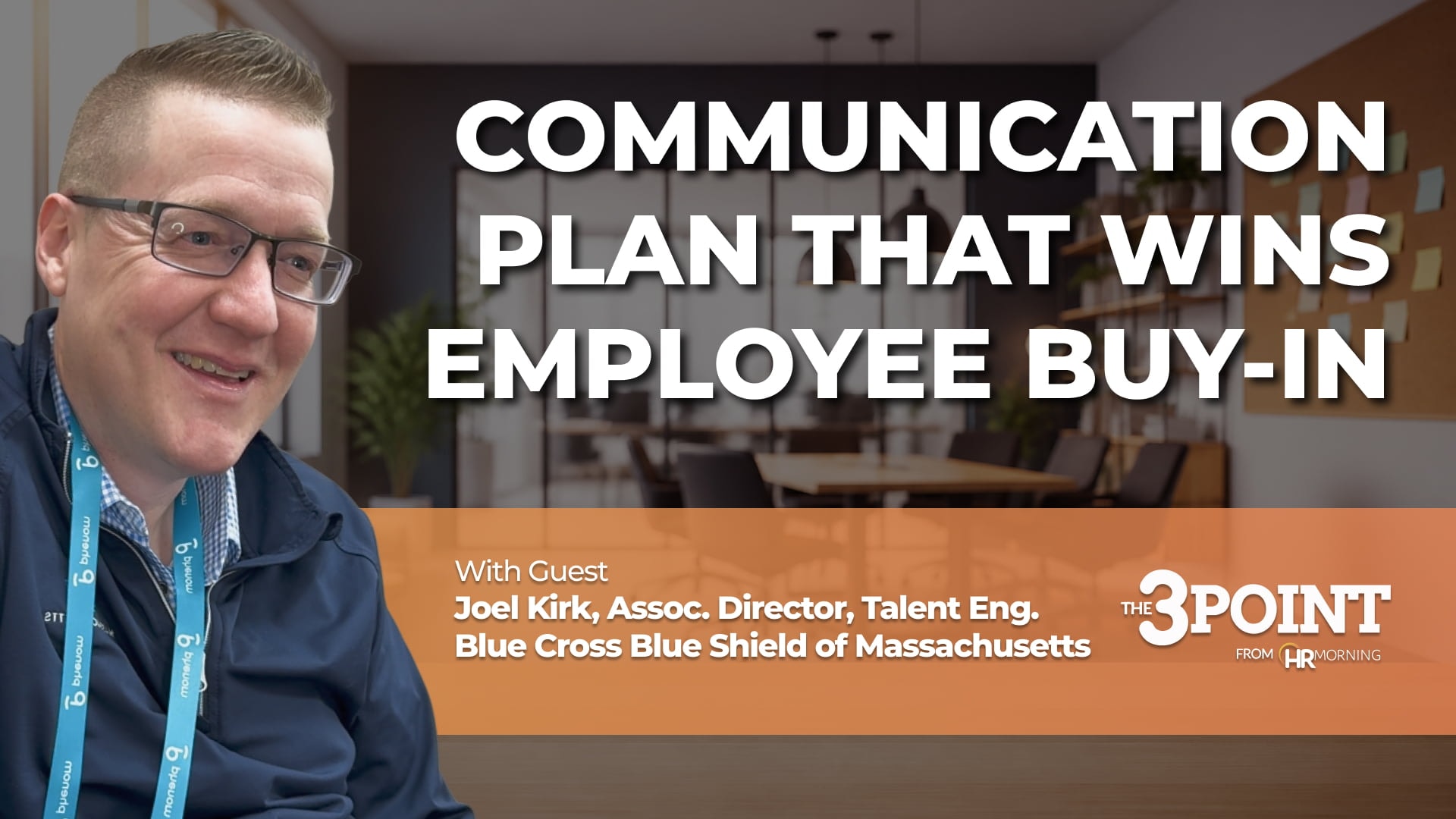
In this episode of HRMorning’s 3-Point, we have a practical approach to rolling out changes. Joel Kirk, Associate Director of Talent Engagement at Blue Cross Blue Shield of Massachusetts, shows us how his team communicated before and throughout a new initiative that impacted all employees. The change was positive, but change is not always comfortable. So good communication made it a great experience.
Click, watch and listen for more details on communicating to gain employee buy-in.
Transcript (edited for clarity):
When you have a new initiative or program, you probably need employees to buy into it. And since you’ve spent money and time, you definitely don’t want to take chances on how well they’ll adopt it. So before you launch something, you’ll want to hear about how this team communicated a big change to the way they were going to recruit and hire from within.
Joel Kirk, Associate Director of Talent Engagement, Blue Cross Blue Shield of Massachusetts: “One of the things we’re realizing about communicating is that you have to meet people where they’re at. Some people want to watch a video. Some people want to listen to a podcast. Some people want to read the email. So we’re approaching it in a couple of different ways so people will really get the information.”
So that’s the critical first step. Know that you need to communicate changes in a variety of ways. For Kirk and his HR team, the initial word on their new internal job site was an email blast. It explained the platform, its capabilities, and how they could set up their profiles. From there …
Kirk: “We shot some videos. It was kind of at first, the team was like, ‘Really, are we doing this?’ And I was like, ‘Yeah, we’re doing this. Let’s give it a personal touch. Let’s let our associates know how excited we are about it to help spread that excitement.'”
You see, it wasn’t just about sharing information now. It was about emotion, too. This final round of communication makes room for both.
Kirk: “Then we’re going to be some road shows, going into our service centers. They’re, obviously, a big part of our employee base. They do these monthly Power Hours with their associates when they talk about career development, and we’re going to go into that and present and let them know about it, and kind of give them the best tips and tricks. And we’ll do roadshows throughout the company, as well.”
Talk about making an impression. We’ll get more into Kirk and his team’s new internal hiring strategy in another episode. For now, if you want to get buy-in on any change or initiative, communicate like this:
- Mix it up. Remember what Kirk said: Meet people where they are. Use different comm channels – email, video, conversations, whatever it takes.
- Get people excited. When you communicate, show people what has you or your team excited about what’s coming.
- Get out there. In this case, literally meet people where they are. Show them what’s new and the tips and tricks they can try to handle it.
Advertisement
This is a great success you can learn from, right? Fortunately, we have more on the HRMorning website. Check out our Case Studies, where you’ll find other real-world practical tips. Thanks for joining me again.
Further Reading
31 Ways to Tell Employees You’re Thankful for Their Efforts
Words can be the most powerful tool you want to thank employees for their efforts. While any day of the year is a good day to praise or thank employees, this time of year reminds us it’s especially important to show employees how thankful we are. Even better, thanking employees isn’t just fluff. It pays […]
Mitigate Risks at Company Holiday Parties: 9 Best Practices for HR
The holiday season is the perfect opportunity for companies to celebrate successes, strengthen bonds and foster a sense of community amongst employees. While holiday parties can provide a good time, they can expose employers to significant risks if not carefully managed. HR professionals play an integral role in the success of these events, ensuring they […]
3 ‘Learning Culture’ Fails and How HR Can Fix Them Before Gen Z Quits
As a leader, it is easy to become “snowblind” in the current business climate. We are bombarded daily by a slew of buzzwords — job-hopping, job hugging, quiet quitting — and the looming, yet still undefined, shadow of AI’s impact on the workforce. But amid the noise, one statistic from a recent large-scale study demands […]
Access to Personnel Records: New Compliance Obligations for NY Employers
Effective Nov. 8, 2026, New York employers must provide current and former employees with a free copy of personnel records within five business days of a written request. The law covers public and private employers, regardless of size. New Requirements for Personnel Records Employers must also: Employers may limit reviews to two per calendar year, […]
10 Tips to Improve Employee Engagement as Engagement Rates Plummet
HR professionals might consider employee engagement the glue that holds company success together. No matter what you talk about – productivity, leadership, professional growth, retention, recognition, culture, well-being – everything ties back to employee engagement. Not to mention, it is the most important indicator to gauge work satisfaction. But it’s at high risk: Employee engagement […]
Politics at Work: An Election-Season Toolkit for HR Leaders
Employers everywhere are bracing for one of the trickiest challenges of the year as the country goes through another contentious election season. Inflammatory political speech in the workplace is disruptive and can lead to a host of workplace issues ranging from frustration and fractured relationships to claims of harassment and workplace violence incidents. With increasing […]