• Skip to primary navigation
  • Skip to main content

HRMorning

  • FREE RESOURCES
  • PREMIUM CONTENT
  • HR DEEP DIVES
  • PODCASTS
    • VOICES OF HR
    • WOMEN’S LEADERSHIP TODAY
  • LOGIN
  • SIGN UP FREE
  • Employment Law
  • Benefits
  • Recruiting
  • HR Technology
  • Payroll
  • Management
  • Women’s Leadership
  • More
    • Talent Management
    • Performance Management
    • Leadership & Strategy
    • Compensation
    • Policy & Procedures
    • Wellness
    • Staff Departure
    • HR Career & Self-Care
    • Health Care
    • Retirement Plans
  • HR Career & Self-Care

The case for ‘deep work’ – and how to actually do it

Michele McGovern
By: Michele McGovern
  • Share on

About the Author

Michele McGovern writes. A lot. These days, she covers HR, digging deep into company culture, DEI, leadership, management and the everchanging world of work. In the years between getting a BA in journalism from a state school and writing about HR, she wrote about big-city crime for a wire service and small-town life for local newspapers. She’s a mediocre mom, decent wife, wannabe athlete and consummate pursuer of fun - on land, snow and water. Find her on LinkedIn @michele-mcgovern-writer.

Show Less
Last Updated: October 14, 2024
3 minute engagement
strategies for all employees

It’s a wonder work gets done these days. 

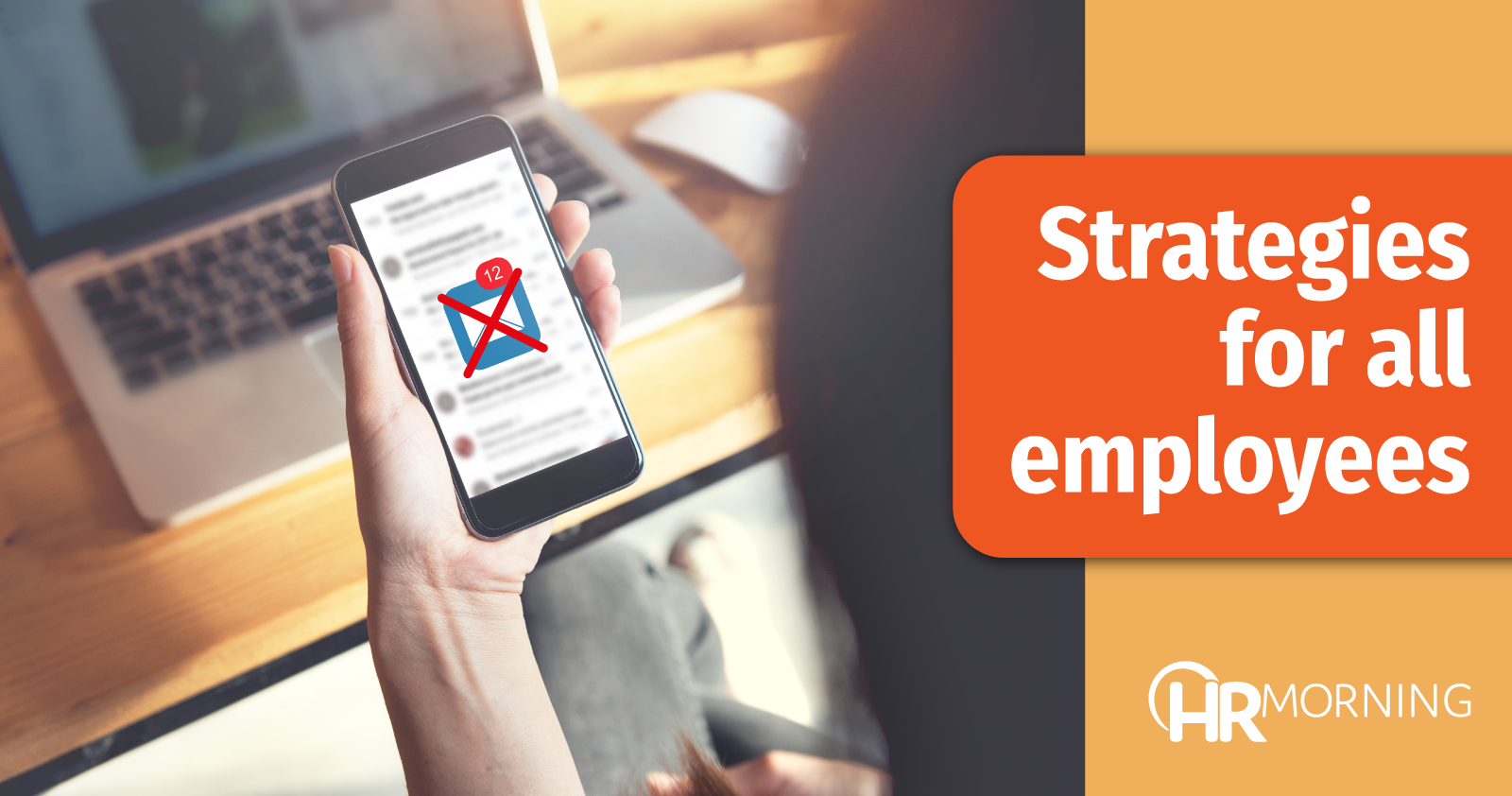
For many managers and their employees, the urge to respond quickly to every alert, multi-task, network and update status is hard to control.

The result: Lots of shallow work – the mindless kind that doesn’t create value or move much ahead.

What’s missing: Deep work – the valuable kind that makes an impact on what matters most to your organization.

Deep work gets results: Go ahead and Google “deep work.” You’ll see pages of posts from people in all industries and occupations praising deep work for their productivity and creativity successes.

It doesn’t come easily, but the commitment to deep work – focusing without distraction on a mentally demanding task – can help anyone catch on to complicated ideas and do better work in less time, says Cal Newport, author of Deep Work: Rules for Focused Success in a Distracted World.

Here are the keys:

Schedule the work

Make deep work a regular part of each day. Schedule an hour or two and put yourself in a place where you can’t be distracted.

Turn off alerts on your computer (assuming you need it for your deep work), leave your phone behind and avoid the Internet (if possible) to boost your level of focus.

Try to clear your mind of other responsibilities and issues. You need to be in a tidy mental state and physical surrounding to get started.

Focus on the most important thing

Before you start to work, ask yourself: “Will this move the needle or is it just keeping me busy?”

Make sure the deep work you’re about to embark on will have an impact on your career, your employees’ careers or your company’s well-being.

If not, refocus and find other work that has a long-term impact.

Create new habits

So many of us are addicted to our distractions. We can’t have conversations with a person in front of us without checking who’s texting or posting on our phones. Or we can’t work on the tasks at hand without responding to every social media alert that dings.

To break the addiction, and create a deep-work habit, try to work in the same place, at the same time with the same expected results as much as possible.

Drain the shallow end later

Don’t be mistaken: Deep work is exhausting because it pushes you to your limits. So you want to push aside shallow work – tedious, mindless tasks – until after the work.

This will also help you identify shallow work that can be delegated or even eliminated.

Quantify what you do

Focused work can help you advance your career: If you push yourself to stay focused on the big picture, you can start to select projects and strategies for deep work time that shape your career.

Look back weekly for quantity or quality data to prove your hard work had an impact.

Structure shallow work time

Despite all that can be accomplished in deep work, you’ll still have to do shallow work.

Protect that time, too. Budget time for meetings, answering email and doing paperwork.

Then you can create even more time for work that matters.

Filed under
  • HR Career & Self-Care
  • Share on

Get the HRMorning Newsletter

With HRMorning arriving in your inbox, you will never miss critical stories on labor laws, benefits, retention and onboarding strategies.

  • This field is for validation purposes and should be left unchanged.
  • This field is hidden when viewing the form
  • This field is hidden when viewing the form
  • This field is hidden when viewing the form
  • This field is hidden when viewing the form
  • This field is hidden when viewing the form
  • This field is hidden when viewing the form
  • This field is hidden when viewing the form
  • This field is hidden when viewing the form
  • This field is hidden when viewing the form
  • This field is hidden when viewing the form
  • This field is hidden when viewing the form
  • This field is hidden when viewing the form
  • This field is hidden when viewing the form
  • This field is hidden when viewing the form
  • This field is hidden when viewing the form
  • This field is hidden when viewing the form
  • This field is hidden when viewing the form
  • This field is hidden when viewing the form
  • This field is hidden when viewing the form
  • This field is hidden when viewing the form
  • This field is hidden when viewing the form
  • This field is hidden when viewing the form
  • This field is hidden when viewing the form
  • This field is hidden when viewing the form
  • This field is hidden when viewing the form
  • This field is hidden when viewing the form
  • This field is hidden when viewing the form
  • This field is hidden when viewing the form
  • This field is hidden when viewing the form
  • This field is hidden when viewing the form
  • This field is hidden when viewing the form
  • This field is hidden when viewing the form
  • This field is hidden when viewing the form
  • This field is hidden when viewing the form
  • This field is hidden when viewing the form
  • This field is hidden when viewing the form
  • This field is hidden when viewing the form
  • This field is hidden when viewing the form
  • This field is hidden when viewing the form
  • This field is hidden when viewing the form
  • This field is hidden when viewing the form
  • This field is hidden when viewing the form
  • This field is hidden when viewing the form
  • This field is hidden when viewing the form
  • This field is hidden when viewing the form
  • This field is hidden when viewing the form
  • This field is hidden when viewing the form
  • This field is hidden when viewing the form
  • This field is hidden when viewing the form
  • This field is hidden when viewing the form
  • This field is hidden when viewing the form
  • This field is hidden when viewing the form
  • This field is hidden when viewing the form
  • This field is hidden when viewing the form
  • This field is hidden when viewing the form
  • This field is hidden when viewing the form

Free Training & Resources

Webinars

Hiring and Background Checks in the Age of COVID-19

White Papers

ROI of Automated Workforce Management

Provided by WorkEasy

Webinars

A Skill-Based Approach to Productivity and Wellbeing: Building Stronger, More Engaged Employees

Webinars

Improve Your Hiring with Background Screenings – Intellicorp page

SPONSORED CONTENT

HR Technology

sponsored content
The Best AI Software for HR Automation

Courtesy of G-P

Talent Management

sponsored content
Powerful Employee Retention Strategies for 2025: How to Keep Your Best People

Courtesy of PEOPLEGURU

Benefits

Health Care

Wellness

sponsored content
Proven Results: 5 Ways Teladoc Health Chronic Condition Management Transforms HR Outcomes

Courtesy of TELADOC HEALTH

Further Reading

  • HR Career & Self-Care
  • HR Technology
Future-Proofing Your HR Career: 55 HR Jobs With Highest, Lowest Risk Due to AI

If you’ve been wondering how artificial intelligence (AI) could impact your HR career, you aren’t alone.   Practically everyone, fr...

  • HR Career & Self-Care
Want to be a super boss? 5 tactics to take management to the next level

Is your organization full of a bunch of bosses – or is there a super boss or two out there? Nearly every organization needs more s...

  • HR Career & Self-Care
2 Keys for Boosting the Mental Health of Stressed HR Pros

When was the last time your HR team members did a well-being self-checkup? Being a caring professional can lead to mental health struggles ...

  • HR Career & Self-Care
For a Thriving HR Career Try These Expert Self-Care Practices

Are imposter syndrome, self-doubt, insecurity or other limiting beliefs holding you back from taking action in your HR career? “A...

  • HR Career & Self-Care
5 Primary Functions of Human Resources Departments

Today’s human resources department is more complex than ever. And today’s human resources professionals are either generalists who ...

  • HR Career & Self-Care
Should your company hire a Chief Remote Officer? Expert lays out the advantages

Most organizations have recognized the benefits of hybrid and remote workplaces. Is it finally time to hire a Chief Remote Officer R...

Get the latest from HRMorning in your inbox PLUS immediately access 10 FREE HR guides.

I WANT MY FREE GUIDES
HR Morning Logo
  • Facebook
  • Linked In
  • ABOUT HRMORNING
  • ADVERTISE WITH US
  • WRITE FOR US
  • CONTACT
  • Employment Law
  • Benefits
  • Recruiting
  • Talent Management
  • Performance Management
  • HR Technology
  • Leadership & Strategy
  • Compensation
  • Policy & Procedures
  • Wellness
  • Staff Departure
  • HR Career & Self-Care
  • Health Care
  • Retirement Plans
  • DEI

HRMorning, part of the Rover Insights Network, provides the latest HR and employment law news for HR professionals in the trenches of small-to-medium-sized businesses. Rather than simply regurgitating the day's headlines, HRMorning delivers actionable insights, helping HR execs understand what HR trends mean to their business.

Powered By Rover Insights
Privacy Policy | Terms of Service
Copyright© 2026 Rover Insights
HRMorning Logo

WELCOME BACK!

Enter your username and password below to log in

Forget Your Username or Password?

Reset Password

Lost your password? Please enter your username or email address. You will receive a link to create a new password via email.

Log In

Why do we need your credit card for a free trial?

We ask for your credit card to allow your subscription to continue should you decide to keep your membership beyond the free trial period.  This prevents any interruption of content access.

Your card will not be charged at any point during your 21 day free trial
and you may cancel at any time during your free trial.

During your free trial, you can cancel at any time with a single click on your “Account” page.  It’s that easy.
