• Skip to primary navigation
  • Skip to main content

HRMorning

  • FREE RESOURCES
  • PREMIUM CONTENT
  • HR DEEP DIVES
  • PODCASTS
    • VOICES OF HR
    • WOMEN’S LEADERSHIP TODAY
  • LOGIN
  • GET STARTED
  • Employment Law
  • Benefits
  • Recruiting
  • HR Technology
  • Payroll
  • Management
  • Women’s Leadership
  • More
    • Talent Management
    • Performance Management
    • Leadership & Strategy
    • Compensation
    • Policy & Procedures
    • Wellness
    • Staff Departure
    • HR Career & Self-Care
    • Health Care
    • Retirement Plans
  • Talent Management

3 Ways to Turn Succession Planning into a Companywide Talent Strategy

Tiffany McGowen, HR Expert Contributor
By: Tiffany McGowen, HR Expert Contributor
Read it on Beacon
  • Share on

About the Author

Tiffany McGowen is Senior Executive Vice President of HR and Talent Acquisition at Paycom. Tiffany oversees all human resources initiatives and recruiting strategies that have helped Paycom grow to over 7,000 employees. She is based in Oklahoma and enjoys volunteering for foster care programs and other organizations across the state.

Show Less
Last Updated: September 23, 2026
4 minute engagement
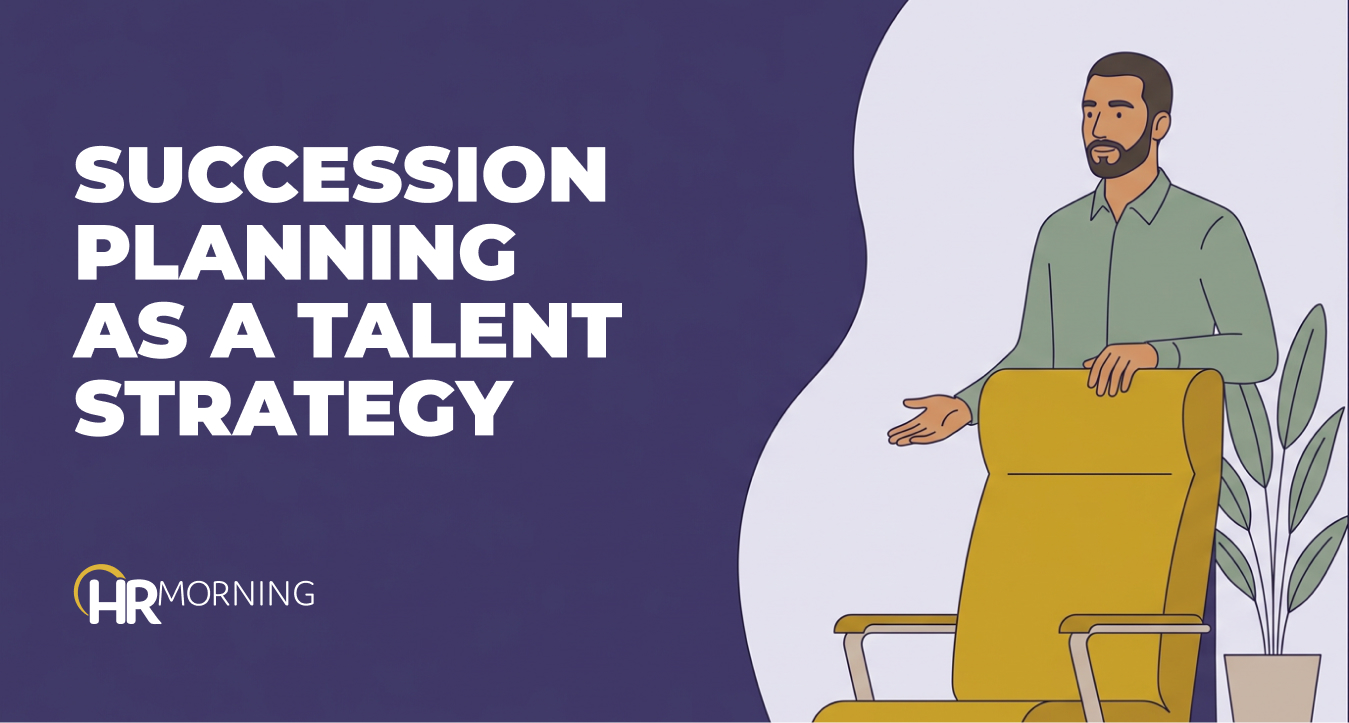
HR leader presenting an empty office chair, illustrating succession planning as a companywide talent strategy.
You read HRMorning's newsletter. Beacon's Daily Brief is the version tuned to you: it skips what you've already read and leads with what you've asked Beacon about. Get your Daily Brief →

Have you named who will fill that role when your tenured leader retires? Will you keep the position limited to one person or will you divide it and create additional roles? Which roles will be backfilled as you move people up?

With succession planning in mind, these questions should be top of mind for HR leaders. And they shouldn’t be questions that are only confronted after retirement parties end.

Since January 2020 to March of this year, more than two million Americans aged 55 and older have left the workforce, according to the U.S. Bureau of Labor Statistics. And with 30.4 million baby boomers set to reach retirement age between now and 2029, filling the seats of tenured employees will be a constant discussion for years to come.

Be Intentional with Succession Planning

As workforce complexity increases, organizations must ensure continuity across the roles that most directly affect performance, from managers and technical specialists to operational and technical leaders. Gaps in these critical positions can disrupt productivity, slow growth and strain teams if organizations aren’t prepared.

Organizations have to be more intentional about their succession planning, as it can’t be a one-and-done situation. With software, it’s often easier to see who is in your talent pipeline so you can keep your business moving and avoid interruptions.

Let’s dive into the three steps to effective succession planning:

  1. Centralizing talent data
  2. Keeping it top of mind for HR, and
  3. Using automation to proactively develop internal pipelines.

1. Centralize Data to Make It Easier to Fill Seats

As you prepare your organization to be more proactive in succession planning, it’s important to keep employee data all in one place rather than across multiple systems or paper spreadsheets.

Fragmented systems create information silos and data discrepancies that limit accuracy and insight into who is prepared to step into critical roles. When talent data is scattered across various platforms, HR teams struggle to assess readiness advancement consistently or identify development gaps early. As a result, succession planning becomes reactive, focused on filling vacancies after they occur rather than preparing talent in advance.

The first step to having a more proactive approach to succession planning is to put your employee data in one place, creating a single source of truth. When employee information lives within a single database, HR gains a comprehensive view of internal talent pipelines and potential leadership candidates across teams and roles.

Without a centralized source of truth, HR teams lack the visibility needed to align employee development plans with strategic business goals or to apply consistent criteria when assessing promotion readiness and leadership potential across departments.

2. Keep Succession Planning Top of Mind

Employee headcount is always shifting, no matter the size of your organization. To be ready for the next departure, HR needs to consistently review employee skills and development to identify emerging leaders and adjust plans as business needs evolve. Without clear visibility into talent pipelines, capable employees may be overlooked, and development may be delayed until roles are already vacant.

Without proper planning, your organization could be left scrambling to fill a vacant position, creating a disruption to the business. There’s also a risk of filling the seat with the wrong person because you were in a hurry.

Your clients depend on you, and your employees depend on the company to put them in the best position to succeed. So don’t wait until the notice from your tenured employee arrives; start looking at your pipeline now.

3. Use Automation to Strengthen Your Talent Pipeline

Moving people around as seats become open can be a challenge. That’s why full-solution automation is valuable for keeping your talent pipeline flowing.

By tracking employee growth and advancement readiness over time, you gain a clearer, more accurate understanding of who is prepared to step into future roles and where additional development is needed.

Centralized data improves accuracy and confidence, making it easier to evaluate successor candidates fairly and align development efforts across the organization, keeping your talent pipeline flowing.

Over time, automation shifts succession planning from replacement to development. Instead of responding to vacancies after they occur, HR can intentionally build bench strength that supports long‑term stability.

With Paycom’s single-database software, organizations of all sizes can proactively manage risk, strengthen internal pipelines and support employee growth with greater confidence.

And you’ll still have time to enjoy a slice of cake at the next retirement party.

Read it on Beacon
Open this article in Beacon, from HRMorning, and ask how it applies to your company. Every answer names its source.
Read it on Beacon
Get HRMorning's newsletter tuned to you every morning: your Daily Brief on Beacon →
Filed under
  • Talent Management
  • Share on

Get the HRMorning Newsletter

With HRMorning arriving in your inbox, you will never miss critical stories on labor laws, benefits, retention and onboarding strategies.

Get it free with a Beacon account. Beacon keeps your company's HR context at hand, and every answer names its source.
Create my free account

Free Training & Resources

White Papers

Completion Rates Aren’t a Training Strategy

Provided by Navex

White Papers

State of Women’s and Family Health Benefits 2026

Provided by Maven Clinic

White Papers

Managing FMLA in California: Where Federal Law Ends and CFRA Begins

Provided by AbsenceSoft

Webinars

Beyond Compliance: Building Trust Through AI Governance in HR

Provided by Paycom

SPONSORED CONTENT

Performance Management

Talent Management

sponsored content
Employee Recognition Program: What the First 6 Months Reveal About Whether It Will Last

Courtesy of INSPIRUS

Compensation

Recruiting

sponsored content
Salary Benchmarking: 6 Choices That Decide Whether Your Pay Data Holds Up

Courtesy of MARSH

Employment Law

Policy & Procedures

sponsored content
Policy Rollout: 4 Checkpoints That Show Employees Got the Message

Courtesy of NAVEX

Further Reading

  • Talent Management
10 Effective Employee Retention Strategies Every Company Needs

Most turnover doesn’t come from a dramatic exit. It comes from small frustrations that stack up – stalled growth paths, uneven workload...

  • Talent Management
Is Faux Productivity Real? Research Says Faking It Is …

Are your people productive? Or is it faux productivity you see? The research is in on faux productivity and it’s — well R...

  • Talent Management
‘Breadcrumbing’: How This Trend Hurts the Workplace and 6 Ways to Fix It

People inside your organization are likely breadcrumbing employees and job candidates. And it’s hurting everything from your reput...

  • Talent Management
How to better align with worker preferences

By now, you’ve heard that hiring challenges aren’t going away in 2023. The effects of the labor market paradox in 2022, which saw a lab...

  • Talent Management
6 Ways To Fire Up Your Team and Spark Creativity

Blank stares. Shrugged shoulders. Phone scrolling. If that’s what your meetings are filled with, there’s trouble. Your t...

  • Talent Management
12 ideas for building an employee recognition program

Employee recognition is a key component of any healthy work environment. Recognizing your employees in various ways helps them feel like va...

Get the latest from HRMorning in your inbox PLUS Beacon, free. Check it before you say it.

GET STARTED FREE
HR Morning Logo
  • Facebook
  • Linked In
  • ABOUT HRMORNING
  • ADVERTISE WITH US
  • WRITE FOR US
  • CONTACT
  • Employment Law
  • Benefits
  • Recruiting
  • Talent Management
  • Performance Management
  • HR Technology
  • Leadership & Strategy
  • Compensation
  • Policy & Procedures
  • Wellness
  • Staff Departure
  • HR Career & Self-Care
  • Health Care
  • Retirement Plans
  • DEI

HRMorning provides the latest HR and employment law news for HR professionals in the trenches of small-to-medium-sized businesses. Rather than simply regurgitating the day's headlines, HRMorning delivers actionable insights, helping HR execs understand what HR trends mean to their business.

Privacy Policy | Terms of Service
Copyright© 2026 HRMorning
HRMorning Logo

WELCOME BACK!

Enter your username and password below to log in

Forget Your Username or Password?

Reset Password

Lost your password? Please enter your username or email address. You will receive a link to create a new password via email.

Log In

Why do we need your credit card for a free trial?

We ask for your credit card to allow your subscription to continue should you decide to keep your membership beyond the free trial period.  This prevents any interruption of content access.

Your card will not be charged at any point during your 21 day free trial
and you may cancel at any time during your free trial.

During your free trial, you can cancel at any time with a single click on your “Account” page.  It’s that easy.