• Skip to primary navigation
  • Skip to main content

HRMorning

  • FREE RESOURCES
  • PREMIUM CONTENT
  • HR DEEP DIVES
  • PODCASTS
    • VOICES OF HR
    • WOMEN’S LEADERSHIP TODAY
  • LOGIN
  • SIGN UP FREE
  • Employment Law
  • Benefits
  • Recruiting
  • HR Technology
  • Payroll
  • Management
  • Women’s Leadership
  • More
    • Talent Management
    • Performance Management
    • Leadership & Strategy
    • Compensation
    • Policy & Procedures
    • Wellness
    • Staff Departure
    • HR Career & Self-Care
    • Health Care
    • Retirement Plans
WLT Logo
  • Business Skills

8 Strategies for Conflict Management in the Digital Age

Michelle Myers
By: Michelle Myers
  • Share on

About the Author

Michelle Myers is a dedicated Creative Content Production Manager overseeing the content strategy and execution for Women's Leadership, HRMorning, and Resourceful Finance Pro. With a keen eye for detail and a passion for creating engaging and informative content, Michelle plays a vital role in delivering high-quality resources to professionals in HR, finance, and women's leadership. Her expertise spans across various content formats, ensuring that each platform provides valuable insights and fosters professional growth. Michelle's commitment to excellence and her ability to manage complex production workflows make her an invaluable asset to her team.

Show Less
Last Updated: March 18, 2026
3 minute engagement
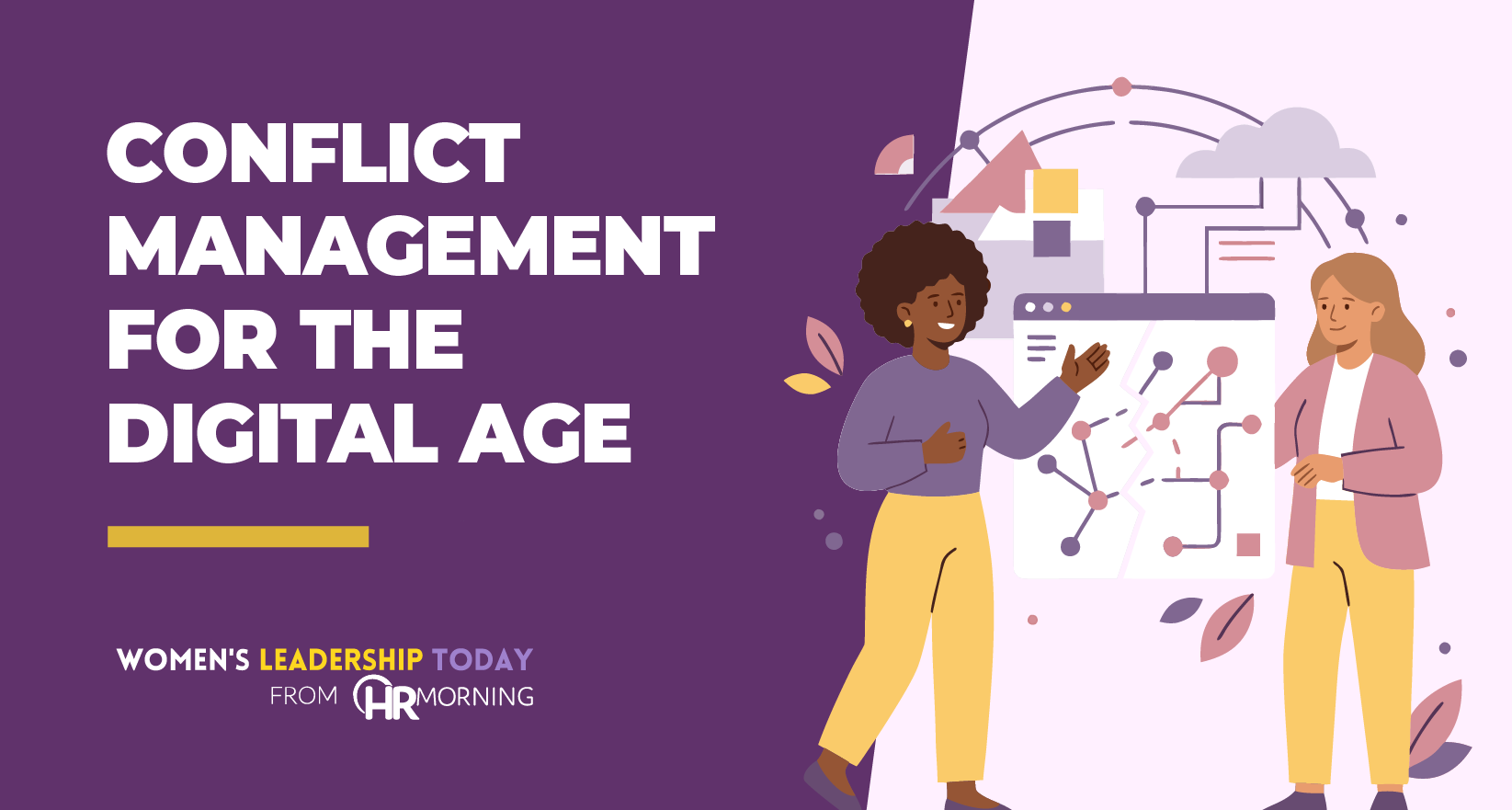
Women's Leadership Today blog banner illustrating strategies for conflict management in the digital age, featuring two female professionals working to repair a fractured digital network.

Conflict management has taken on new dimensions as technology reshapes how we communicate and interact.

Conflicts, once face-to-face, now often unfold over emails, video calls and instant messaging platforms.

This shift requires a new approach to conflict management, emphasizing digital communication skills, empathy, and technological fluency.

Change Your Conflict Management Style

Here are key strategies to effectively manage conflicts in the digital age.

1. Encourage Clear, Concise Communication

Digital communication, while convenient, is prone to misunderstandings due to the lack of non-verbal cues. To mitigate this, strive for clarity and conciseness in your messages. Use straightforward language, avoid jargon, and ensure your intent is unmistakable.

When addressing conflicts, be specific about the issues, provide context and outline your desired outcomes clearly. This reduces the chances of misinterpretation and keeps the conversation focused.

2. Prioritize Empathy and Emotional Intelligence

Emotional intelligence is critical in conflict management, especially in digital interactions where emotional nuances are harder to detect. When conflicts arise, take the time to understand the other party’s perspective and emotions.

Acknowledge their feelings and demonstrate empathy in your responses. This can de-escalate tensions and foster a more collaborative atmosphere.

3. Choose the Right Communication Channel

Selecting the appropriate communication channel is crucial for effective conflict resolution. Complex or sensitive issues are best addressed through video calls or phone conversations, where vocal tones and facial expressions can aid understanding.

For less sensitive matters, emails or messaging platforms may suffice. Always consider the nature of the conflict and the preferences of the parties involved when choosing your communication channel.

4. Establish Ground Rules for Digital Communication

Setting clear guidelines for digital communication can prevent conflicts. Establish norms for response times, acceptable communication styles, and the use of various platforms. For instance, agree on expected response times to emails or messages to avoid frustration from delayed replies.

Encourage respectful and professional language in your interactions, especially those on digital platforms. These ground rules create a structured environment that reduces the potential for misunderstandings.

5. Leverage Technology for Collaboration

Technology offers numerous tools that can facilitate conflict resolution. Collaborative platforms like Slack, Microsoft Teams, and project management tools enable real-time communication and transparent task tracking.

Use these tools to document discussions, share relevant information, and track progress on resolving conflicts. This transparency helps all parties stay informed and aligned, reducing the chances of further disagreements.

6. Address Issues Promptly

Timely intervention is key to preventing conflicts from escalating. Address issues as soon as they arise, rather than letting them fester. Proactively check in with team members or colleagues to identify potential conflicts early.

By addressing concerns promptly, you can often resolve them before they develop into more significant problems.

7. Foster a Positive Digital Culture

A positive organizational culture extends to digital interactions. Promote values such as respect, transparency and inclusivity in your digital communications. Recognize and reward positive behaviors, and address negative ones swiftly.

Encouraging a culture of open dialogue and mutual respect helps create an environment where conflicts are less likely to occur and are more easily resolved when they do.

8. Continuously Develop Conflict Management Skills

Finally, invest in ongoing training and development to enhance your conflict management skills. Attend workshops, take online courses, and stay updated on best practices in digital communication and conflict resolution. Encourage your team to do the same, fostering a culture of continuous improvement.

Managing conflicts in the digital age requires a blend of traditional conflict resolution techniques and modern digital communication skills. By embracing clarity, empathy, appropriate technology use, and proactive conflict management, individuals and organizations can navigate digital conflicts effectively, maintaining harmony and productivity in an increasingly virtual world. Learn more strategies for handling conflict, what fuels it, and how to spot it before it erupts in our event, “Conflict Management for Women Leaders.”

Filed under
WLT Logo
  • Business Skills
  • Share on

Get the HRMorning Newsletter

With HRMorning arriving in your inbox, you will never miss critical stories on labor laws, benefits, retention and onboarding strategies.

  • This field is for validation purposes and should be left unchanged.
  • This field is hidden when viewing the form
  • This field is hidden when viewing the form
  • This field is hidden when viewing the form
  • This field is hidden when viewing the form
  • This field is hidden when viewing the form
  • This field is hidden when viewing the form
  • This field is hidden when viewing the form
  • This field is hidden when viewing the form
  • This field is hidden when viewing the form
  • This field is hidden when viewing the form
  • This field is hidden when viewing the form
  • This field is hidden when viewing the form
  • This field is hidden when viewing the form
  • This field is hidden when viewing the form
  • This field is hidden when viewing the form
  • This field is hidden when viewing the form
  • This field is hidden when viewing the form
  • This field is hidden when viewing the form
  • This field is hidden when viewing the form
  • This field is hidden when viewing the form
  • This field is hidden when viewing the form
  • This field is hidden when viewing the form
  • This field is hidden when viewing the form
  • This field is hidden when viewing the form
  • This field is hidden when viewing the form
  • This field is hidden when viewing the form
  • This field is hidden when viewing the form
  • This field is hidden when viewing the form
  • This field is hidden when viewing the form
  • This field is hidden when viewing the form
  • This field is hidden when viewing the form
  • This field is hidden when viewing the form
  • This field is hidden when viewing the form
  • This field is hidden when viewing the form
  • This field is hidden when viewing the form
  • This field is hidden when viewing the form
  • This field is hidden when viewing the form
  • This field is hidden when viewing the form
  • This field is hidden when viewing the form
  • This field is hidden when viewing the form
  • This field is hidden when viewing the form
  • This field is hidden when viewing the form
  • This field is hidden when viewing the form
  • This field is hidden when viewing the form
  • This field is hidden when viewing the form
  • This field is hidden when viewing the form
  • This field is hidden when viewing the form
  • This field is hidden when viewing the form
  • This field is hidden when viewing the form
  • This field is hidden when viewing the form
  • This field is hidden when viewing the form
  • This field is hidden when viewing the form
  • This field is hidden when viewing the form
  • This field is hidden when viewing the form
  • This field is hidden when viewing the form
  • This field is hidden when viewing the form

Free Training & Resources

Webinars

The Power of Recognition: Engaging the Multi-generational Workforce

White Papers

Recognition Is a System, Not a Moment

Provided by Terryberry

White Papers

How Leading Employers Design Women’s and Family Health Benefits to Drive Outcomes

Provided by Maven Clinic

Webinars

Smarter Hiring: Data-Driven Recruiting and Inclusive Talent Strategies

Provided by Asure

SPONSORED CONTENT

HR Technology

sponsored content
The Best AI Software for HR Automation

Courtesy of G-P

Talent Management

sponsored content
Powerful Employee Retention Strategies for 2025: How to Keep Your Best People

Courtesy of PEOPLEGURU

Benefits

Health Care

Wellness

sponsored content
Proven Results: 5 Ways Teladoc Health Chronic Condition Management Transforms HR Outcomes

Courtesy of TELADOC HEALTH

Further Reading

  • Business Skills
Setting Healthy Boundaries: 8 Steps to Communicate What You Want

A boundary is a figurative line an individual draws that makes the limits of what they will and won’t tolerate. Healthy boundaries dir...

  • Business Skills
Performing Under Pressure: 5 Tips to Avoid Burnout

Burnout is an epidemic affecting the modern workplace today. All of us experience pressure and stress at work at one time or another, but b...

  • Business Skills
Presenting with Purpose: Strategies for Translating Knowledge into Action

What sets executive presentations apart from standard presentations? The answer is executive presence. Executive presence is a delivery sty...

  • Business Skills
6 Quick Tips for Powerful Presentations

Presenting live in front of colleagues can be a valuable career opportunity, but it can also be stressful. A great deck can truly suppo...

  • Business Skills
6 Big Ways Good Communication Will Support Organizational Resilience

Management teams and individuals in leadership roles are constantly searching for new and effective ways to reinforce the strength and func...

  • Business Skills
Did That Just Happen? 8 Tips for Recovering During Professional Presentations

No matter how much you prepare, things can still go wrong during an important professional presentation. Everyone has experienced the occas...

Get the latest from HRMorning in your inbox PLUS immediately access 10 FREE HR guides.

I WANT MY FREE GUIDES
HR Morning Logo
  • Facebook
  • Linked In
  • ABOUT HRMORNING
  • ADVERTISE WITH US
  • WRITE FOR US
  • CONTACT
  • Employment Law
  • Benefits
  • Recruiting
  • Talent Management
  • Performance Management
  • HR Technology
  • Leadership & Strategy
  • Compensation
  • Policy & Procedures
  • Wellness
  • Staff Departure
  • HR Career & Self-Care
  • Health Care
  • Retirement Plans
  • DEI

HRMorning, part of the Rover Insights Network, provides the latest HR and employment law news for HR professionals in the trenches of small-to-medium-sized businesses. Rather than simply regurgitating the day's headlines, HRMorning delivers actionable insights, helping HR execs understand what HR trends mean to their business.

Powered By Rover Insights
Privacy Policy | Terms of Service
Copyright© 2026 Rover Insights
HRMorning Logo

WELCOME BACK!

Enter your username and password below to log in

Forget Your Username or Password?

Reset Password

Lost your password? Please enter your username or email address. You will receive a link to create a new password via email.

Log In

Why do we need your credit card for a free trial?

We ask for your credit card to allow your subscription to continue should you decide to keep your membership beyond the free trial period.  This prevents any interruption of content access.

Your card will not be charged at any point during your 21 day free trial
and you may cancel at any time during your free trial.

During your free trial, you can cancel at any time with a single click on your “Account” page.  It’s that easy.
