The CHRO has Outgrown the Operating Model

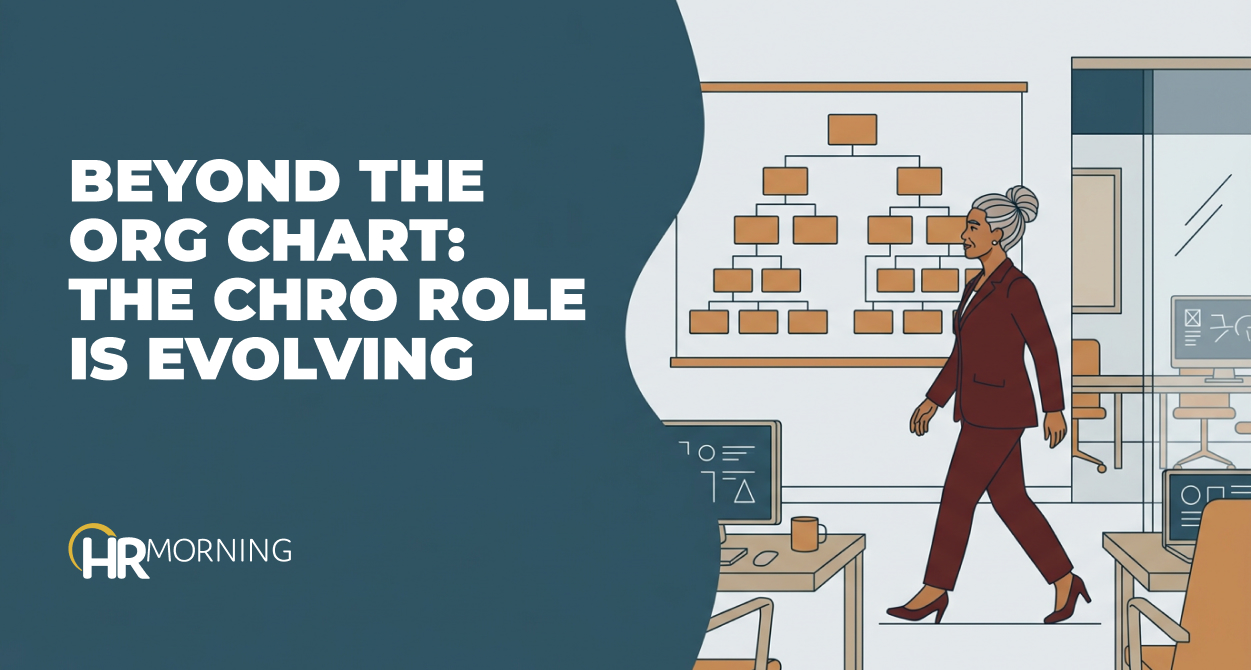
For years, companies kept changing the nameplate on the top HR job: Personnel became HR, then HR became People or Culture, then People became Talent. You get the drift.
And yes, I am going to call all of them Chief Human Resources Officers (CHROs). That is partly because we need to call them something, but mostly because the title was never the real story. While companies debated the name, the work blew past the job description.
I see it every day in my work with leadership teams. CHROs are being asked to help lead AI transformation, workforce redesign, succession and operating model change, often while working within a role designed primarily to run the HR function. The mandate expanded. The authority, resources and structure surrounding it often did not. Hiring, compensation, benefits, compliance and culture still matter. They are simply no longer the boundaries of the role.
That lane is gone.
The CHRO has become an enterprise transformation leader, but many companies still surround the role with the authority, resources and structure of a traditional HR function. The job moved forward. The operating model stayed behind.
For CHROs, the Work has Already Moved
Across our executive search and interim work, we increasingly see CHROs at the center of decisions that once sat elsewhere.
At one global pharmaceutical company, AI transformation initially sat largely within technology. But as AI began reshaping workflows, roles and required capabilities, the CHRO became central to the agenda. Their involvement ultimately expanded beyond HR into enterprise transformation, connecting technology decisions with the operating model, workforce and organizational change.
AI may begin as a technology investment, but it quickly becomes a people and operating question. Which work changes? Which decisions stay human? Which skills become more valuable?
The Chief Information Officer (CIO) must lead the technology. The CHRO must help the enterprise understand how it will work. They should set that future together, alongside the CEO, CFO and business leaders.
This is not mission creep. This is the job.
The Old Planning Model is Breaking
Traditional workforce planning makes the disconnect clear. Most plans begin with today’s organization. Leaders review open positions, forecast headcount, and then decide which vacancies to fill. That works if the jobs and skills the company needs remain stable. But we all know that it’s a fallacy.
AI and business transformation are changing tasks, workflows, decisions and leadership requirements faster than annual planning can respond. A company can hit its approved headcount and still lack the capabilities its strategy requires.
At a large telecommunications company, workforce planning shifted from filling projected roles to asking what capabilities the business would actually need. As technology and AI changed the work itself, the CHRO helped reshape the talent strategy around skills, continuous learning and workforce readiness rather than simply hiring against an existing organizational chart.
The first question cannot be, “How many people do we need?”
It has to be, “What work must get done, what outcome must it produce, and how should that work be delivered?” Only then can leaders decide what should remain human, what can be augmented or automated, and how to access the capabilities needed.
The CHRO is uniquely positioned to connect those choices. Not to own every single one, but to make sure they add up.
Transformation Fails in the Gaps
Companies still manage technology, leadership, workforce, culture and organization design as separate workstreams, but businesses do not experience them separately.
A workforce redesign will fail if people do not trust the rationale. An AI investment will disappoint if workflows do not change. A new operating model will stall if leaders cannot lead inside it. At one global consumer company, plans to expand its manufacturing and distribution footprint initially centered on the facility itself. When the CHRO and her team used AI-powered digital twins to examine how people would work within it, the findings prompted the company to redesign the entire facility.
The CHRO sees where those dependencies meet. The role should help set the future alongside the CEO, CFO, CIO and business leaders, not wait for the strategy and then manage the consequences.
Build for the Job That Exists Now
The CHRO’s original responsibilities did not disappear when this broader mandate arrived. Companies simply added transformation on top.
Asking the CHRO to lead more without changing the structure beneath the role is not empowerment. It is a design flaw.
If AI and workforce transformation are permanent priorities, they need permanent ownership. That might mean an HR technology leader, an AI transformation leader, a COO for HR or another executive with a clear mandate. The title matters less than the accountability.
CEOs and boards should ask one question: Have we built the CHRO role around the job we expect this person to do, or around the function the role used to run?
Changing the nameplate was easy. The real work is in rebuilding the role.
- Share on


Free Training & Resources
White Papers
Provided by Maven Clinic
White Papers
Provided by AbsenceSoft


