4 Leadership Tricks Managers Get Wrong

The road to team success is a lot like the one to hell.
Both are paved with good intentions.
While you mean well in all you do, some leadership tricks you use actually compromise results.
That’s what researchers found out about how people lead teams. (To note, they were not actually able to check on the road to hell — even with AI at their fingertips — but they did uncover a lot about team failures.)
But who can blame managers for some missteps, especially when their intentions are good? Consider this: “The average manager now has 51% more responsibilities than they can effectively manage,” said Brent Cassell, vice president in the Gartner HR Practice, which did a deep dive into management practices. “Organizations must redesign the manager role to focus on the activities that have the greatest impact on manager effectiveness.
Bottom line: Good managers are often overwhelmed and understaffed.
When Leadership Tricks Fail
What happens is that good managers do things that seem right at the moment, but the good intentions lead to failures.
The best ways to avoid this: Know the top well-intentioned behaviors that often compromise results.
Nihar Chhaya, an executive coach and President of PartnerExec, researched leadership traits and found these four are the most common “helpful” traits that are often underlying contributors to team failures.
1. Conformity
Some managers want everyone to get along. So they quell conflict as soon as it arises. And they look for consensus in nearly every decision.
Problem is, conformity can destroy innovation, independent thinking and motivation.
Better: Most of the time you want to remember that individual values, strengths and aspirations might cause some conflict. But most people can work it out when given the time and space. Plus, leveraging people’s differences can increase creativity, independence and motivation. Equally important is making some decisions without consensus. It’s critical for managers to lead — and sometimes that calls for calling the shots.
2. Overprotecting
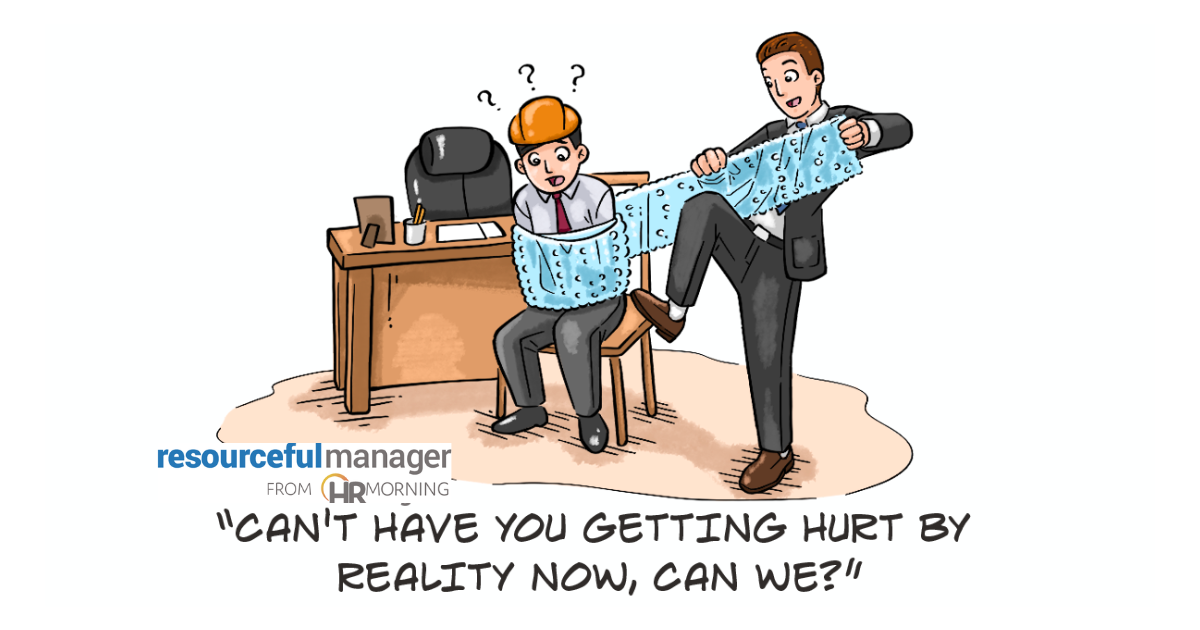
It’s in many managers’ instinct to protect those around them — especially a team they care about. However, some leaders take protection too far, shielding employees from certain realities and circumstances they need to face so they can overcome adversity on their own. They also hold back on true feedback and criticism, so employees don’t know exactly where they stand.
Their unrealistic optimism can end up leaving everyone disappointed when something bad comes down the pike.
Better: Lean into reality. The researcher suggested that managers who try to overprotect stop seeing themselves as heroes to their teams. Instead, consider yourself a partner in their progress and growth. To help them, you want to guide them to learn from mistakes, and recognize and overcome adversity.
3. Winning
Some leaders are so focused on results and team progress, they accelerate or over-amplify success. Some set the bar low so it seems the team is always winning and moving forward. Others make rash decisions, so no one waits for anything — even if waiting would produce better results. Then they leave little time to reflect on and learn from what could’ve been done better.
When the focus is always on winning and what’s next, the team will be less likely grow through learning.
Better: Spend time learning, reflecting and finding purpose with your team. Ask questions like this in one-on-ones and group discussions after you’ve achieved a next step:
- What was the most important action we took that lead us to this outcome?
- Is there anything we should be doing differently?
- Why is this important to you and how can we make it more aligned with your goals?
4. Friending
We’ve talked about the problems with trying to be everyone’s friend. And the research found it truly is detrimental to success. When bosses try to be liked (or loved) by everyone, they can cause undue confusion and even strife. Friendship can sometimes be misinterpreted as favoritism or forced loyalty. When the boss is a friend, it’s just weird!
Better: Now, that doesn’t mean you shouldn’t be friendly. That builds engagement and strong teams. The researcher suggests that managers focus less on being a fun person and more on being the source for learning, practical insight and advancement.

- Share on


Free Training & Resources
White Papers
Provided by Paycom

Resources
Premium Articles
Premium Articles
Premium Articles
Premium Articles


