• Skip to primary navigation
  • Skip to main content

HRMorning

  • FREE RESOURCES
  • PREMIUM CONTENT
  • HR DEEP DIVES
  • PODCASTS
    • VOICES OF HR
    • WOMEN’S LEADERSHIP TODAY
  • LOGIN
  • SIGN UP FREE
  • Employment Law
  • Benefits
  • Recruiting
  • HR Technology
  • Payroll
  • Management
  • Women’s Leadership
  • More
    • Talent Management
    • Performance Management
    • Leadership & Strategy
    • Compensation
    • Policy & Procedures
    • Wellness
    • Staff Departure
    • HR Career & Self-Care
    • Health Care
    • Retirement Plans
RM Logo
  • Leadership & Strategy

7 Things New Managers Must Know (but Seldom Do)

Michele McGovern
By: Michele McGovern
  • Share on

About the Author

Michele McGovern writes. A lot. These days, she covers HR, digging deep into company culture, DEI, leadership, management and the everchanging world of work. In the years between getting a BA in journalism from a state school and writing about HR, she wrote about big-city crime for a wire service and small-town life for local newspapers. She’s a mediocre mom, decent wife, wannabe athlete and consummate pursuer of fun - on land, snow and water. Find her on LinkedIn @michele-mcgovern-writer.

Show Less
Last Updated: January 12, 2026
5 minute engagement

New managers are usually excited, optimistic, determined — and terribly unprepared.

No one wants to be the new manager who fails. Nearly half of them are at risk of failure, according to research from Gartner.

Even worse, new managers often fail their teams. In an Oji Leadership and Harris Poll study, of the employees working for new managers:

  • 40% felt “stress or anxiety about going to work” because of working under a first-time manager
  • 30% said working for a first-time manager had a negative impact on relationships at work and home
  • 35% said they lacked motivation, and
  • 20% had trouble sleeping over it.

The Impact of New Managers

Ouch! Who knew ill-prepared leaders could impact so much?

Naturally, no new manager — or veteran one, for that matter — wants employees stressed, unmotivated and ready to quit.

So let’s look at seven things new managers need to know, but seldom are prepared to handle — plus ways to better help get them equipped to take on their new roles.

1. Make New Friends

This is especially important to know — and address — in the absence of new-manager training, as most new managers are promoted from within the ranks.

Once they’re the boss, social relationships change. It’s nearly impossible to be the boss in the office and switch into friend mode when you step outside the office.

“Problems arise when authority becomes clouded by personal relationships,” says management professor and director of Wharton’s Center for Human Resources Peter Cappelli in his research in Knowledge at Wharton.

So there’s no real training for this: It’s actually more like restraining!

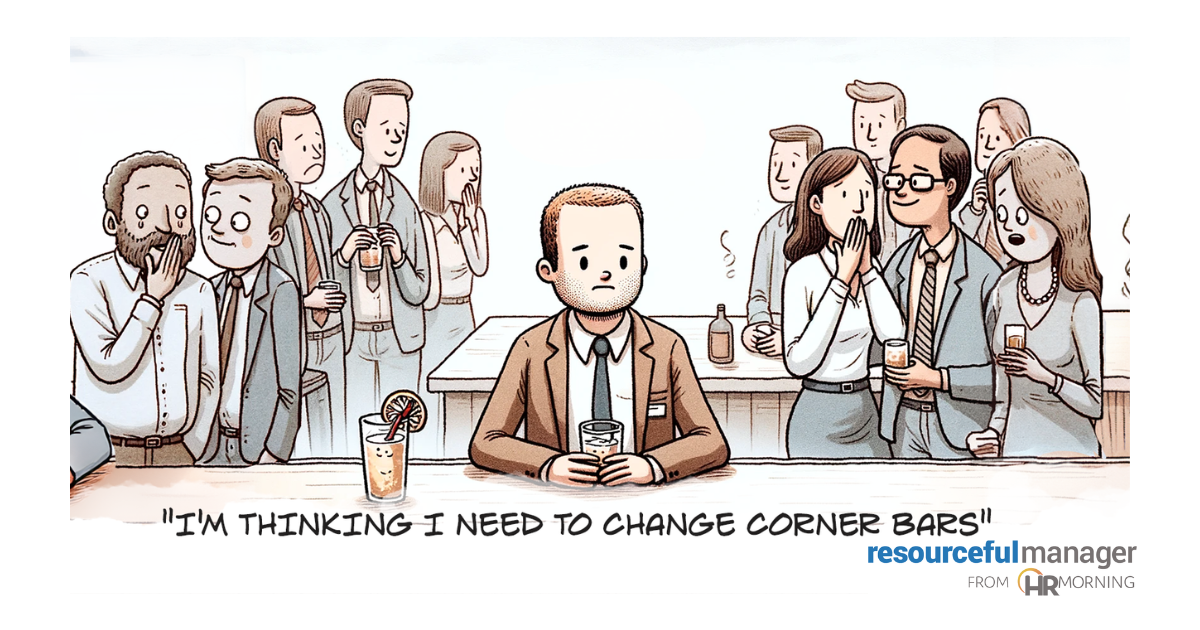
As Cappelli puts it: “Happy hours with your co-workers generally involve complaining about your bosses. So if you are the manager and you get invited, you should go. But be prepared to buy the first drinks and then go home. They don’t want you there. Even though you may feel you’re still buddies with these people, the relationship has changed — a lot.”

2. Set Expectations

Some new managers want to maintain the status quo. Others want to shake up everything. Either way, many don’t set the proper expectations, leaving employees to wonder what’s up, what’s next and what’s happened.

Rather than have them test you in some ways or wait to see how you’ll manage, make it clear. Cappelli suggests new managers explain that:

  • You won’t micromanage
  • You’ll deal with the people above you
  • You’re ready to help with problems when they bring them to you, and
  • You will give objective, regular feedback.

3. Set Boundaries

This goes hand-in-hand with friendships: As a new manager, you’ll need to set new boundaries. That means you want to let employees know that in your new role, you need to maintain confidentiality. You won’t be able to answer all the questions all the time.

At the same time, you want to ensure them that you are obligated and committed to their confidentiality when they request it.

“You’re not employed as a friend or a therapist. You’re employed as a supervisor, and there are resources that you can direct them to,” Cappelli says in his research. “And trying to fix someone’s life problems can take up most of your time, every day. Plus, being a supervisor with formal authority over people comes with legal obligations, one of which is the duty of care … The big lesson here is knowing when to bring in people who know more about this stuff than you do, like HR — and that’s almost always sooner than you think.”

4. Step In on Conflict

One thing most managers dislike is conflict. And one thing new managers often do is try to avoid it.

First, new managers want to recognize that conflict is inevitable on the team — and sometimes, conflict is a good thing. But new managers must step in and do something most of the time.

Fortunately, that doesn’t mean you need to smooth over or resolve every conflict. What is critical: You handle internal conflict with impartiality. While this isn’t a full tutorial on handling conflict, consider it a guideline until you take a course or read more:

  • Acknowledge conflict. Whether you’re in a conflict with an employee or colleague, or you have to help employees at odds, don’t think it will resolve itself. Schedule a meeting quickly to address it.
  • Listen and show empathy. You need to hear every side of the situation to fully understand it. Tell everyone you understand where they’re coming from (once you actually do, of course).
  • Focus on the issue, not the people. This is especially important when you’re involved in the conflict.
  • Encourage collaboration. Ask everyone involved to collaborate on a solution that aligns with your team goals.

5. Run a Meeting Well

In the Oji study, one of employees’ top complaints about new managers was their inability to run a productive meeting. That means, employees felt like their time was wasted — and they got less than they would like to get done.

I recently saw this mantra: No agenda, no attenda.

So take that as your first tip on running productive meetings. Don’t bother if you don’t have — and distribute — an agenda with a purpose, action and expected result. And tell your people that if they see an agenda that doesn’t seem productive for them, they can opt out of the meeting.

6. Make Decisions Quickly

Managers make thousands of decisions a day — To go or for here? Now or later? Turkey or ham? But it’s the decisions that affect your team that matter most at work.

Most managers aren’t trained to make effective decisions. They often rely on experience, their gut or questionable authority.

There are formulas and advice everywhere on making decisions. And a new manager’s abilities to do it well will evolve with time. One of the best pieces of advice is from Jeff Bezos: Make decisions when you have 70% of the information you think you need. If you wait for 90%, it’ll be too late.

Find more tips on making good, fast decisions here.

7. Give Quality Feedback

Feedback, like conflict, is often difficult for new managers to give — especially when they’ve been promoted from the ranks. And especially when it’s negative.

But the simplest advice here is: Give it often. When you step into a management role, tell employees you’ll give them feedback on the spot, in regular meetings and when they request it. Employees should never question where they stand.

And for those who are reluctant to give feedback, heed advice from here.

Filed under
RM Logo
  • Leadership & Strategy
  • Share on

Get the HRMorning Newsletter

With HRMorning arriving in your inbox, you will never miss critical stories on labor laws, benefits, retention and onboarding strategies.

  • This field is for validation purposes and should be left unchanged.
  • This field is hidden when viewing the form
  • This field is hidden when viewing the form
  • This field is hidden when viewing the form
  • This field is hidden when viewing the form
  • This field is hidden when viewing the form
  • This field is hidden when viewing the form
  • This field is hidden when viewing the form
  • This field is hidden when viewing the form
  • This field is hidden when viewing the form
  • This field is hidden when viewing the form
  • This field is hidden when viewing the form
  • This field is hidden when viewing the form
  • This field is hidden when viewing the form
  • This field is hidden when viewing the form
  • This field is hidden when viewing the form
  • This field is hidden when viewing the form
  • This field is hidden when viewing the form
  • This field is hidden when viewing the form
  • This field is hidden when viewing the form
  • This field is hidden when viewing the form
  • This field is hidden when viewing the form
  • This field is hidden when viewing the form
  • This field is hidden when viewing the form
  • This field is hidden when viewing the form
  • This field is hidden when viewing the form
  • This field is hidden when viewing the form
  • This field is hidden when viewing the form
  • This field is hidden when viewing the form
  • This field is hidden when viewing the form
  • This field is hidden when viewing the form
  • This field is hidden when viewing the form
  • This field is hidden when viewing the form
  • This field is hidden when viewing the form
  • This field is hidden when viewing the form
  • This field is hidden when viewing the form
  • This field is hidden when viewing the form
  • This field is hidden when viewing the form
  • This field is hidden when viewing the form
  • This field is hidden when viewing the form
  • This field is hidden when viewing the form
  • This field is hidden when viewing the form
  • This field is hidden when viewing the form
  • This field is hidden when viewing the form
  • This field is hidden when viewing the form
  • This field is hidden when viewing the form
  • This field is hidden when viewing the form
  • This field is hidden when viewing the form
  • This field is hidden when viewing the form
  • This field is hidden when viewing the form
  • This field is hidden when viewing the form
  • This field is hidden when viewing the form
  • This field is hidden when viewing the form
  • This field is hidden when viewing the form
  • This field is hidden when viewing the form
  • This field is hidden when viewing the form
  • This field is hidden when viewing the form

Free Training & Resources

White Papers

Unconventional Benefits: An Employer’s Guide

Provided by Paycom

White Papers

HSA Survey & Myths Infographic

White Papers

TriNet – The Total Economic Impact of TriNet PEO (Forrester TEI Report)

Provided by TriNet

Webinars

Beyond Burnout: How Employers Can Make a Difference for Workers in Crisis

SPONSORED CONTENT

HR Technology

sponsored content
The Best AI Software for HR Automation

Courtesy of G-P

Talent Management

sponsored content
Powerful Employee Retention Strategies for 2025: How to Keep Your Best People

Courtesy of PEOPLEGURU

Benefits

Health Care

Wellness

sponsored content
Proven Results: 5 Ways Teladoc Health Chronic Condition Management Transforms HR Outcomes

Courtesy of TELADOC HEALTH

Further Reading

  • Leadership & Strategy
6 Big Manager Mistakes That Can Get Your Company Sued

What’s the most common reason well-meaning employers end up in court? Manager mistakes that quietly turn into six-figure legal problems. ...

  • Leadership & Strategy
January Turnover Warning: 38% Plan Job Searches

The great job freeze of 2025 is starting to thaw – and January turnover risks are rising. HR has a short window before employees start jo...

  • HR Technology
  • Leadership & Strategy
LMS Strategy: How HR Expectations Are Changing

Learning Management System (LMS) platforms were originally designed to manage required employee training. Today, that definition is startin...

  • Leadership & Strategy
Horrible Bosses: 12 Signs They’re in Your Midst

As far as bosses go, the majority aren’t stellar. In fact, a Stagwell study found that 71% of the employees surveyed have had a t...

  • Leadership & Strategy
The Kiss Cam Scandal: 3 Overlooked Implications for HR

You’ve seen the kiss cam scandal. And you’ve probably thought of how it affects HR. After all, one of the culprits involved ...

  • Leadership & Strategy
Need your idea heard? Never spend more than 7 minutes to say it

Want your idea heard — and acted on? Can you get just a few minutes with decision-makers? Need to make an impact fast? Whatever yo...

Get the latest from HRMorning in your inbox PLUS immediately access 10 FREE HR guides.

I WANT MY FREE GUIDES
HR Morning Logo
  • Facebook
  • Linked In
  • ABOUT HRMORNING
  • ADVERTISE WITH US
  • WRITE FOR US
  • CONTACT
  • Employment Law
  • Benefits
  • Recruiting
  • Talent Management
  • Performance Management
  • HR Technology
  • Leadership & Strategy
  • Compensation
  • Policy & Procedures
  • Wellness
  • Staff Departure
  • HR Career & Self-Care
  • Health Care
  • Retirement Plans
  • DEI

HRMorning, part of the Rover Insights Network, provides the latest HR and employment law news for HR professionals in the trenches of small-to-medium-sized businesses. Rather than simply regurgitating the day's headlines, HRMorning delivers actionable insights, helping HR execs understand what HR trends mean to their business.

Powered By Rover Insights
Privacy Policy | Terms of Service
Copyright© 2026 Rover Insights
HRMorning Logo

WELCOME BACK!

Enter your username and password below to log in

Forget Your Username or Password?

Reset Password

Lost your password? Please enter your username or email address. You will receive a link to create a new password via email.

Log In

Why do we need your credit card for a free trial?

We ask for your credit card to allow your subscription to continue should you decide to keep your membership beyond the free trial period.  This prevents any interruption of content access.

Your card will not be charged at any point during your 21 day free trial
and you may cancel at any time during your free trial.

During your free trial, you can cancel at any time with a single click on your “Account” page.  It’s that easy.

