Post-Election Fallout: 2 Ways to Manage New Tension in the Workplace

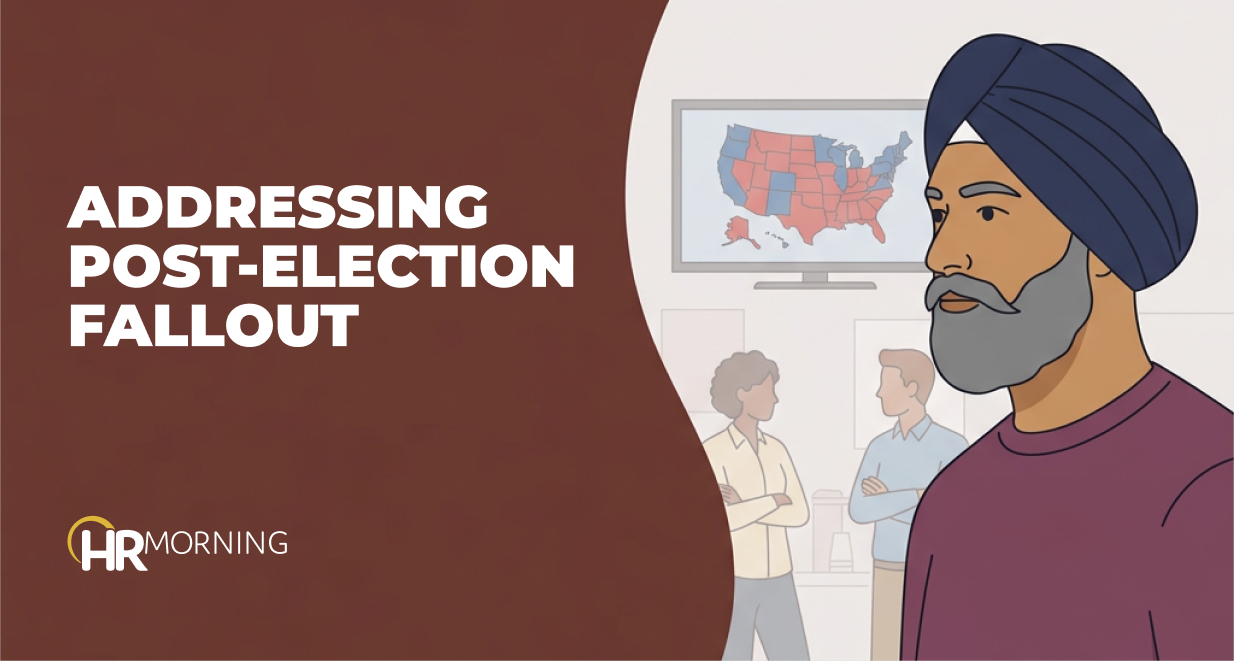
With the midterms over, you’d probably like to put the occasional (or frequent?) contentious moments any election can cause behind you.
But it’s not likely to end with the last vote cast. HR and other leaders often face a recurring challenge in post-election times: acknowledging and managing politically charged moments that can turn up tension in the workplace.
It’s a real concern, considering more than a quarter of employees said they were likely to leave their jobs following the 2024 election due to incivility in the workplace, according to research from SHRM. Fifty-six percent of them said differing political viewpoints was the top driver of the incivility they experienced or witnessed.
Addressing Post-Election Fallout
So, yes, before good employees leave, company culture deteriorates, or worse, harassment occurs, over an election, you might want to address the shift in political control of Congress.
Remaining silent is probably not the best bet, according to David Grossman, CEO of the Grossman Group and a workplace communication expert. But there’s an important distinction between taking a political position and demonstrating leadership.
“Silence is a decision, and employees read it as one,” says Grossman. “Leaders don’t need to weigh in on who won or lost an election. But they do need to recognize that people are bringing different emotions and concerns into the workplace. The opportunity here is to reinforce respect, acknowledge uncertainty and remind employees that they are part of the same team. That’s not political commentary. That’s good leadership.”
Here are two tools to help you address potential post-election fallout:
1. React When Necessary
Like Grossman said, sometimes you can alleviate difficult or contentious conversations in the workplace by addressing what’s happening head-on. When you acknowledge it – without taking a side – you put employees in a more comfortable place.
Whether the message comes from HR, or directly from managers to their employees, some things you might want share:
- We encourage you to feel your feelings without making anyone feel less for their feelings
- Take space and time if you need it
- Remember that part of being a diverse and caring community is that we all have different backgrounds and experiences, and
- Let’s do our part to be extra gentle with ourselves and with each other.
2. Be Proactive in Some Situations
You can recognize when something like election results are sensitive or contentious. Employees are likely talking about it, regardless of whether you’ve created boundaries around what’s appropriate.
That’s the time to get ahead of bigger issues with these conversations.
We’ve previously shared this formula from 15Five, when they wanted to get ahead of an emotional time. It still works for almost any subject:
- Acknowledge that an election can be a deeply personal issue that connects to personal lives, families and faith traditions
- Stress the importance of kindness and respect around the wide spectrum of beliefs on political issues
- Explain how miscommunication can easily happen on forums like Slack and email, and
- Offer other communication outlets to discuss issues such as with the leadership team or HR department.
- Share on


Free Training & Resources
White Papers
Provided by Maven Clinic