
An ‘Insecurity Tax’ Could Hurt Retention: 4 Solutions to Keep Your Talent
By
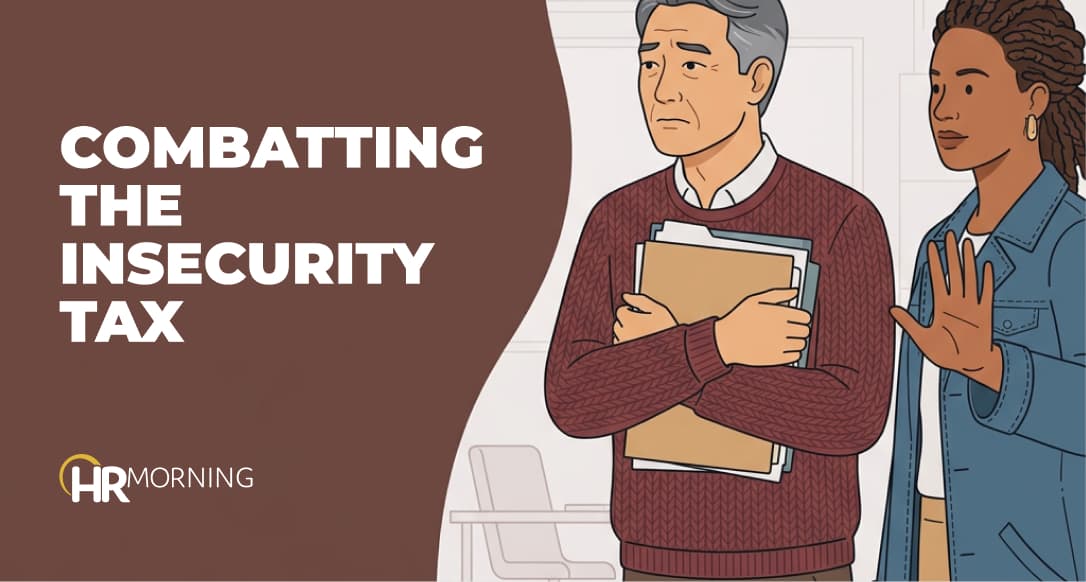
The last decade of corporate churn might have revealed this surprising lesson: One of the biggest threats to retention isn’t compensation, remote work or even AI.
It could be managerial insecurity. When leadership is rooted in a manager’s personal anxiety, organizational behavior becomes entirely predictable. Micromanagement, hoarding authority, avoiding constructive dissent, and making defensive decisions to protect ego rather than advance the enterprise’s mission often happen in the workplace.
This could be an operational vulnerability that costs businesses real money — something I refer to as an “Insecurity Tax.”
According to the Society for Human Resource Management (SHRM), toxic workplace cultures and poor management driven by these behaviors have cost U.S. employers over $223 billion in employee turnover. Furthermore, Gallup research reveals that managers account for 70% of the variance in team engagement, yet companies fail to choose the candidate with the right management talent 82% of the time.
Insecurity, Toxicity Erodes Culture
In my work as a Marine officer and leadership coach, I’ve seen how insecure leadership erodes culture long before anyone notices the symptoms. A promising employee proposes a faster way to execute a workflow, but an insecure manager immediately reframes it as a threat: Who will get credit? Who will be displaced? Who will look bad?
The result is a culture that rewards caution and punishes initiative. High performers leave, middle performers linger, and company velocity stalls.
Some dismiss these stories as individual personality flaws; yet, for HR leaders tasked with workforce planning, the resulting fallout proves it’s a systemic failure. The antidote isn’t motivational posters or feel-good retreats. It’s a repeatable leadership architecture that flips the incentive from personal preservation to organizational succession. I call it Lead Last, a practical framework built on counterintuitive principles grounded in humility, emotional intelligence, and long-term vision.
As HR executives and people leaders, you can implement four operational shifts to reverse the Insecurity Tax within your leadership pipelines.
1. Shift Care from Performative to Operational
Psychological safety has become a slogan, hashtag, and corporate buzzword. But safety is more than a “vibe.” Drawing from Dr. Stephen Covey’s Emotional Bank Account concept, HR teams must train managers to treat care as a series of deliberate operational deposits and withdrawals:
- Deposits: Active listening to explore ideas, transparent check-ins so employees know where they stand, and direct, growth-oriented correction instead of passive-aggressive behavior.
- Withdrawals: Gossip (defined as giving feedback, positive or negative, in a person’s absence), erratic moods, and conflict avoidance.
HR leaders must give managers the tools to keep this ledger balanced: praise that is measurable, correction that is private and constructive, and consistent consequences. Empathy without accountability is abandonment; accountability without empathy is cruelty.
2. Institutionalize Feedback with the CLEAR Model
Most performance conversations fail because they are vague, emotional or inconsistent. When managers operate out of insecurity, they either avoid tough conversations entirely or rely on the ineffective “compliment sandwich,” which confuses employees more than it clarifies.
To standardize performance management, replace ambiguous feedback loops with a repeatable model: CLEAR.
- Clarify the situation
- Lay out the facts
- Explain the impact
- Ask for perspective, and
- Reset expectations with a timeline
Advertisement
With this framework, every correction becomes a short, documented interaction that ends with a concrete next step and a follow-up date. Ambiguity evaporates, accountability becomes predictable, and managers stop defaulting to defensive reactions.
3. Pass the ‘Empty Chair’ Test
The ultimate KPI for any manager is whether the team functions when they are gone. Whereas insecure leaders build systems that collapse without them, secure leaders build systems that scale without them.
HR leaders should evaluate managers not on how indispensable they are, but on how effectively they build talent pipeline continuity. To operationalize this across your organization:
- Standardize meeting rhythms and document decision trees
- Require structured handoff plans for every major project
- Train and empower deputies to make decisions and publish results, and
- Train leaders to make introspection a daily habit through post-decision progress journals and shared “lessons-learned” logs.
Effective leadership creates ripples that extend beyond the immediate moment. Leadership that proves its value by making itself replaceable is leadership that endures.
4. Ensure Emotional Intelligence Outpaces AI
As artificial intelligence automates routine managerial and administrative tasks, the premium on human judgment, trust and emotional intelligence will only rise. Insecure managers will attempt to use technology and automation to surveil and control. Conversely, secure leaders will use it to scale human capability.
AI will not replace emotionally intelligent leaders, but it will rapidly expose insecure ones. The strategic choice for HR executives is clear: Allow unaddressed managerial anxiety to drain your top talent, or institutionalize leadership practices that make your organization resilient.
The Insecurity Tax Is Reversible: HR Action Checklist
Reversing the Insecurity Tax requires moving from theoretical culture talk to tactical, unglamorous execution. As you evaluate your people strategy for this quarter, use this quick checklist to audit your management pipeline:
- Reward succession, not indispensability: Are your promotional paths incentivizing managers to build capable successors, or are they rewarding knowledge hoarding?
- Audit feedback loops: Are managers equipped with a structured model like CLEAR, or are performance conversations still vague and reactive?
- Require one-page handoff plans: Do key roles have documented processes and trained deputies who can step in without operational slowdown?
- Incorporate introspection habits: Are leadership development programs teaching managers how to process feedback as usable data rather than a personal threat?
Converting managerial anxiety into organizational advantage is a sustainable path forward in a changing landscape.
Further Reading
Post-Election Fallout: 2 Ways to Manage New Tension in the Workplace
With the midterms over, you’d probably like to put the occasional (or frequent?) contentious moments any election can cause behind you. But it’s not likely to end with the last vote cast. HR and other leaders often face a recurring challenge in post-election times: acknowledging and managing politically charged moments that can turn up tension […]
Politics at Work: An Election-Season Toolkit for HR Leaders
Employers everywhere are bracing for one of the trickiest challenges of the year as the country goes through another contentious election season. Inflammatory political speech in the workplace is disruptive and can lead to a host of workplace issues ranging from frustration and fractured relationships to claims of harassment and workplace violence incidents. With increasing […]
Are You Keeping Workforce Data Longer Than You Need To?
When an employee leaves, HR closes the personnel file, processes the final paycheck, and shuts off system access. Copies of that employee’s information can remain in places HR does not manage: email archives, collaboration platforms, badge-access logs, fleet telematics systems, and the files of recruiting, payroll and benefits vendors. Some of those records have to […]
How Managers Are the Missing Link in Workforce Capability: 3 Solutions
Managers are the bridge between business strategy, day-to-day execution, and organizational growth. Understanding and developing workforce capability has always been central to that role. And for HR leaders, a manager’s ability to do that well impacts everything from internal mobility and succession planning to retention and workforce readiness. The challenge is that workforce capability is […]
14 Fun Fall Team-Building Activities Employees Will Love
The change of seasons brings a unique way to engage your employees, promote team-building and have some fun with employees. And it couldn’t be more important than right now: Employee engagement has recently dropped to its lowest since 2020, according to Gallup research. Regardless of the time of year, it’s important to maintain employee motivation […]
The CHRO has Outgrown the Operating Model
For years, companies kept changing the nameplate on the top HR job: Personnel became HR, then HR became People or Culture, then People became Talent. You get the drift. And yes, I am going to call all of them Chief Human Resources Officers (CHROs). That is partly because we need to call them something, but […]