10 of the Most Loathed Words at Work

Some things are better left unsaid, especially at work.
And the most loathed words are definitely better left unsaid.
Here’s the problem with buzzwords in the workplace: People might think they sound cool, saying idea harvesting and hyper-tasking. But those words — among many more like them — aren’t effective at getting their point across. Buzzwords don’t help motivate employees, direct projects or clarify information.
New Crop of Most Loathed Words
I’ve been writing about buzzwords (and quite honestly, trying to avoid them) for many years. And some almost always top the list — win-win, and long-hanging fruit come to mind quickly and annoyingly.
But the most recent batch is full of many that were annoying as soon as they hit the street!
“Managers should take a moment to reassess the language they use in the workplace,” says Raymond Lee, President at Careerminds.com. “It’s crucial to recognize that the words we choose can significantly impact team morale and motivation. By opting for clear and meaningful dialogue over jargon, leaders can foster a more inclusive, engaging, and productive environment.”
So let’s look at the most loathed words in the workplace — these are the words to leave behind in 2026. Some of these buzzwords have been around way too long. Some of them have been overused this year.
We’ll show what they’re supposed to mean and the problems they’ve caused, according to our sources at Lake Superior University and CareerMinds.
1. Game Changer
It’s a big phrase, telling us that something is changing everything as we know it. Problem this past year, is that it’s so overused it seems like everything has changed.
And if everything is a game-changer, there’s no real game anymore, is there?
2. Sorry, Not Sorry
While this phrase is popular is wildly popular in the general population, it has crept its way into everyday business conversations. Sorry, not sorry is a half-hearted apology masquerading as bold honesty.
The phrase feels as disingenuous as it sounds. And it’s just plain unprofessional.
3. 100%
As the pollers at Lake Superior State University put it: When it comes to this word, “its overuse has left no room for nuance or doubt.” If someone asks you, if you agree, how often do you say, “70%” or “22%”? Probably never.
4. Deliverables
“This one turns inspired projects into a soul-sucking checklist!” the researchers at Careerminds said. What you do is more than a checklist; that’s what deliverables makes people’s work sound like.
You don’t want to reduce work to just items on a list if you want people to gain passion and creativity for it.
5. Balls in the Air
This term paints the picture of someone juggling several balls in the air simultaneously — akin to multi-tasking.
While it’s meant to sound manageable and even fun, it often underplays the real stress and complexity involved in keeping multiple projects moving smoothly.
6. Utilize
This is actually a pet peeve of mine. I’ll let Lake Superior State University give the reason I share: “A classic offender, ‘utilize’ proves that longer is not always better. Why complicate things when ‘use’ works just fine?”
No need for it when you write or speak.
7. Push the Envelope
This phrase either encourages employees to exceed normal limits and innovate or refers to a person who’s already done more — and that could be in a positive or negative way. For instance, someone who pushes the envelope might stand out for getting things done or annoying others.
It’s old and tired at this point. Younger generations probably don’t even understand it!
8. Bleeding Edge
We’ve heard this phrase over the years to describe innovation. But the constant chase for the next big thing can leave teams exhausted. Sometimes you can just get good work done without the hype.
9. Mission Critical
Most of us don’t work in a place where Tom Cruise is fixing everything in a do-or-die mission. Unless it’s a make-or-break moment for the company, you probably don’t need to raise employees’ stress levels with so many criticals.
10. Spidey Sense
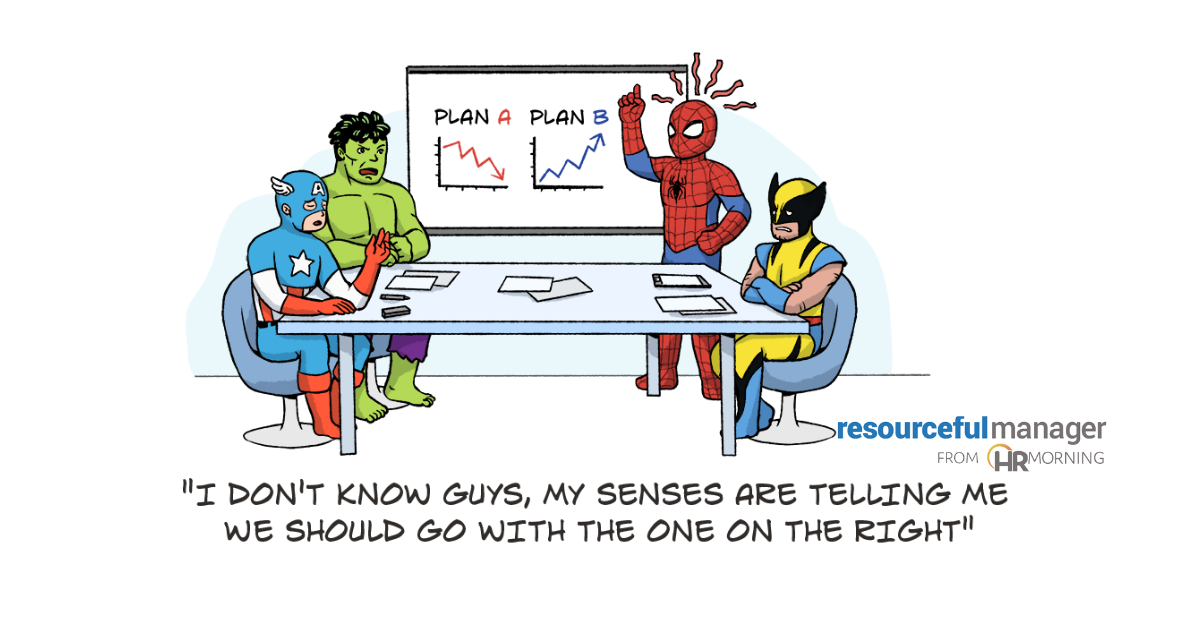
Bet you can guess where this one came from? It’s borrowed from Spider-Man and is used to describe a gut feeling that something might be off. While it’s meant to acknowledge intuition, using it in a serious context can trivialize concerns.
Skip the Most Loathed Words
The objective: Stop using buzzwords — whether they’re this year’s most hated or all-time hated phrases.
To stop:
- Act like you’re talking to Mom. Use the words you’d use to explain something to her — and that almost never includes buzzwords, industry jargon or cursing!
- Be more specific. If you drop a buzzword, finish off with something specific. For instance, instead of, “By Friday let’s have the deliverables,” say “By Friday, let’s have what we’ve completed condensed into a one-page report and the next steps defined and assigned.”
- Eliminate them from writing. You can’t erase what’s been said, but you can erase the written word before it’s been delivered. Start to pull buzzwords from what you write, and they’ll come out of the spoken word more easily.

- Share on


Free Training & Resources
White Papers
Provided by AbsenceSoft