• Skip to primary navigation
  • Skip to main content

HRMorning

  • FREE RESOURCES
  • PREMIUM CONTENT
  • HR DEEP DIVES
  • PODCASTS
    • VOICES OF HR
    • WOMEN’S LEADERSHIP TODAY
  • LOGIN
  • SIGN UP FREE
  • Employment Law
  • Benefits
  • Recruiting
  • HR Technology
  • Payroll
  • Management
  • Women’s Leadership
  • More
    • Talent Management
    • Performance Management
    • Leadership & Strategy
    • Compensation
    • Policy & Procedures
    • Wellness
    • Staff Departure
    • HR Career & Self-Care
    • Health Care
    • Retirement Plans
WLT Logo
  • Business Skills

Presenting with Purpose: Strategies for Translating Knowledge into Action

Michelle Myers
By: Michelle Myers
  • Share on

About the Author

Michelle Myers is a dedicated Creative Content Production Manager overseeing the content strategy and execution for Women's Leadership, HRMorning, and Resourceful Finance Pro. With a keen eye for detail and a passion for creating engaging and informative content, Michelle plays a vital role in delivering high-quality resources to professionals in HR, finance, and women's leadership. Her expertise spans across various content formats, ensuring that each platform provides valuable insights and fosters professional growth. Michelle's commitment to excellence and her ability to manage complex production workflows make her an invaluable asset to her team.

Show Less
Last Updated: May 8, 2023
3 minute engagement

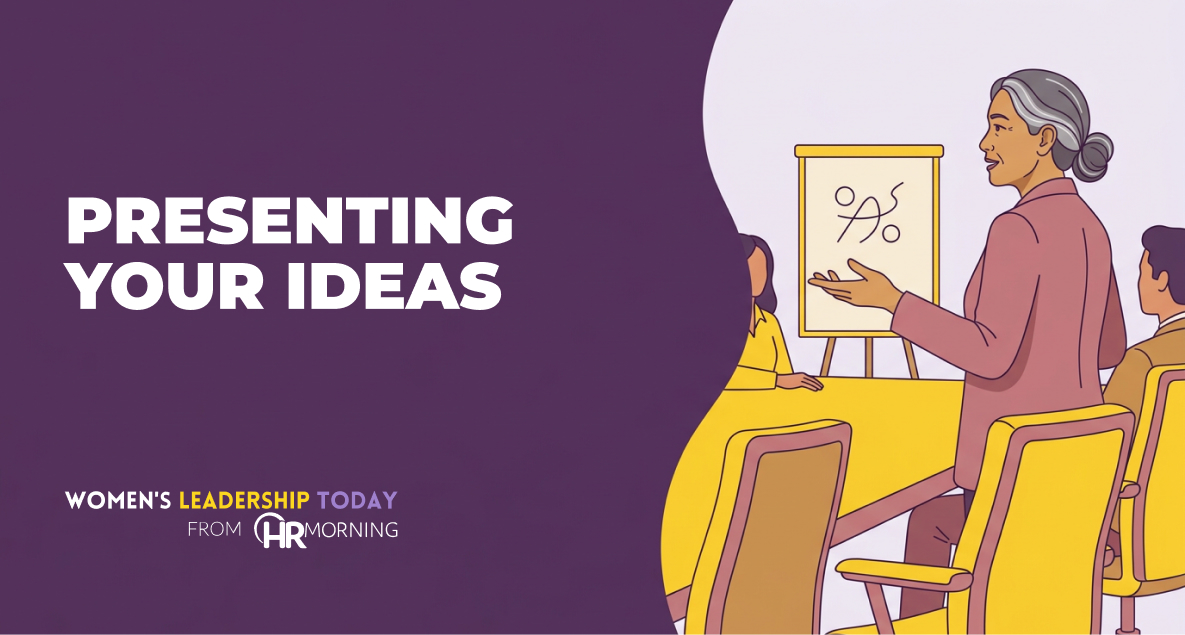
What sets executive presentations apart from standard presentations? The answer is executive presence.

Executive presence is a delivery style that displays confidence and authority on the topic being presented. Senior-level presenters typically have extensive experience related to the subject matter they discuss, and their self-assuredness stands out. They capture the audience’s attention and keep them engaged throughout the presentation, and they articulate their ideas in ways that reach their audience.

Presentation skills are critical for all professionals, especially those who regularly lead meetings and training sessions. Executive presence enables leaders to organize and present information logically while conveying thoughts, facts, and instructions in ways that the audience can understand and appreciate.

By developing your executive presence to increase the impact of your presentations, you can achieve:

  • Increased awareness: When you know how to communicate with your audience, they develop a deeper understanding of what you have to say. This creates a more prepared and collaborative team that works toward a common goal.
  • Improved productivity: Playing an active role in growing the company can boost your motivation and drive, resulting in increased productivity.
  • Higher morale: Presenting a clear picture of the goals at hand can make your team feel more secure and self-assured. When they understand how achieving daily goals will benefit them, they put in more effort.

Tips for Enhancing Your Presentations

Developing a masterful set of techniques for delivering executive presentations takes time and practice. As you progress in your professional role, you’ll gradually discover your own unique strategies. However, if you’re looking for a few tips to employ right away, the following may help you enhance your executive presence and deliver more impactful presentations:

  • Keep Your Audience in Mind: Just like any business interaction, it’s essential to tailor your words and delivery to your audience. You want to talk to your audience, not at them. Consider their level of experience and familiarity with the topic you’re discussing. For instance, if you’re discussing growth strategies with entry-level employees, it’s best to present them with comprehensive points and actionable instructions, rather than inundating them with statistics and figures.
  • Tell a Story: Your audience will likely connect with your ideas more easily if you present them in a relatable and understandable way. Using a story-telling framework during your presentation can help you take your audience on an informational journey with you. You don’t have to make your story juvenile or silly, but presenting a conflict and a solution using this framing can be incredibly effective.

  • Employ the Pivot Strategy: Sometimes your presentation might not be suitable for linear delivery. Being able to pivot around your points is an excellent skill to have. Practice your presentation and anticipate when or if questions will arise midway through. Be ready to pivot by skipping ahead, reviewing what you’ve already covered, or explaining various points in greater detail. Adaptability is a crucial aspect of executive- level presentations.

While being knowledgeable in specific subjects is an effective way to establish authority, the ability to translate that knowledge into clear instructions is what makes a senior executive equipped to lead a team. You don’t need to remind your audience that you’re experienced, since you’re leading the presentation, they already know that you have it under control.

If you want to take your skills to the next level and deliver stellar presentations, we invite you to register for “Executive Presentation Skills: Speak with Impact & Authority.” This program will provide you with the guidance and support you need to speak with authority and create a lasting impact.

Filed under
WLT Logo
  • Business Skills
  • Share on

Get the HRMorning Newsletter

With HRMorning arriving in your inbox, you will never miss critical stories on labor laws, benefits, retention and onboarding strategies.

  • This field is for validation purposes and should be left unchanged.
  • This field is hidden when viewing the form
  • This field is hidden when viewing the form
  • This field is hidden when viewing the form
  • This field is hidden when viewing the form
  • This field is hidden when viewing the form
  • This field is hidden when viewing the form
  • This field is hidden when viewing the form
  • This field is hidden when viewing the form
  • This field is hidden when viewing the form
  • This field is hidden when viewing the form
  • This field is hidden when viewing the form
  • This field is hidden when viewing the form
  • This field is hidden when viewing the form
  • This field is hidden when viewing the form
  • This field is hidden when viewing the form
  • This field is hidden when viewing the form
  • This field is hidden when viewing the form
  • This field is hidden when viewing the form
  • This field is hidden when viewing the form
  • This field is hidden when viewing the form
  • This field is hidden when viewing the form
  • This field is hidden when viewing the form
  • This field is hidden when viewing the form
  • This field is hidden when viewing the form
  • This field is hidden when viewing the form
  • This field is hidden when viewing the form
  • This field is hidden when viewing the form
  • This field is hidden when viewing the form
  • This field is hidden when viewing the form
  • This field is hidden when viewing the form
  • This field is hidden when viewing the form
  • This field is hidden when viewing the form
  • This field is hidden when viewing the form
  • This field is hidden when viewing the form
  • This field is hidden when viewing the form
  • This field is hidden when viewing the form
  • This field is hidden when viewing the form
  • This field is hidden when viewing the form
  • This field is hidden when viewing the form
  • This field is hidden when viewing the form
  • This field is hidden when viewing the form
  • This field is hidden when viewing the form
  • This field is hidden when viewing the form
  • This field is hidden when viewing the form
  • This field is hidden when viewing the form
  • This field is hidden when viewing the form
  • This field is hidden when viewing the form
  • This field is hidden when viewing the form
  • This field is hidden when viewing the form
  • This field is hidden when viewing the form
  • This field is hidden when viewing the form
  • This field is hidden when viewing the form
  • This field is hidden when viewing the form
  • This field is hidden when viewing the form
  • This field is hidden when viewing the form
  • This field is hidden when viewing the form

Free Training & Resources

Webinars

Future of Work: Digitizing Workplace Experience

White Papers

HR in 2026: Insights & Best Practices

Webinars

How Hiring Will Change Post COVID-19: 7 tips to hire top talent in the new normal

Webinars

The Future of HR: It’s Employees Doing Their Own Payroll

SPONSORED CONTENT

HR Technology

sponsored content
The Best AI Software for HR Automation

Courtesy of G-P

Talent Management

sponsored content
Powerful Employee Retention Strategies for 2025: How to Keep Your Best People

Courtesy of PEOPLEGURU

Benefits

Health Care

Wellness

sponsored content
Proven Results: 5 Ways Teladoc Health Chronic Condition Management Transforms HR Outcomes

Courtesy of TELADOC HEALTH

Further Reading

  • Business Skills
What’s Your Coaching Super Power? (Take the Quiz Now!)

Coaching is a powerful tool that enables you to help your team members reach their full potential and drive overall success. Effective coac...

  • Business Skills
What’s Your Conflict Style? Take the Quiz!

Not everybody handles conflict the same way. While some are confident and assertive, others might want to avoid conflict like it’s co...

  • Business Skills
Performing Under Pressure: 5 Tips to Avoid Burnout

Burnout is an epidemic affecting the modern workplace today. All of us experience pressure and stress at work at one time or another, but b...

  • Business Skills
When You Need to Intervene: Coaching Your Employees to Greatness

Being a team leader involves a great deal of work; leaders need to be aware of the how, when, and why they are directing their efforts towar...

  • Business Skills
Understanding Workplace Stress – and What to Do About It

Stress is a response to pressure, which can be either negative or positive. Stress is often relatively short-term and is caused by a feeling...

  • Business Skills
6 Quick Tips for Powerful Presentations

Presenting live in front of colleagues can be a valuable career opportunity, but it can also be stressful. A great deck can truly suppo...

Get the latest from HRMorning in your inbox PLUS immediately access 10 FREE HR guides.

I WANT MY FREE GUIDES
HR Morning Logo
  • Facebook
  • Linked In
  • ABOUT HRMORNING
  • ADVERTISE WITH US
  • WRITE FOR US
  • CONTACT
  • Employment Law
  • Benefits
  • Recruiting
  • Talent Management
  • Performance Management
  • HR Technology
  • Leadership & Strategy
  • Compensation
  • Policy & Procedures
  • Wellness
  • Staff Departure
  • HR Career & Self-Care
  • Health Care
  • Retirement Plans
  • DEI

HRMorning, part of the Rover Insights Network, provides the latest HR and employment law news for HR professionals in the trenches of small-to-medium-sized businesses. Rather than simply regurgitating the day's headlines, HRMorning delivers actionable insights, helping HR execs understand what HR trends mean to their business.

Powered By Rover Insights
Privacy Policy | Terms of Service
Copyright© 2026 Rover Insights
HRMorning Logo

WELCOME BACK!

Enter your username and password below to log in

Forget Your Username or Password?

Reset Password

Lost your password? Please enter your username or email address. You will receive a link to create a new password via email.

Log In

Why do we need your credit card for a free trial?

We ask for your credit card to allow your subscription to continue should you decide to keep your membership beyond the free trial period.  This prevents any interruption of content access.

Your card will not be charged at any point during your 21 day free trial
and you may cancel at any time during your free trial.

During your free trial, you can cancel at any time with a single click on your “Account” page.  It’s that easy.