• Skip to primary navigation
  • Skip to main content

HRMorning

  • FREE RESOURCES
  • PREMIUM CONTENT
  • HR DEEP DIVES
  • PODCASTS
    • VOICES OF HR
    • WOMEN’S LEADERSHIP TODAY
  • LOGIN
  • GET STARTED
  • Employment Law
  • Benefits
  • Recruiting
  • HR Technology
  • Payroll
  • Management
  • Women’s Leadership
  • More
    • Talent Management
    • Performance Management
    • Leadership & Strategy
    • Compensation
    • Policy & Procedures
    • Wellness
    • Staff Departure
    • HR Career & Self-Care
    • Health Care
    • Retirement Plans
  • Benefits
  • Employee Services

Well-being: Do employees really believe that HR cares?

Renee Cocchi
By: Renee Cocchi
Read it on Beacon
  • Share on

About the Author

Renée Cocchi has a passion for learning and helping other professionals do their jobs more effectively and efficiently. She earned her Master's Degree from Drexel University, and she’s spent the past few decades working as a writer and editor in the publishing industry. Her experience covers a wide variety of fields from benefits and compensation in HR, to medical, to safety, to business management. Her experience covers trade publications, newsmagazines, and B2B newsletters and websites. When she's not working, she spends her free time just chilling with her family and volunteering at a local dog shelter. Her goal in life is to help all shelter dogs get happy, loving homes!

Show Less
Last Updated: May 23, 2022
3 minute engagement
5 High-impact Ways To Get The Message Across
You read HRMorning's newsletter. Beacon's Daily Brief is the version tuned to you: it skips what you've already read and leads with what you've asked Beacon about. Get your Daily Brief →

Ask any employer where employee well-being ranks on their priority list, and it will likely be close to the top: one thing we’ve learned from The Great Resignation is that employees’ mental health is deeply linked to retention. Employers are taking this seriously – according to a RAND survey, over 80% of large employers provide workplace wellness programs to their employees. However, the latest Gallup poll has revealed only 24% of employees strongly agree that their company cares about employee well-being. HR can’t help but wonder: did the message get lost in translation, or do company efforts still have a long way to go?

Why do employees think employers don’t care?

A Purdue University survey found the top reason why employees opt out of wellness programs is that they don’t see value in what the organization is delivering: 19% reported well-being programs did not meet their needs, and 31% felt well-being programs just added to an over-stuffed plate. Experts from Wellable Labs suggest that when a wellness program doesn’t meet the needs of staff, it can backfire as a feeling of disconnection between an employee and their company, reinforcing perceptions that a program is rooted in branding or cost reduction over concern for employee well-being.

5 high-impact ways to get the message across

It’s vital that employees feel their organization cares about them. No one wants to work for a company that doesn’t care about its employees. So what can you do?

Here are five high-impact ideas that drive the notion that employers care about their people, according to Gallup:

  1. Ask the audience what they want. Ask employees early and often to contribute their ideas for improving well-being in the workplace. Giving your staff power in the decision process will help you eliminate their concerns and show them that the company cares. This will allow employees who are also more likely to participate in a program they suggested.
  2. Give robust recognition for well-being achievements. A critically important psychological need in the workplace is routine recognition. Gallup says it’s a proven driver of numerous business outcomes. So, make it part of your well-being programs. Incentivize employees to pursue programs that provide high well-being and show the company cares about them attaining their goals.
  3. Include employees’ families. Want employees to feel cared about? Include their family’s well-being in programs and activities. Encouraging family member involvement shows not only does the company care about its employees, but it cares about their families, too. 
  4. De-stigmatize employee assistance programs (EAPs). Thirty percent of U.S. workers said they don’t know how to access their company’s EAPs. That’s a big problem. If employees don’t know how to find them, they can’t use them. So, promote them until you’re blue in the face! Emphasize the confidentiality of the EAPs. Many workers avoid them because they are afraid of the stigma associated with some EAPs. Consider automatic pre-enrollment. That way it removes administrative tasks to use the EAPs. And have a large portion of the communications come from executives to drive home the importance of these programs.
  5. Use best-practice communication methods. Create company sharing networks where employees can socialize and share their well-being best practices. Do monthly or quarterly meetings during lunch so employees can share personal practices or goals that others might not be familiar with and could benefit from. This can include useful apps, books, or classes. Lastly, ensure that the program details and its benefits are communicated often and through a variety of channels.

As the COVID-19 pandemic drags on, employee well-being challenges are here to stay. Wellness programs have proven themselves to be worth the effort, yielding fantastic results for company culture and retention when done right. According to the Gallup poll, employees who strongly believe their companies care about well-being are:

  • 69% less likely to look for another job
  • 71% less likely to experience burnout, and
  • Five times more likely to be a promoter of their company

Creating a company-sponsored, employee-driven well-being network shows employees that their organization wants to help them with their wellness pursuits. Supporting employee well-being is the right thing to do – both for employees and for the business they sustain.

Read it on Beacon
Open this article in Beacon, from HRMorning, and ask how it applies to your company. Every answer names its source.
Read it on Beacon
Get HRMorning's newsletter tuned to you every morning: your Daily Brief on Beacon →
Filed under
  • Benefits
  • Employee Services
  • Share on

Get the HRMorning Newsletter

With HRMorning arriving in your inbox, you will never miss critical stories on labor laws, benefits, retention and onboarding strategies.

Get it free with a Beacon account. Beacon keeps your company's HR context at hand, and every answer names its source.
Create my free account

Free Training & Resources

White Papers

How Leading Employers Design Women’s and Family Health Benefits to Drive Outcomes

Provided by Maven Clinic

White Papers

AI HR Prompts

Webinars

Every Family Counts: How to Build an Adoption-Friendly Workplace

Provided by Dave Thomas Foundation for Adoption

White Papers

Building an Incident Management Program? Start With These Four Fundamentals

Provided by Navex

SPONSORED CONTENT

Compensation

Recruiting

sponsored content
Salary Benchmarking: 6 Choices That Decide Whether Your Pay Data Holds Up

Courtesy of MARSH

Employment Law

Policy & Procedures

sponsored content
Policy Rollout: 4 Checkpoints That Show Employees Got the Message

Courtesy of NAVEX

Benefits

Staff Administration

sponsored content
PEO ROI: 3 Numbers to Know Before You Leave Patchwork HR

Courtesy of TRINET

Further Reading

  • Wellness
3 strategies to supercharge wellness benefits

For an organization reevaluating its benefits offerings, wellness is a common area of focus and an opportunity to build a competitive advan...

  • Wellness
Kindness in the Workplace: Why It’s Essential and 8 Ways to Practice It

The world often isn’t a kind place. The workplace should be. Generally, people want to work at a nice place. But being a nice plac...

  • Recruiting
  • Talent Management
What is a talent pool and how can you build a strong one?

Bottom line up front: A talent pool is a database of qualified candidates you can pull from to fill open roles. Candidates in your talent p...

  • Benefits
  • Payroll
Paycheck Advances Are Consumer Loans, CFPB Says in Proposed Rule

Many paycheck-advance products, such as earned-wage access, are consumer loans, the Consumer Financial Protection Bureau (CFPB) recently st...

  • Talent Management
What You Can Do About the Great Detachment: 8 Critical Responses

Employees have increasingly become detached from their work, many holding on by a thread. Gallup researchers coined it the Great Detachm...

  • Talent Management
‘Loud Loyalty’: 6 Ways to Make This Trend Work

Quiet stuff sucks. So let’s embrace what’s new and loud in HR — “Loud Loyalty.” Think about all the quiet ...

Get the latest from HRMorning in your inbox PLUS Beacon, free. Check it before you say it.

GET STARTED FREE
HR Morning Logo
  • Facebook
  • Linked In
  • ABOUT HRMORNING
  • ADVERTISE WITH US
  • WRITE FOR US
  • CONTACT
  • Employment Law
  • Benefits
  • Recruiting
  • Talent Management
  • Performance Management
  • HR Technology
  • Leadership & Strategy
  • Compensation
  • Policy & Procedures
  • Wellness
  • Staff Departure
  • HR Career & Self-Care
  • Health Care
  • Retirement Plans
  • DEI

HRMorning, part of the Rover Insights Network, provides the latest HR and employment law news for HR professionals in the trenches of small-to-medium-sized businesses. Rather than simply regurgitating the day's headlines, HRMorning delivers actionable insights, helping HR execs understand what HR trends mean to their business.

Powered By Rover Insights
Privacy Policy | Terms of Service | HRMorning Insider? Manage your subscription
Copyright© 2026 Rover Insights
HRMorning Logo

WELCOME BACK!

Enter your username and password below to log in

Forget Your Username or Password?

Reset Password

Lost your password? Please enter your username or email address. You will receive a link to create a new password via email.

Log In

Why do we need your credit card for a free trial?

We ask for your credit card to allow your subscription to continue should you decide to keep your membership beyond the free trial period.  This prevents any interruption of content access.

Your card will not be charged at any point during your 21 day free trial
and you may cancel at any time during your free trial.

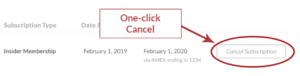
During your free trial, you can cancel at any time with a single click on your “Account” page.  It’s that easy.