
The hidden benefits of holiday gifting
By
The holidays are here and it’s time to start thinking about end-of-year celebrations and rewards like holiday gifts.
Many companies are accustomed to giving a small gift to employees during this season as an appreciation of employees’ hard work and dedication. Between recession fears, hiring freezes, quiet quitting and layoffs, employees have been through a lot this year, so there’s no better time to remind them of their worth.
Putting some extra thought into how – and why – you’re rewarding employees can reap more benefits than you may think.
What do employees want in a holiday gift?
Everyone likes to receive gifts, but for employees, it can be a way to recognize their dedication to the job and reignite their passion for the year to come. But while over half (57%) of employees want to receive an end-of-year reward, only one-third expect a reward at the end of the year, according to new research from Blackhawk Network.
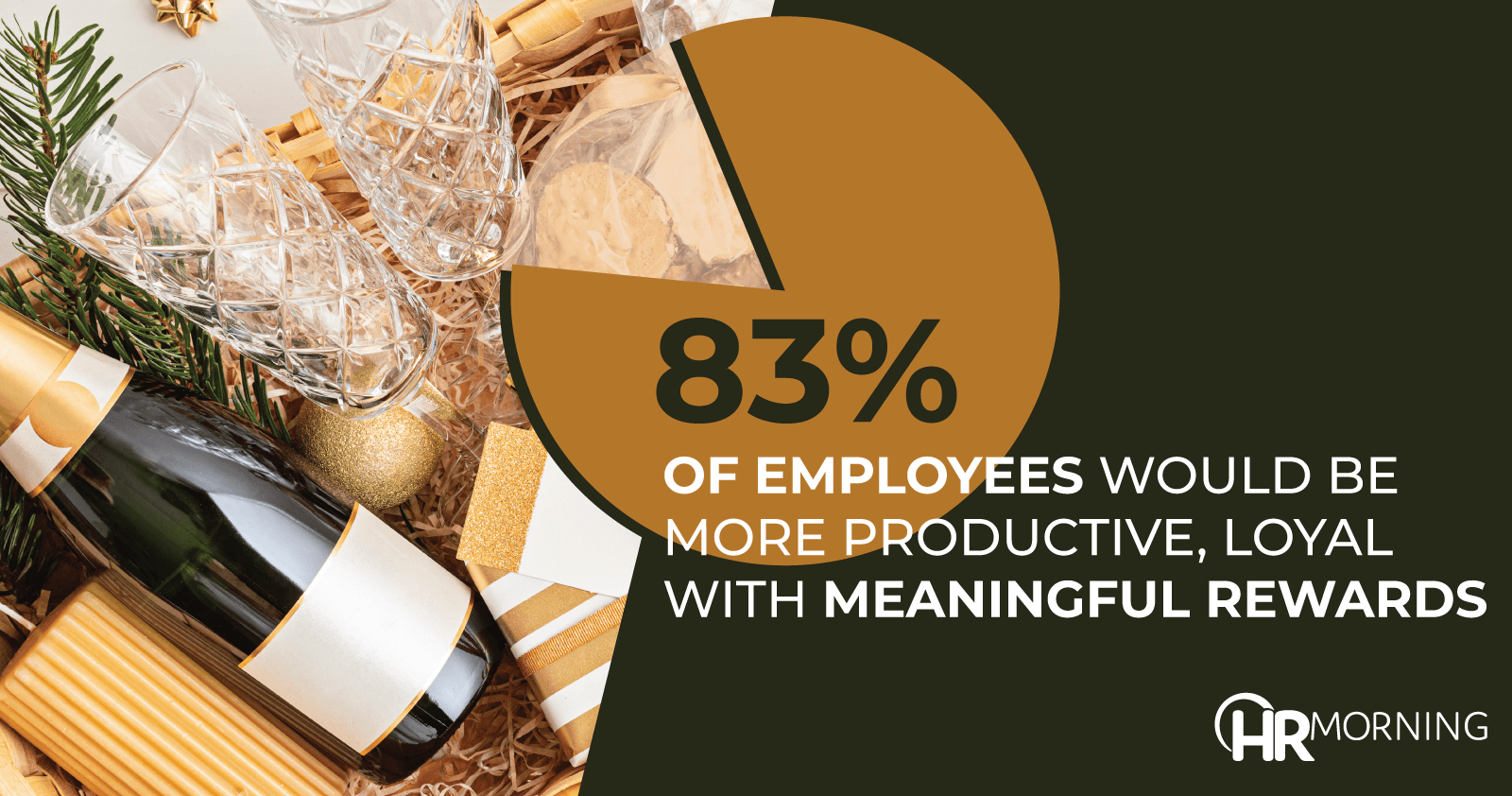
Plus, giving holiday gifts does more than strengthen your relationship with employees. Eighty-three percent of respondents said they would be more productive and loyal if employers gave meaningful recognition and rewards.
White Papers
Building an Adoption-Friendly Workplace: Benefits That Help Families Grow and Employees Stay
Not giving meaningful rewards can even cost you top talent, with four out of every 10 employees saying they would consider leaving their current employer for one offering holiday rewards.
“It’s much less expensive to recognize your existing workforce than paying to recruit, hire, train and onboard new employees,” says Jeff Haughton, SVP, Incentives, Corporate Development & Strategy at Blackhawk Network. “Giving smart holiday rewards can serve as long-term investments that pay significant dividends for you and your employees – not just during the holidays, but all year round.”
According to the survey, the top rewards employees would prefer include:
- Prepaid and gift cards (84%)
- Additional vacation days (40%)
- Food gifts (29%), and
- Physical gifts (28%).
How to make the most out of holiday rewards
Holiday rewards can be hit-or-miss, especially when considering the different needs of your workforce. While younger employees may want an added benefit such as vacation days, other employees may want something a little more traditional, such as a food gift or gift card.
Although it’s impossible to please everyone, here are some best practices to make sure your holiday gifts have a positive impact on employees as they head into the new year.
Understand employee needs. While giving gifts is great, giving the wrong gift can do more harm than good. For example, only 2% of respondents said their top reward choice would be an office party. Other less meaningful gifts can make employees feel like they don’t matter or that employers don’t care, and cause feelings of resentment going into the new year.
Advertisement
Go digital. While about a quarter (28%) of respondents would like a physical gift, 77% think that digital prepaid and gift cards are an appropriate reward. Making whatever gift you choose to give your workforce digital can help easily distribute gifts and is a better option for hybrid or remote workforces than physical gifts.
Don’t stop when the holidays are over. According to research from Blackhawk Network, nearly 75% of respondents want to be rewarded at least quarterly. Instead of stopping with holiday gifts, consider using it as a jumping-off point to continue showing your recognition to employees year-round by offering small gifts every so often in 2023, such as adding funds to a prepaid card.
Further Reading
Clocks Fall Back Nov. 1: A Payroll Checklist for the Extra Hour
When daylight saving time ends, employees on the clock when the time changes at 2 a.m. pick up an additional hour. Payroll teams need to make sure that hour is credited and paid this run. This year, the clocks fall back one hour on Nov. 1, despite a late push to make daylight saving time […]
Wyoming UI Taxable Wage Base Rises for 2027
Wyoming’s unemployment insurance (UI) wage base rises to $34,900 per employee in 2027, up from $33,800 in 2026. The $1,100 increase takes effect Jan. 1 and increases the wages subject to each employer’s assigned UI tax rate. The change doesn’t set an employer’s tax rate. All employers receive a base rate plus four additional rate […]
FLSA Compliance Guide 2026: Wage and Hour Rules for HR
The Department of Labor’s Wage and Hour Division recovered more than $259 million in back wages for nearly 177,000 employees in fiscal year 2025, the most since 2019. The lion’s share – more than $184 million – involved violations of the Fair Labor Standards Act (FLSA). Federal wage-and-hour policy changed this year, too, affecting exemption […]
FMLA Eligibility: Do ‘Bonus Hours’ Count Toward the 1,250?
FMLA eligibility usually looks straightforward: Employees need 1,250 hours of service in the prior 12 months. But the calculation isn’t always that simple, especially when bonus pay or shift differentials come into play. This well-established Sixth Circuit precedent – Mutchler v. Dunlap Memorial Hospital – shows how “hours worked” questions can end up in court. […]
DOL Restores Overtime Salary Threshold to $684 in Final Rule Update
The Department of Labor (DOL) has finalized a technical amendment restoring the 2019 overtime salary threshold to the Code of Federal Regulations (CFR) following two federal court decisions that invalidated the 2024 rule. For HR and payroll teams, the amendment closes the loop on the litigation and confirms which federal salary thresholds govern exempt classifications. […]
WNBA Agreement Puts New Spotlight on Pay Disparity: 8 Takeaways for HR
You’d think a near-400 % pay increase for a group of women in the spotlight would finally ease the tension over pay disparity. But the “transformational” WNBA collective bargaining agreement might not spill over into corporate America as easily as a rim shot. The deal is a big deal: WNBA player salaries will range between […]