SHRM Owes $400K After Rescinding Job Offer Over Service Dog

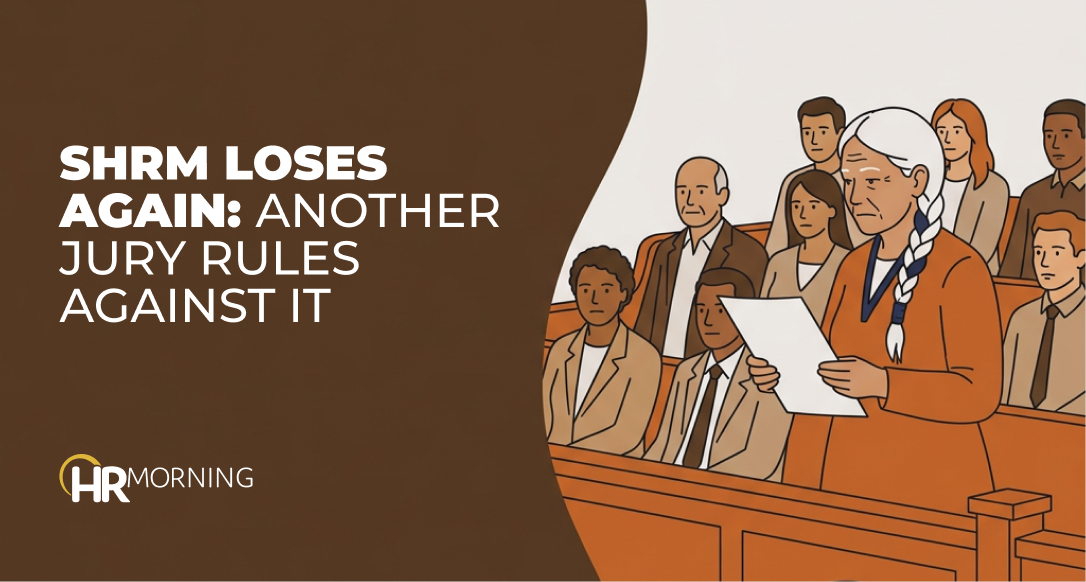
SHRM has been found liable for failing to accommodate a job applicant who uses a service dog to manage Type 1 diabetes – a violation of the federal Americans with Disabilities Act (ADA) and state law.
On Oct. 9, a federal jury in Virginia awarded Fiona Torres $400,000 in compensatory damages; it declined to award punitive damages.
How the Job Offer Fell Apart
According to Torres’ complaint, she had accepted an offer for a senior specialist position in SHRM’s product management department in June 2024. She then asked to bring her service dog to the Alexandria office. The dog alerts her when her blood sugar approaches dangerous levels. She said she experienced life-threatening blackouts before getting the dog and only one in the eight years since. SHRM rescinded the job offer in July.
At trial, SHRM argued it had proposed alternate accommodations. It also pointed to the lack of a doctor’s prescription for the dog and the fact that Torres sometimes goes without her service animal when exercising or traveling.
The Interactive Process Wasn’t the Problem
Here’s where this gets interesting for HR: The jury agreed that SHRM engaged in the interactive process in a timely manner and in good faith. Even so, it found SHRM failed to provide reasonable accommodations under the ADA and the Virginia Human Rights Act.
The jury also found that SHRM rescinded the offer because it would’ve had to accommodate Torres. That finding supported liability under the ADA, even though jurors rejected her separate claim that the organization rescinded the offer because of her disability itself.
In other words, SHRM got credit for how it handled the discussion but not for the outcome. Going through the interactive process doesn’t settle the question of whether the accommodation you offer will work. HR can do everything right in the discussion and still face liability if the accommodation it ultimately offers doesn’t work.
SHRM disagrees with the verdict and is considering an appeal. In a statement, it described accommodation as a dialogue, not a dictation, and raised concerns that the verdict could be interpreted as requiring employers to grant whatever accommodation an employee requests.
What HR Should Take From This
The key is making sure the alternative you offer addresses the limitation the employee raised. That requires more than showing you considered options or offered something you thought was reasonable.
In Torres’ case, she said the dog alerts her to potentially dangerous changes in her blood sugar levels. Any alternative SHRM proposed needed to account for that specific function the service dog provides. If an alternative wouldn’t provide effective protection, offering it wouldn’t resolve the accommodation request.
The case also provides an important reminder that accommodation obligations apply to job applicants. An offer can’t be revoked just because an accommodation request complicates the hiring process. If the request is still being evaluated, keep working through the options and document the basis for any decision.
The Job Accommodation Network’s guidance on accommodation during hiring offers practical help with requests at that stage.
Another Jury Loss for SHRM
This verdict comes about 10 months after a Colorado jury found SHRM liable for race discrimination and retaliation against former instructional designer Rehab Mohamed. That jury awarded Mohamed $1.5 million in compensatory damages and $10 million in punitive damages. A trial court denied SHRM’s request to set the verdict aside. SHRM is appealing.
More info: Torres v. Society for Human Resource Management jury verdict
- Share on