• Skip to primary navigation
  • Skip to main content

HRMorning

  • FREE RESOURCES
  • PREMIUM CONTENT
  • HR DEEP DIVES
  • PODCASTS
    • VOICES OF HR
    • WOMEN’S LEADERSHIP TODAY
  • LOGIN
  • SIGN UP FREE
  • Employment Law
  • Benefits
  • Recruiting
  • HR Technology
  • Payroll
  • Management
  • Women’s Leadership
  • More
    • Talent Management
    • Performance Management
    • Leadership & Strategy
    • Compensation
    • Policy & Procedures
    • Wellness
    • Staff Departure
    • HR Career & Self-Care
    • Health Care
    • Retirement Plans
RM Logo
  • Work Location

9 Ways to Be Better at Remote Work

Michele McGovern
By: Michele McGovern
  • Share on

About the Author

Michele McGovern writes. A lot. These days, she covers HR, digging deep into company culture, DEI, leadership, management and the everchanging world of work. In the years between getting a BA in journalism from a state school and writing about HR, she wrote about big-city crime for a wire service and small-town life for local newspapers. She’s a mediocre mom, decent wife, wannabe athlete and consummate pursuer of fun - on land, snow and water. Find her on LinkedIn @michele-mcgovern-writer.

Show Less
Last Updated: September 9, 2024
4 minute engagement
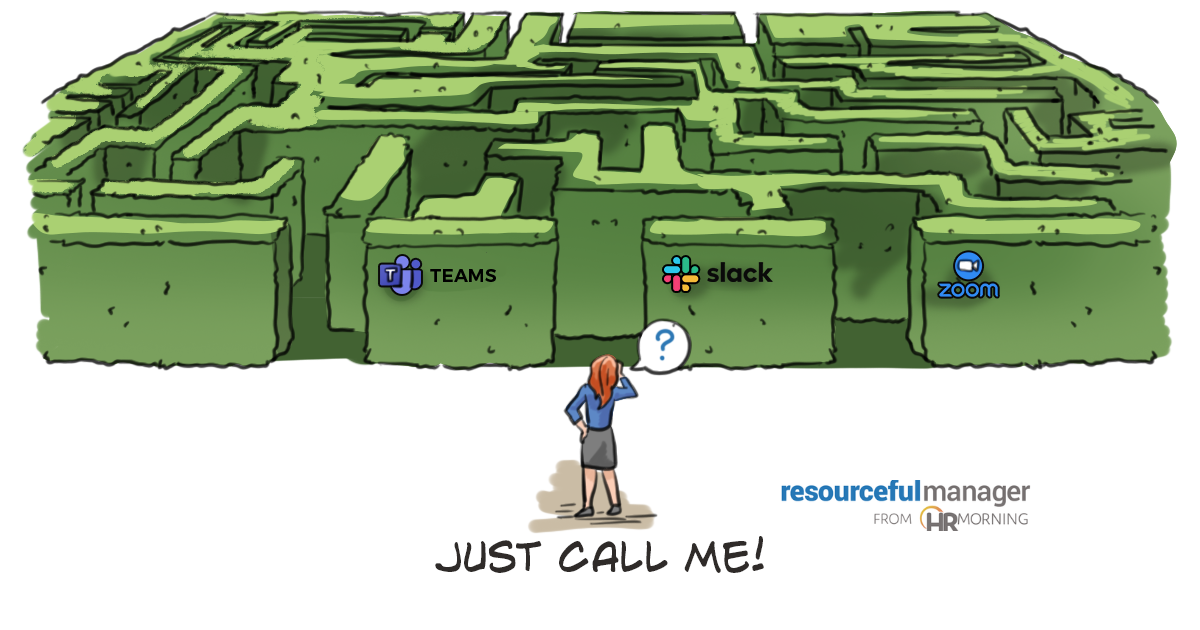
A woman looks at a hedge maze with 3 enterances - one labled msteams, one labled slack, and the third labeled zoom. She has recieved the message "just call me" and not sure which enterance to go into.

At this point, you’d think we’d be better at remote work.

But it turns out, employees, teams and bosses still struggle to make remote work seamless.

Fifty-three percent of remote workers say itÂ’s difficult to feel connected to their coworkers, a Pew Research study found. About 70% of remote workers feel burned out from using so many digital communication tools, a Forbes Advisor analysis found.

Why We Need to Be Better at Remote

Despite the drawbacks, 98% of employees would like to work remotely part or all of the time for the rest of their careers, according to research from Buffer.

“ThereÂ’s plenty of data to back up the benefits of working remotely so work will continue even with the challenges ahead,” says John Williams, Head of Marketing at The Instant Group. “With planning, open lines of communication and the right tech, thereÂ’s no reason why companies canÂ’t run successful remote teams for short periods or even integrate more into their future approach on a permanent basis.”

Since it’s in the future, let’s be better at remote work.

Here are the three critical areas of remote work and how to improve them.

Communication

We don’t communicate as well as we could when people work remotely. Yes, we have the tools. But we lack what face-to-face communication brings to the table:

  • opportunity and ability to read body language
  • spontaneous, fruitful discussions
  • synchronous, effective feedback, and
  • genuine personal connection.

Texts, phone calls, Zoom meetings and instant messaging (IM) can’t fully replace any of that. So we want to be more mindful of remote communication.

Several tips:

  • Set communication expectations. Determine the channels you use for different types of communication — for instance, email for longer formatted information and IM apps for pressing issues. Decide on the expectations for responses to messages also, noting when people are NOT expected to respond.
  • Ensure clarity. Four things to remember when communicating remotely: 1) Use simple terminology, not jargon, 2) Write in short, concise sentences, 3) Use bullet points, and 4) Use a short story to illustrate a point when necessary.
  • Use reliable communication tools such as Slack, Microsoft Teams, or Zoom for different types of communication needs (chat, video calls, project management) rather than relying solely on personal cell phones.
  • Build in one-on-one time with each employee. Managers want to schedule regular catch-ups with agendas so your people can plan accordingly.
  • Make sure you’re aligned. Survey remote employees to get feedback on communication practices and how they’re impacted. Adjust over time as some tools will outlive their usefulness.

Culture

Culture is generally built easier within a shared workspace. There, it’s usually embraced and built stronger. That’s why it’s important to put in more effort to build culture with dispersed teams.

To build a better remote culture, Instant Offices suggests:

  • Team building: Make the effort to foster communication and build relationships like we did during the pandemic when we couldn’t see people. For instance, create an “office social life” by planning regular meetups, lunches and team building activities to boost team morale. Try virtual happy hours or coffee breaks, water cooler Slack chats where people can drop in when they need a break to discuss non-work subjects, and monthly book or movie club meetings.
  • Recognition: Use the meet-ups and Zoom calls for public recognition and rewards. Send shout-outs in a team chat, during meetings or on an app board devoted to recognition.
  • Offer professional and personal development. Show you value employees by helping them succeed and become the best versions of themselves. Offer online or “lunch and learn” sessions on subjects that help them with finances, career development, well-being and beyond. Establish mentor programs so newer employees can connect with seasoned employees to build a sense of belonging.

Comfort

How and where employees work remotely impacts remote work efficiency and satisfaction. Help employees with these practical work tips:

  • Set a schedule. We won’t say “stick to a schedule” because realistically, we can’t always! But when remote employees maintain routines, they can stay as productive as if they were in an office.
  • Set regular breaks. Stepping away for lunch, movement or regular breaks helps keep burnout at bay.
  • Start and end the workday. Establishing a routine to start and end days helps build a barrier between work and life. ItÂ’s crucial to be able to switch off.
  • Choose the best work area. Set up in an area of the home thatÂ’s comfortable, quiet, and set up for productivity.
Filed under
RM Logo
  • Work Location
  • Share on

Get the HRMorning Newsletter

With HRMorning arriving in your inbox, you will never miss critical stories on labor laws, benefits, retention and onboarding strategies.

  • This field is for validation purposes and should be left unchanged.
  • This field is hidden when viewing the form
  • This field is hidden when viewing the form
  • This field is hidden when viewing the form
  • This field is hidden when viewing the form
  • This field is hidden when viewing the form
  • This field is hidden when viewing the form
  • This field is hidden when viewing the form
  • This field is hidden when viewing the form
  • This field is hidden when viewing the form
  • This field is hidden when viewing the form
  • This field is hidden when viewing the form
  • This field is hidden when viewing the form
  • This field is hidden when viewing the form
  • This field is hidden when viewing the form
  • This field is hidden when viewing the form
  • This field is hidden when viewing the form
  • This field is hidden when viewing the form
  • This field is hidden when viewing the form
  • This field is hidden when viewing the form
  • This field is hidden when viewing the form
  • This field is hidden when viewing the form
  • This field is hidden when viewing the form
  • This field is hidden when viewing the form
  • This field is hidden when viewing the form
  • This field is hidden when viewing the form
  • This field is hidden when viewing the form
  • This field is hidden when viewing the form
  • This field is hidden when viewing the form
  • This field is hidden when viewing the form
  • This field is hidden when viewing the form
  • This field is hidden when viewing the form
  • This field is hidden when viewing the form
  • This field is hidden when viewing the form
  • This field is hidden when viewing the form
  • This field is hidden when viewing the form
  • This field is hidden when viewing the form
  • This field is hidden when viewing the form
  • This field is hidden when viewing the form
  • This field is hidden when viewing the form
  • This field is hidden when viewing the form
  • This field is hidden when viewing the form
  • This field is hidden when viewing the form
  • This field is hidden when viewing the form
  • This field is hidden when viewing the form
  • This field is hidden when viewing the form
  • This field is hidden when viewing the form
  • This field is hidden when viewing the form
  • This field is hidden when viewing the form
  • This field is hidden when viewing the form
  • This field is hidden when viewing the form
  • This field is hidden when viewing the form
  • This field is hidden when viewing the form
  • This field is hidden when viewing the form
  • This field is hidden when viewing the form
  • This field is hidden when viewing the form
  • This field is hidden when viewing the form

Free Training & Resources

Webinars

Rethink Onboarding: Turn Early Moments into Long-Term Engagement

Provided by Alight

White Papers

9 Questions to Determine if It is Time to Reboot Your Employee Discount Program

Provided by PerkSpot

Webinars

Beyond Compliance: Building Trust Through AI Governance in HR

Provided by Paycom

Webinars

The Generational Guide: Attracting, Retaining & Managing Millennial and Gen Z Talent

SPONSORED CONTENT

HR Technology

sponsored content
The Best AI Software for HR Automation

Courtesy of G-P

Talent Management

sponsored content
Powerful Employee Retention Strategies for 2025: How to Keep Your Best People

Courtesy of PEOPLEGURU

Benefits

Health Care

Wellness

sponsored content
Proven Results: 5 Ways Teladoc Health Chronic Condition Management Transforms HR Outcomes

Courtesy of TELADOC HEALTH

Further Reading

  • Work Location
What’s Really Behind the RTO Battle? 5 Ways to Make Peace

What’s really behind the RTO battle? Could it be personal freedom vs. corporate control? Autonomy vs. micromanagement? The C-suit...

  • Employment Law
  • Recruiting
Is Geographical Discrimination Legal? What HR Needs to Know

As remote and hybrid work continue to evolve, some employees are finding themselves on the receiving end of unexpected ultimatums: Relocate...

  • Talent Management
  • Work Location
Best practices for a hybrid work environment that benefits the company and your people

In the post-pandemic world, many organizations are still experimenting with optimization of employee hybrid work schedules. In an episo...

  • Employment Law
  • Work Location
New RTO lawsuit: Company cut bonus in half because employee worked from home

As the RTO wars continue, employers are pushing hard to get workers back into their cubicles, with some going so far as to “incentivizeâ€...

Get the latest from HRMorning in your inbox PLUS immediately access 10 FREE HR guides.

I WANT MY FREE GUIDES
HR Morning Logo
  • Facebook
  • Linked In
  • ABOUT HRMORNING
  • ADVERTISE WITH US
  • WRITE FOR US
  • CONTACT
  • Employment Law
  • Benefits
  • Recruiting
  • Talent Management
  • Performance Management
  • HR Technology
  • Leadership & Strategy
  • Compensation
  • Policy & Procedures
  • Wellness
  • Staff Departure
  • HR Career & Self-Care
  • Health Care
  • Retirement Plans
  • DEI

HRMorning, part of the Rover Insights Network, provides the latest HR and employment law news for HR professionals in the trenches of small-to-medium-sized businesses. Rather than simply regurgitating the day's headlines, HRMorning delivers actionable insights, helping HR execs understand what HR trends mean to their business.

Powered By Rover Insights
Privacy Policy | Terms of Service
Copyright© 2026 Rover Insights
HRMorning Logo

WELCOME BACK!

Enter your username and password below to log in

Forget Your Username or Password?

Reset Password

Lost your password? Please enter your username or email address. You will receive a link to create a new password via email.

Log In

Why do we need your credit card for a free trial?

We ask for your credit card to allow your subscription to continue should you decide to keep your membership beyond the free trial period.  This prevents any interruption of content access.

Your card will not be charged at any point during your 21 day free trial
and you may cancel at any time during your free trial.

During your free trial, you can cancel at any time with a single click on your “Account” page.  It’s that easy.