• Skip to primary navigation
  • Skip to main content

HRMorning

  • FREE RESOURCES
  • PREMIUM CONTENT
  • HR DEEP DIVES
  • PODCASTS
    • VOICES OF HR
    • WOMEN’S LEADERSHIP TODAY
  • LOGIN
  • SIGN UP FREE
  • Employment Law
  • Benefits
  • Recruiting
  • HR Technology
  • Payroll
  • Management
  • Women’s Leadership
  • More
    • Talent Management
    • Performance Management
    • Leadership & Strategy
    • Compensation
    • Policy & Procedures
    • Wellness
    • Staff Departure
    • HR Career & Self-Care
    • Health Care
    • Retirement Plans
RM Logo
  • Performance Management

Remote & Hybrid Employee Feedback: 6 Tips to Make It More Effective

Michele McGovern
By: Michele McGovern
  • Share on

About the Author

Michele McGovern writes. A lot. These days, she covers HR, digging deep into company culture, DEI, leadership, management and the everchanging world of work. In the years between getting a BA in journalism from a state school and writing about HR, she wrote about big-city crime for a wire service and small-town life for local newspapers. She’s a mediocre mom, decent wife, wannabe athlete and consummate pursuer of fun - on land, snow and water. Find her on LinkedIn @michele-mcgovern-writer.

Show Less
Last Updated: September 7, 2026
4 minute engagement

Nearly every manager will need to give feedback to employees who aren’t always onsite.

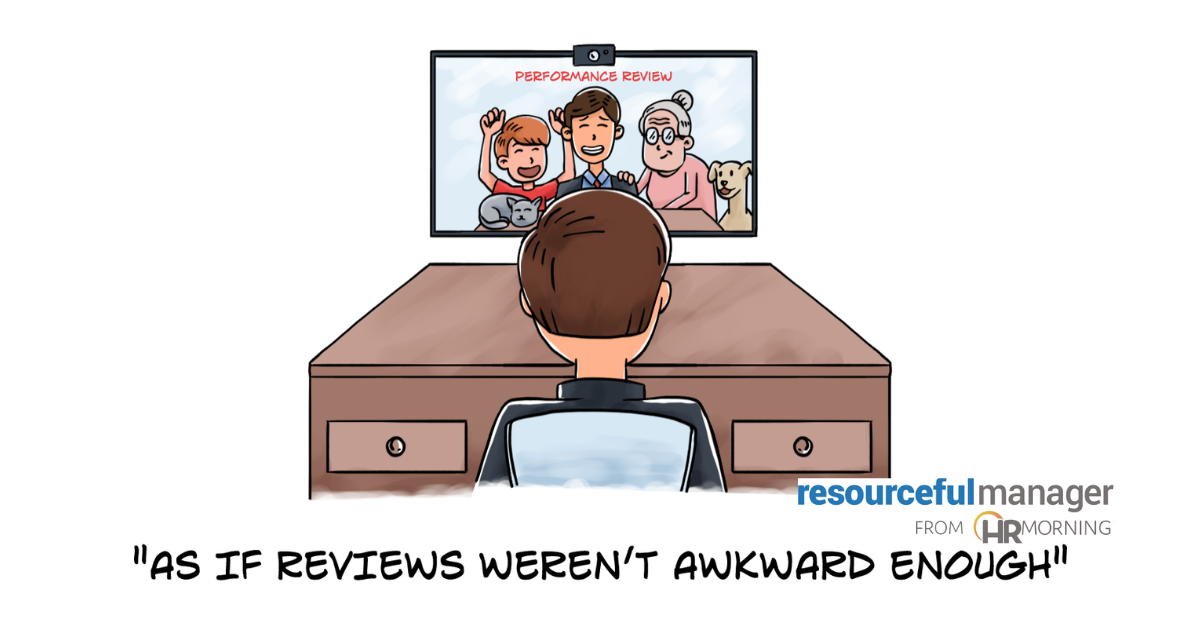
More than a third of employees do some or all of their work remotely, according to the Bureau of Labor Statistics. So you can only imagine that feedback with remote and hybrid employees — people who don’t interact with their boss as much as on-site employees — could be extra awkward.

Employee Feedback of the Future

But managers don’t just have to handle potentially awkward conversations now. Feedback with remote and hybrid employees needs to be handled a bit differently than traditional feedback.

“With fewer face-to-face encounters, feedback conversations can seem more awkward than ever,” says Carolyn Stern, CEO of EI Experience, and author of The Emotionally Strong Leader.

The future of employee feedback is here. Here are six tips to help you and your employees working remotely get the most out of it.

1. Measure Remote Abilities

Naturally, you want to cover how well employees handle their job duties. Add to that how well employees handle working remotely. If they’re going to be hybrid, you want to establish expectations and measurements for managing remote work responsibilities.

So make time and place to cover:

  • Technology access, use and capabilities
  • Managing more than one workspace
  • Transitioning from place to place
  • Availability when offsite
  • Interaction onsite, and
  • The balance of productivity between workspaces.

At the same time, find out if employees have the resources they need to make the hybrid work situation efficient.

2. Plan to Be Spontaneous

Plan several feedback sessions throughout the year (annual reviews are a thing of the past). But be prepared and willing to give feedback any time.

“It is not necessary to wait until an employee’s next performance review to schedule a meeting. If a manager has feedback that will help an employee, share it,” says Stern.

Point is, if you have feedback that’ll help employees do their jobs better – or stop doing something that inhibits their performance – then give it immediately. And because you’re dealing with hybrid work, step into a meeting space onsite or get on a video call when you’re off premises.

3. Practice the SBI Model

One way to ensure you’re always ready to give effective employee feedback: Follow the SBI Model – that’s for Situation-Behavior-Impact.

You pick a specific moment or an isolated behavior and how it impacts productivity or relationships. Here’s an example:

  • Situation: Be specific about where and when. “I noticed in this morning’s meeting …”
  • Behavior: Describe the behavior, not what you or the employee might have been thinking. “… you interrupted Jenny three times while she had the floor.”
  • Impact: Identify the specific result of the behavior and include a feeling. “That’s frustrating for me, not being able to hear what she has to say, and it’s frustrating for speakers to not be able to finish their thoughts.”

From there, you can ask the employee for feedback on ways to improve the situation.

4. Check Your Intent

Regardless of when or where you give feedback, the purpose is to help employees improve performance. It’s time to check anger, disappointment and judgment at the door.

So, test your emotions before you move forward on planned or impromptu feedback. Are you thinking about venting or coaching? Do you want to criticize or help? Are you angry or concerned?

Act on the latter of each choice. Pause if you feel the former of each choice. Hold off on making the call or scheduling a Zoom.

5. Focus on Action

Because you don’t see people who are hybrid as much – and perhaps because you work different schedules, too – action and follow-up are even more critical.

Be specific with action-oriented language. For instance, “You’ll want to do X going forward” or “Taking this approach will produce immediate results. First, you’ll need to …”

From there, put the actions that you and employees will take following the feedback session in writing. You might send an email and get written agreement to the exact next steps, when you’ll review progress and the expected outcomes.

6. Make Time for Positive Feedback

The old feedback sandwich approach isn’t ideal anymore. Employees hear two positive notes (the bread) and one negative note (the meat), and they’ll remember the good stuff. And never improve the bad stuff.

But this doesn’t mean you want to skip positive feedback, especially in a hybrid work setting where feedback can happen too seldom.

Just separate the two. When you have feedback that’s focused on making improvements or changes, give it alone. When you have positive feedback, give it immediately, in person (via video, if one of you is remote) and with purpose.

Filed under
RM Logo
  • Performance Management
  • Share on

Get the HRMorning Newsletter

With HRMorning arriving in your inbox, you will never miss critical stories on labor laws, benefits, retention and onboarding strategies.

  • This field is for validation purposes and should be left unchanged.
  • This field is hidden when viewing the form
  • This field is hidden when viewing the form
  • This field is hidden when viewing the form
  • This field is hidden when viewing the form
  • This field is hidden when viewing the form
  • This field is hidden when viewing the form
  • This field is hidden when viewing the form
  • This field is hidden when viewing the form
  • This field is hidden when viewing the form
  • This field is hidden when viewing the form
  • This field is hidden when viewing the form
  • This field is hidden when viewing the form
  • This field is hidden when viewing the form
  • This field is hidden when viewing the form
  • This field is hidden when viewing the form
  • This field is hidden when viewing the form
  • This field is hidden when viewing the form
  • This field is hidden when viewing the form
  • This field is hidden when viewing the form
  • This field is hidden when viewing the form
  • This field is hidden when viewing the form
  • This field is hidden when viewing the form
  • This field is hidden when viewing the form
  • This field is hidden when viewing the form
  • This field is hidden when viewing the form
  • This field is hidden when viewing the form
  • This field is hidden when viewing the form
  • This field is hidden when viewing the form
  • This field is hidden when viewing the form
  • This field is hidden when viewing the form
  • This field is hidden when viewing the form
  • This field is hidden when viewing the form
  • This field is hidden when viewing the form
  • This field is hidden when viewing the form
  • This field is hidden when viewing the form
  • This field is hidden when viewing the form
  • This field is hidden when viewing the form
  • This field is hidden when viewing the form
  • This field is hidden when viewing the form
  • This field is hidden when viewing the form
  • This field is hidden when viewing the form
  • This field is hidden when viewing the form
  • This field is hidden when viewing the form
  • This field is hidden when viewing the form
  • This field is hidden when viewing the form
  • This field is hidden when viewing the form
  • This field is hidden when viewing the form
  • This field is hidden when viewing the form
  • This field is hidden when viewing the form
  • This field is hidden when viewing the form
  • This field is hidden when viewing the form
  • This field is hidden when viewing the form
  • This field is hidden when viewing the form
  • This field is hidden when viewing the form
  • This field is hidden when viewing the form
  • This field is hidden when viewing the form

Free Training & Resources

Webinars

2026 Workplace Compliance Trends

Provided by Paycom

White Papers

The Business Case for Maven Clinic

Provided by Maven Clinic

White Papers

HSA Employee Survey Kit

Webinars

Your Policy Changed. Did Employee Behavior?

Provided by Navex

SPONSORED CONTENT

HR Technology

sponsored content
The Best AI Software for HR Automation

Courtesy of G-P

Talent Management

sponsored content
Powerful Employee Retention Strategies for 2025: How to Keep Your Best People

Courtesy of PEOPLEGURU

Benefits

Health Care

Wellness

sponsored content
Proven Results: 5 Ways Teladoc Health Chronic Condition Management Transforms HR Outcomes

Courtesy of TELADOC HEALTH

Further Reading

  • Performance Management
Can We Talk? Where Performance Conversations Run Off the Rails

Let’s say you finally decided to talk to an employee about his performance. You’ve put it off for some time, because …...

  • Performance Management
17 Dumb Writing Mistakes You Want to Avoid

You’re a smart leader. You don’t make dumb writing mistakes, right? Or do you? Here’s the problem with management ...

  • Performance Management
Unbossing: 3 Cons, 3 Pros & 10 Takeaways

Unbossing: the systematic elimination of middle managers. If you’re an employee, unbossing sounds like a great idea — until ...

  • Performance Management
I Used AI to Do My Work for 1 Month — And This Is How It Affected My Job

Would you let AI do your job for you? After all, if AI could do your work, you probably wouldn’t have a job. That’s why ...

  • Performance Management
5 conversations managers need to have with employees – but avoid

Admit it: You’ve put off conversations with employees because they were weird. We’re not talking about uncomfortable conversatio...

  • HR Technology
  • Performance Management
16 Practical Questions to Ask Performance Management Software Vendors (Plus 32 Follow-Up Questions)

Performance management software preserves the proof HR needs when stakes are high – informing merit increases and promotions while backin...

Get the latest from HRMorning in your inbox PLUS immediately access 10 FREE HR guides.

I WANT MY FREE GUIDES
HR Morning Logo
  • Facebook
  • Linked In
  • ABOUT HRMORNING
  • ADVERTISE WITH US
  • WRITE FOR US
  • CONTACT
  • Employment Law
  • Benefits
  • Recruiting
  • Talent Management
  • Performance Management
  • HR Technology
  • Leadership & Strategy
  • Compensation
  • Policy & Procedures
  • Wellness
  • Staff Departure
  • HR Career & Self-Care
  • Health Care
  • Retirement Plans
  • DEI

HRMorning, part of the Rover Insights Network, provides the latest HR and employment law news for HR professionals in the trenches of small-to-medium-sized businesses. Rather than simply regurgitating the day's headlines, HRMorning delivers actionable insights, helping HR execs understand what HR trends mean to their business.

Powered By Rover Insights
Privacy Policy | Terms of Service
Copyright© 2026 Rover Insights
HRMorning Logo

WELCOME BACK!

Enter your username and password below to log in

Forget Your Username or Password?

Reset Password

Lost your password? Please enter your username or email address. You will receive a link to create a new password via email.

Log In

Why do we need your credit card for a free trial?

We ask for your credit card to allow your subscription to continue should you decide to keep your membership beyond the free trial period.  This prevents any interruption of content access.

Your card will not be charged at any point during your 21 day free trial
and you may cancel at any time during your free trial.

During your free trial, you can cancel at any time with a single click on your “Account” page.  It’s that easy.