Hate Difficult Conversations? 3 Approaches to Ease the Pain (for Everyone)

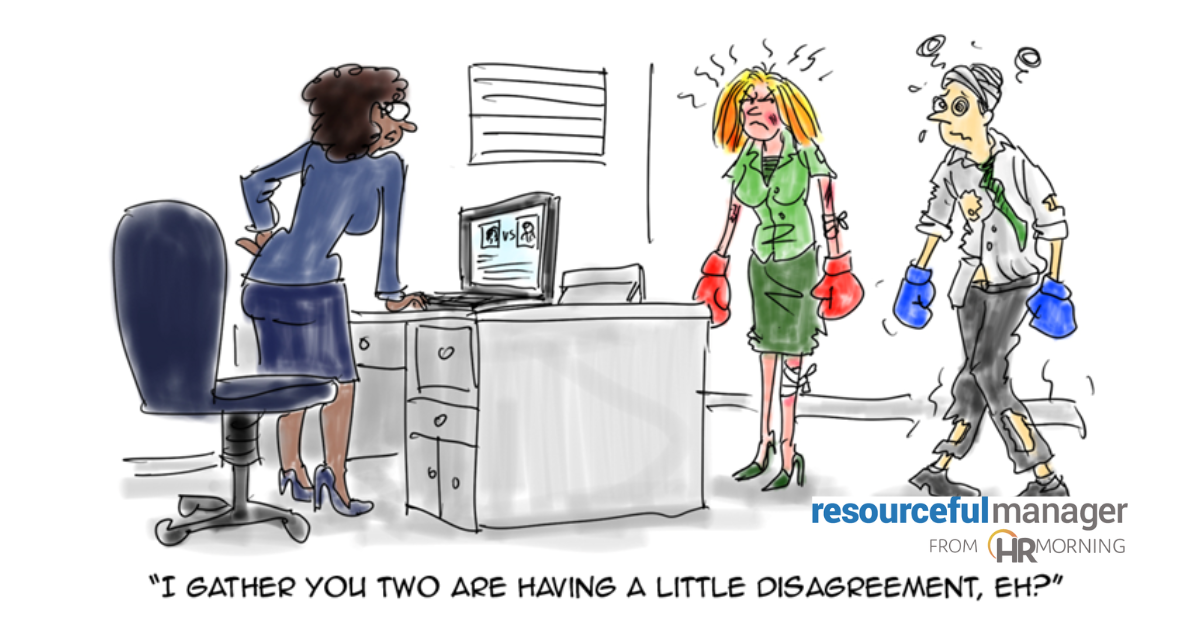
When you manage people, sooner or later you’ll find yourself in a situation where you need to have a difficult conversation you’d rather avoid.
In fact, two-thirds of managers avoid or delay giving negative feedback — often because they anticipate a negative reaction, according to a Leadership IQ study.
You’ve probably faced it, too: A project blows up, and people are pointing fingers. There’s a conflict between two employees that’s getting destructively personal. One of your colleagues seems to be sabotaging your employee.
It’s not an easy aspect of leadership, but difficult conversations are part of the job … so you can’t avoid them.
First Rule, Don’t Delay
Despite a potentially awkward conversation, the consequences of not having it can spiral into something worse.
So you can’t put it off, much less delay the conversation.
Change The Approach
Instead, try some different twists to your usual approach to make those dreaded talks a lot less painful.
How we present ourselves during difficult conversations can make them go more smoothly be more effective. Try to take the emotion out of the conversation. Difficult talks are loaded with at least a little drama, so being as objective as possible makes them go more smoothly.
Try these approaches for your different roles and with different people to improve the most difficult conversations:
1. With a Peer: Be a Concerned Teammate
Let’s say an employee tells you a manager in another department is purposely sabotaging a project she’s leading. You may not be sure what the manager may or may not actually have done — or even what his motivations might be — the employee vows to take her concerns up the ladder until “something is done.”
Since you’re friendly with the other manager, you want to give him a heads-up before things start to spiral out of control. Ideally, do this in a supportive environment — perhaps on a lunch break or during a mid-afternoon walk — so the conversation can begin more relaxed.
This approach signals that you’re not taking a side and not jumping to conclusions. Then relay only what you were told without inserting personal comments or gossip.
There may be denial and some pushback. But the fact is you’re a peer and not a boss. You hold no power or authority over this person.
You’re talking as a concerned colleague to give him a chance to see the situation as it develops and perhaps make the best adjustments.
2. With a Superior: Be a Trusted Lieutenant
Sometimes you must have a difficult conversation with a superior, and that may be even more stressful if you think the person won’t react well to what you have to say.
It’s normal to think that if they dont react well to the conversation, it may hurt your career.
In such cases, always remember you work for the organization, not your bosses, and your first duty is to the company.
Also, keep in mind that if you were the boss and there was a potentially bad situation you weren’t aware of, you’d likely want an employee to bring it to your attention.
Open with just that thought when you have the conversation. Then come right out with it. Limit yourself to facts or concrete observations, not rumors or conjecture.
By treating your boss in the way you’d want to be treated, you show loyalty and trustworthiness. The more open and honest you are, the less likely your boss will want to choke the messenger — he or she may even thank you.
3. With Employees: Be an Objective Mediator
Some difficult conversations involve playing peacemaker between your direct reports and other co-workers.
Emotions are probably running high by the time you hear about the problem, so you know going in the discussion could get testy.
In those situations, you’re better off meeting with both sides separately before getting them in the same room to hammer out an agreement. Listen to everyone involved and try to see their point of view, even if you disagree with it.
Find points that both sides can agree on, then assemble everyone together. Rather than ending unpleasantly, the conversation could inspire both parties to adopt your consensus-building attitude.
Remember, the reason some conversations are so difficult is that you’re dealing with others’ conflicting opinions, ideas and emotions. It pays to tailor your approach from one of judgment to one of support.

- Share on


Free Training & Resources
White Papers
Provided by AbsenceSoft
Webinars
Provided by Mitratech