Employees Have FOBO: 5 Important Factors to Manage the AI Anxiety

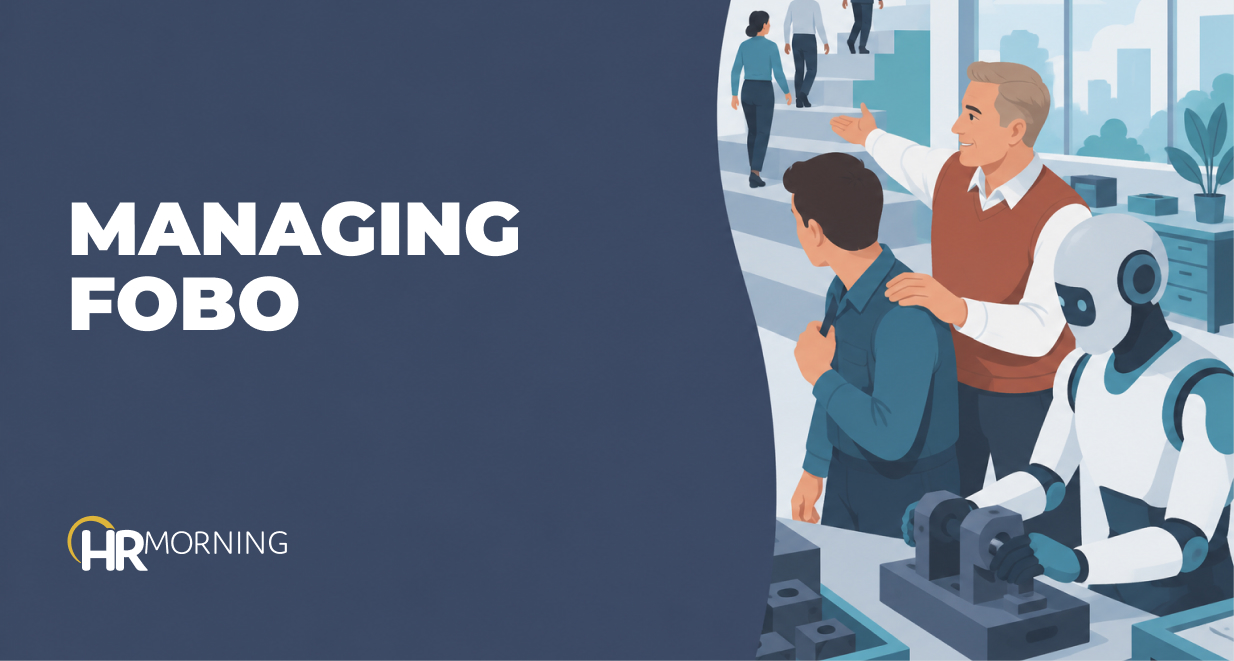
Many employees are struggling with AI in ways you didn’t even imagine. They have FOBO – fear of becoming obsolete.
And that fear has the potential to paralyze them — making the possibility of becoming obsolete a reality.
“AI has accelerated that shift over the past year: tasks are being automated and employees are watching responsibilities disappear from their own job descriptions,” said Sandra Moran, Chief Marketing and Customer Experience Officer at Schoox. “The problem is uncertainty. People do not know which skills matter now, or what their roles will look like six months from now.”
FOBO Affects Employees, Employers
FOBO — similar to its cultural cousin FOMO (fear of missing out) — is a growing trend. Employees are afraid their skills, experience or role could become outdated. Some fear they won’t be able to adapt to technology, especially AI capabilities; then they’ll lose credibility and their jobs.
In fact, more than 60% of employees worry their jobs could be “disrupted”—i.e., require new skills, change in demands, or simply become obsolete. More than 55% experience anxiety about becoming obsolete in their field, according to research from ETS.
Employers are concerned, too: Nearly three-quarters of companies use AI, according to research from an Express Employment Professionals-Harris poll. But 55% of leaders don’t feel they have the resources to help employees use it effectively.
“Many organizations are spending a fortune deploying AI across their operations and often leaving their people to guess if they will still have a job in the end,” said Moran.
Identifying FOBO
Some employees will outright say they’re afraid of becoming a thing of the past or losing their job. Most won’t. Because FOBO can be paralyzing, you want to help employees recognize it … and move forward.
“FOBO builds gradually, which makes it easy to miss,” said Moran. “Watch for changes in an employee’s confidence, engagement and willingness to adapt … Left unaddressed, that uncertainty can impact their everyday work.”
What to Do in the Face of FOBO
A fair percentage of your employees have FOBO. You might even have it. So you can’t ignore it. You want to address FOBO by telling employees that roles will likely change, but their jobs won’t go away. Of course, if you plan on eliminating roles, you want to be transparent.
“That starts with identifying the skills that employees will need and delivering practical, role-specific training they can apply immediately,” said Moran. “This is especially important for frontline workers. According to Schoox’s research, 66% of young frontline workers say their company doesn’t provide the right training to help them perform better.”
You’ll want to:
- Provide specific training. Work with IT and your vendor, or through organizations geared toward hands-on AI training for continuous learning.
- Create a skills map. With AI skills mapping, you define “what skills the job actually requires, understand the skills employees have today, and, close the gap with targeted training,” Moran said.
- Create career paths. Make the path visible so employees can see growth opportunities ahead of them, not just the training they need to take.
“When people have the tools to keep learning and see how it connects to their growth, they’re better prepared to adapt as roles, technology and business needs change,” said Moran.
But training isn’t the singular path to solving FOBO.
Fill the Confidence Gap
Turns out, many people who are living with FOBO aren’t just afraid of the technology. They fear they don’t have the skills, adaptability or ability to learn how to use it. That’s a confidence gap.
“A skills gap means an employee genuinely lacks the knowledge to perform a task. A confidence gap means they have the skill but don’t believe they can use it — and no amount of additional content closes that gap,” said Moran.
Training is the first step in the solution. From there: “Employers need to create opportunities for employees to demonstrate what they know,” Moran said. “Coaching, micro-reinforcements, on-the-job checklists, hands-on learning and direct feedback on what they are doing right will surface the difference faster.”
What to Do When Their FOBO is Real
Unfortunately, in a few cases, FOBO comes to fruition. Some roles in an organization will become obsolete because of AI or other industry and market changes.
That calls for transparency about why roles have been eliminated, what will happen and how you’ll support employees, the market and your stakeholders. Give them opportunities to ask questions and voice concerns.
“The real audience isn’t just the employee losing the role. It’s everyone still on the team watching how you handle it,” said Moran. “Vague messaging doesn’t protect the departing employee, and it teaches the rest of your workforce to distrust the next announcement.”
Then help your employees. “HR should also translate employees’ existing skills into their next opportunity: identify skills they already have, match them to open positions and encourage managers to consider talent from affected teams before going through an external hiring process,” said Moran. “How you handle one person tells the other hundred exactly how safe it is to keep adapting.”
- Share on


Free Training & Resources
White Papers
Provided by Navex
White Papers
Provided by Inspirus