

6 Ways to Be More Productive on Fridays
By
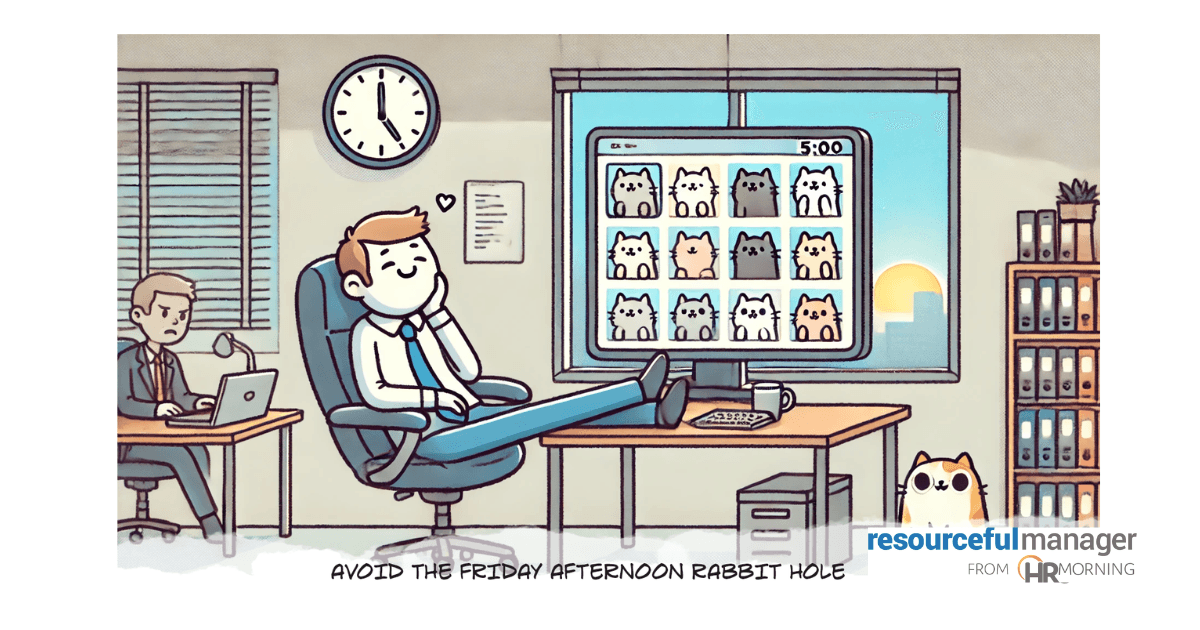
When I started writing this story, it was 4 p.m. on a snowy Friday. That’s important to know because I love to ski.
But I wasn’t skiing. I was stuck inside, staring at a blank screen. Why hadn’t I been more productive already, so I could enjoy what was outside my window?
Why aren’t we all more productive on Fridays (or whatever your last day of the workweek is)?
Because we’re distracted and error-prone, according to a study from Texas A&M.
“Employees were less active in the afternoons and made more typos in the afternoons — especially on Fridays,” said one of the researchers, Dr. Taehyun Roh. “This aligns with similar findings that the number of tasks workers complete increases steadily from Monday through Wednesday, then decreases on Thursday and Friday.”
Why Can’t We Be More Productive?
It’s relatively obvious why we’re distracted: Most of us think about the weekend — whether we’re excited about a concert or dreading the yard work. And we’re usually a bit burned out from the previous four full days of work.
White Papers
Building an Adoption-Friendly Workplace: Benefits That Help Families Grow and Employees Stay
“We found that computer use increased during the week, then dropped significantly on Fridays,” says Roh.
While the drop in productivity could be bad for business, the rise in errors is a bigger deal.
Case in point: By late Friday afternoon, when I wrote this story, Grammarly called me out on more typos and misspellings than I had all week. So fixing those had cost me more time. Had I not fixed them, you’d be reading a poorly written, error-riddled story. And that could cost HRMorning credibility and subscribers — lost time and money due to a Friday afternoon.
So, how can we get more done on Fridays — and get it done well?
Our friends at Korn Ferry’s consulting group have proven ways to be more productive on Friday — perhaps turning it into the most productive day of the week.
1. Plan It
Fridays typically have the fewest appointments. We avoid bad meetings, presentations, training events or even social events. And when you don’t have to interact as much, you have time to focus on your highest priorities.
But you can’t just hope to do that. It’ll happen if you plan on the first day of the week what you’ll accomplish on the last day.
Write down what you need to accomplish by the end of the week. Be specific. Even better, share the list with a colleague who can tell you if it’s too ambitious or not ambitious enough.
2. Choose Low-Stress Work
If possible, use Friday to catch up on or get ahead of the unglamorous work that doesn’t require a lot of deep or creative thinking (but feels like a huge relief when it’s done).
Advertisement
From filing expense reports to reviewing or updating weekly reports, take care of the housekeeping tasks. You can knock out essential tasks so they don’t hang over your head, causing stress. And knowing whatever housekeeping tasks pile up in the next week will get done the following Friday can make the weekend more enjoyable.
3. Make It a Training Day
Similar to choosing low-stress tasks, you might use Fridays to catch up on self-guided training — such as recorded webinars, online tutorials or professional books.
Get into a cadence of Career Growth Fridays, and you might be looking at a promotion next season!
4. Batch the Day
Fridays often leave room for daydreaming and distractions because they aren’t as structured as other days. But if you do create some structure, you can accomplish more.
One Korn Ferry coach suggests you use Fridays to “batch” work, using simple calendar tools to manage time with specific chunks devoted to:
- Complete tasks
- Create buffers for tasks that ran longer than expected
- Plan for the next week, and
- Follow up with colleagues, employees or clients.
5. Get Together
Building on that last bullet, you might want to try Connection Fridays. More and more organizations are adopting no-meeting Fridays because people don’t want to — and seldom need to — sit in big organizational meetings when they (supposedly) won’t work the next two days to act on what’s covered.
So you might use that time for informal one-on-ones with colleagues whom you don’t interact with frequently or employees who need a little extra attention. Use the time to share ideas, struggles and solutions that can make everyone’s work life easier.
6. Start Earlier
Finally, one of the Korn Ferry consultants suggested starting work earlier on Friday because — well, you know — it’s proven we’re less productive and more error-prone by the afternoon.
HR’s Budget Season Cheat Code: Win Over Ops, IT, and Finance Before the Budget Meeting
If you can arrange it and start earlier, you might be able to accomplish more before the sluggishness creeps in. And you can get out ahead of the crowd, knowing you were more productive than most of them.
And maybe make it to the slopes … or beach, or couch, or game, or where it is that you love!
Further Reading
Kind v. Nice: It Makes a Big Difference for Employee Feedback | 2-Minute Video
When it comes to giving employee feedback, there’s a difference between being kind and being nice. It’s an important distinction HR pros and front-line managers want to make. What’s Up in This Episode: Kind v. Nice In this episode of HRMorning’s 3-Point, Amy Baker, Managing Partner at Happy Humans Consulting LLC, explains the difference between […]
A Better Way to Give Employees Feedback Now | 2-Minute Video
Giving and receiving feedback can be difficult. Giving and receiving bad feedback is even worse. We’re not talking about negative evaluations. We’re talking about doing a bad job with any kind of performance or behavior conversation. What’s Up in This Episode: Feedback Redo In this episode of HRMorning’s 3-Point, Kathie Leslie, Owner of Kathryn Leslie, […]
Employees Have FOBO: 5 Factors to Manage the AI Anxiety
Many employees are struggling with AI in ways you didn’t even imagine. They have FOBO – fear of becoming obsolete. And that fear has the potential to paralyze them — making the possibility of becoming obsolete a reality. “AI has accelerated that shift over the past year: tasks are being automated and employees are watching […]
4 Ways Workplace Community Drives Collaboration, Innovation and Growth
Across industries, workforce conversations often begin with the candidate experience. Long-term success depends just as much on what happens after someone joins an organization. To build resilient teams, leaders need to create workplaces where people feel connected, supported, authentic and able to envision a future. A strong sense of workplace community can help turn a […]
7 Keys to Give Feedback That’ll Help Employees Grow
Most bosses want to give feedback that helps employees do better. Unfortunately, many give feedback that makes employees feel worse about themselves and their work. It can be so bad that employees feel the impact of feedback delivered badly for years. That’s not the kind of impression leaders want to make. Feedback Gone Bad More […]
Build the Relationships That Matter Most at Work | 2-Minute Video
When it comes to recognition, the person who gives it is just as important as the message. Sure, it’s important for the boss to recognize employees. But peer-to-peer recognition packs the most punch: Employee relationships matter most. What’s Up in This Episode: Building Better Relationships That’s based on research and observation from Awardco. In this […]