• Skip to primary navigation
  • Skip to main content

HRMorning

  • FREE RESOURCES
  • PREMIUM CONTENT
  • HR DEEP DIVES
  • PODCASTS
    • VOICES OF HR
    • WOMEN’S LEADERSHIP TODAY
  • LOGIN
  • GET STARTED
  • Employment Law
  • Benefits
  • Recruiting
  • HR Technology
  • Payroll
  • Management
  • Women’s Leadership
  • More
    • Talent Management
    • Performance Management
    • Leadership & Strategy
    • Compensation
    • Policy & Procedures
    • Wellness
    • Staff Departure
    • HR Career & Self-Care
    • Health Care
    • Retirement Plans
WLT Logo
  • Business Skills

3 Ways to Integrate Personal & Professional Growth to Maximize Your Potential

Michelle Myers
By: Michelle Myers
Read it on Beacon
  • Share on

About the Author

Michelle Myers is a dedicated Creative Content Production Manager overseeing the content strategy and execution for Women's Leadership, HRMorning, and Resourceful Finance Pro. With a keen eye for detail and a passion for creating engaging and informative content, Michelle plays a vital role in delivering high-quality resources to professionals in HR, finance, and women's leadership. Her expertise spans across various content formats, ensuring that each platform provides valuable insights and fosters professional growth. Michelle's commitment to excellence and her ability to manage complex production workflows make her an invaluable asset to her team.

Show Less
Last Updated: September 2, 2026
4 minute engagement
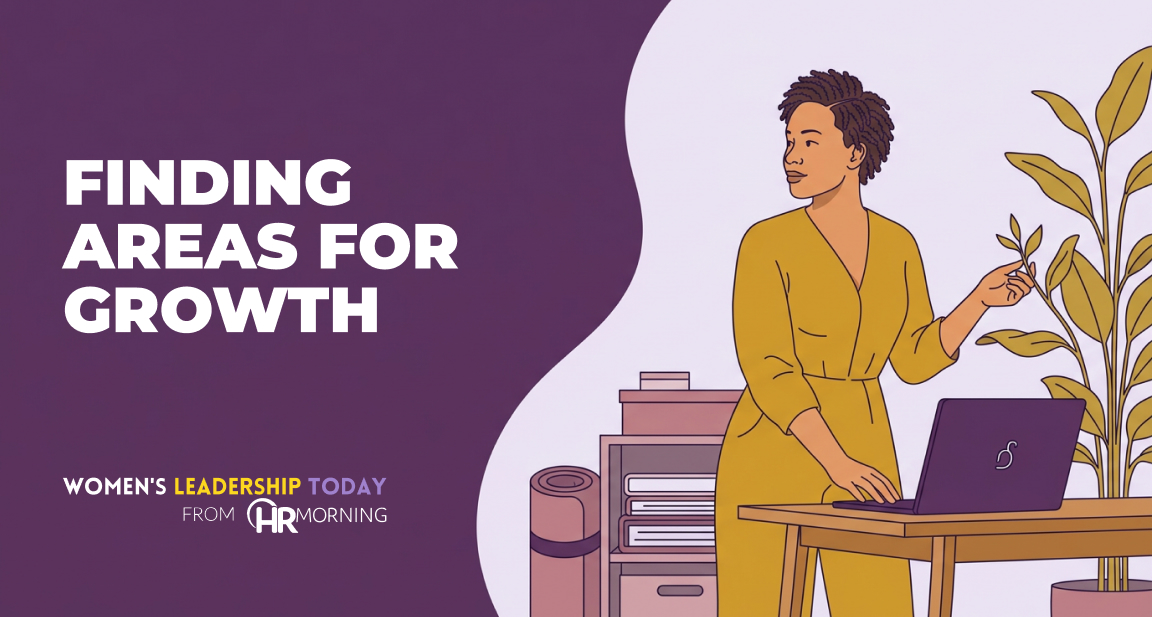
Illustration of a woman inspecting a new shoot on a tall plant beside her laptop in a home-work corner, finding areas for growth.
You read HRMorning's newsletter. Beacon's Daily Brief is the version tuned to you: it skips what you've already read and leads with what you've asked Beacon about. Get your Daily Brief →

Balanced growth refers to personal and professional development happening simultaneously.

For instance, a person may aspire to advance professionally by taking on a higher role in their organization while also prioritizing their mental well-being to grow personally. Both types of progress complement each other, showing that if you aim for balanced growth, it can lead to significant improvements in multiple aspects of life.

Why is Balanced Growth Important?

The pursuit of growth can be highly motivating, but when a person focuses solely on achieving a single goal, it can lead to neglecting other crucial areas of life. For example, a working professional aspires to fill a management position at work and dedicates a significant amount of time and energy to becoming the ideal candidate.

However, upon achieving the goal, she may realize that the sacrifices she made along the way have had long-term effects on other areas of their life. She may have neglected her mental well-being, social life or nutritional needs in the pursuit of professional growth.

This is a common scenario, and because focusing solely on a single goal can be challenging, pursuing balanced growth is a wise approach.

Taking a broader perspective, organizations can benefit significantly by integrating personal and professional growth efforts. By encouraging employees to prioritize their well-being and goals both within and outside of work, companies can reduce employee turnover, empower staff to pursue their desired career paths and foster a healthy and engaged workforce.

On an individual level, achieving balanced growth will vary for each person depending on their specific goals. Thus, if you aim to grow professionally, it’s crucial to create a personalized strategy that addresses multiple aspects of your life.

There are several areas of personal well-being that you can focus on alongside your professional objectives. By pursuing a broader spectrum of growth, you can attain more meaningful and sustainable achievements.

Areas for Growth

Here are five main areas to look at if you want to combine your personal growth with your professional growth:

  1. Mental well-being: Your mental health affects the way you think and learn. Improving it can make you a more adaptable worker. Try learning new things, advancing your skills, and experimenting with your mental abilities to increase productivity and boost your self-esteem.
  2. Spirituality: Spirituality can mean different things to different people, and it’s not always religious. For some, it involves going to church and studying religious texts, but for others, it might mean taking time to appreciate nature and the universe’s flow. What’s important is that you feel a sense of meaning and purpose in your spiritual pursuits.
  3. Emotional growth: Having a solid sense of self-awareness — that is, understanding and managing your feelings — is a crucial part of personal growth. You could try to journal, meditate, attend therapy, or just be mindful of how you’re feeling at any given moment.
  4. Social well-being: As a busy adult, it can be difficult to find time for your friends and family. But human interaction is vital for our well-being. Try scheduling some time to chat with a friend, go out for coffee with a colleague or attend an event with someone you care about.
  5. Physical health: Taking care of your physical health ensures that you can keep growing professionally. Make sure you’re eating healthy, getting enough sleep, staying hydrated and incorporating daily movement to keep yourself in good shape.

Tips on Working Toward Balanced Growth

If you’re ready to take action and start looking for ways to evaluate and improve your own personal development, try these tips:

  1. Celebrate your accomplishments: It’s important not to compare yourself to others who seem more successful. Instead, focus on your own progress and how far you’ve come. Compare yourself today to who you were at your lowest point and take pride in your progress.
  2. Plan effectively: Identify what you want to achieve and develop a clear, step-by-step plan to reach your goals. Be open to reevaluating your plan and adapting your approach as needed.
  3. Acknowledge your wins: Even small achievements are worth celebrating, so give yourself credit for making progress. Celebrating your successes can help motivate you to continue striving for growth.

As time goes on, your goals and aspirations may change, and that’s OK. Stay in touch with your thoughts and feelings and trust your inner compass to guide you in the right direction towards achieving your dreams.

Read it on Beacon
Open this article in Beacon, from HRMorning, and ask how it applies to your company. Every answer names its source.
Read it on Beacon
Get HRMorning's newsletter tuned to you every morning: your Daily Brief on Beacon →
Filed under
WLT Logo
  • Business Skills
  • Share on

Get the HRMorning Newsletter

With HRMorning arriving in your inbox, you will never miss critical stories on labor laws, benefits, retention and onboarding strategies.

Get it free with a Beacon account. Beacon keeps your company's HR context at hand, and every answer names its source.
Create my free account

Free Training & Resources

Webinars

Four Shifts Redefining the Workforce: What HR Leaders Need to Know Now

Provided by Marsh

White Papers

Only 20% of HR Teams Feel Very Confident in Their Leave Compliance

EBOOK, White Papers

Beyond the script: A smarter chronic condition management strategy

Provided by Personify Health

White Papers

Inspirus — The Mid-Market Retention Playbook: 5 Strategies That Work When You Can’t Just Pay More

Provided by Inspirus

SPONSORED CONTENT

HR Technology

Talent Management

sponsored content
AI Skills Gap: The 2026 Questions HR Leaders Are Asking, Answered

Courtesy of TRINET

Performance Management

Talent Management

sponsored content
Employee Recognition Program: What the First 6 Months Reveal About Whether It Will Last

Courtesy of INSPIRUS

Compensation

Recruiting

sponsored content
Salary Benchmarking: 6 Choices That Decide Whether Your Pay Data Holds Up

Courtesy of MARSH

Further Reading

  • Business Skills
6 Quick Tips for Powerful Presentations

Presenting live in front of colleagues can be a valuable career opportunity, but it can also be stressful. A great deck can truly suppo...

  • Business Skills
Be Assertively Nice

When I was approached to put together a presentation on “Break the Niceness Cycle: Assertive Communication Strategies for Women,” many t...

  • Business Skills
7 Critical Points to Inclusive Language at Work (Plus an Infographic to Share)

Inclusive language is a way of speaking that aims to keep conversations more general and welcoming to a wider audience. Using gender-ne...

  • Business Skills
Key Traits of Successful Managers: A Deep Dive

In the ever-evolving landscape of corporate management, understanding the traits that define successful leaders is paramount. As organi...

  • Business Skills
Finding a Mentor and Building a Meaningful Relationship: 3 Important Factors

When you’re new to the professional world, it can be difficult to find your footing and the skills you need to progress. A mentor can hel...

  • Business Skills
Own Your Voice in the Boardroom: 6 Tips to Handle Interruptions

Have you ever spoken up in a meeting, only to be interrupted or dismissed? If so, you’re far from alone. Research confirms women ...

Get the latest from HRMorning in your inbox PLUS Beacon, free. Check it before you say it.

GET STARTED FREE
HR Morning Logo
  • Facebook
  • Linked In
  • ABOUT HRMORNING
  • ADVERTISE WITH US
  • WRITE FOR US
  • CONTACT
  • Employment Law
  • Benefits
  • Recruiting
  • Talent Management
  • Performance Management
  • HR Technology
  • Leadership & Strategy
  • Compensation
  • Policy & Procedures
  • Wellness
  • Staff Departure
  • HR Career & Self-Care
  • Health Care
  • Retirement Plans
  • DEI

HRMorning provides the latest HR and employment law news for HR professionals in the trenches of small-to-medium-sized businesses. Rather than simply regurgitating the day's headlines, HRMorning delivers actionable insights, helping HR execs understand what HR trends mean to their business.

Privacy Policy | Terms of Service
Copyright© 2026 HRMorning
HRMorning Logo

WELCOME BACK!

Enter your username and password below to log in

Forget Your Username or Password?

Reset Password

Lost your password? Please enter your username or email address. You will receive a link to create a new password via email.

Log In

Why do we need your credit card for a free trial?

We ask for your credit card to allow your subscription to continue should you decide to keep your membership beyond the free trial period.  This prevents any interruption of content access.

Your card will not be charged at any point during your 21 day free trial
and you may cancel at any time during your free trial.

During your free trial, you can cancel at any time with a single click on your “Account” page.  It’s that easy.