• Skip to primary navigation
  • Skip to main content

HRMorning

  • FREE RESOURCES
  • PREMIUM CONTENT
  • HR DEEP DIVES
  • PODCASTS
    • VOICES OF HR
    • WOMEN’S LEADERSHIP TODAY
  • LOGIN
  • SIGN UP FREE
  • Employment Law
  • Benefits
  • Recruiting
  • HR Technology
  • Payroll
  • Management
  • Women’s Leadership
  • More
    • Talent Management
    • Performance Management
    • Leadership & Strategy
    • Compensation
    • Policy & Procedures
    • Wellness
    • Staff Departure
    • HR Career & Self-Care
    • Health Care
    • Retirement Plans
WLT Logo
  • Business Skills

Impacts of Nutrition and Exercise: 2 Ways to Improve Employee Mental Health

Natalia Bragagnolo, HR Expert Contributor
By: Natalia Bragagnolo, HR Expert Contributor
  • Share on

About the Author

Natalia Bragagnolo is a Registered Holistic Nutritionist and leads engagement and operations at HEAL Wellness. Organizations looking to address mental health challenges like stress, anxiety and depression choose HEAL for their corporate wellness programming again and again for the high engagement of their programs, the proven results they drive and the people behind the organization.

Show Less
Last Updated: May 15, 2026
4 minute engagement
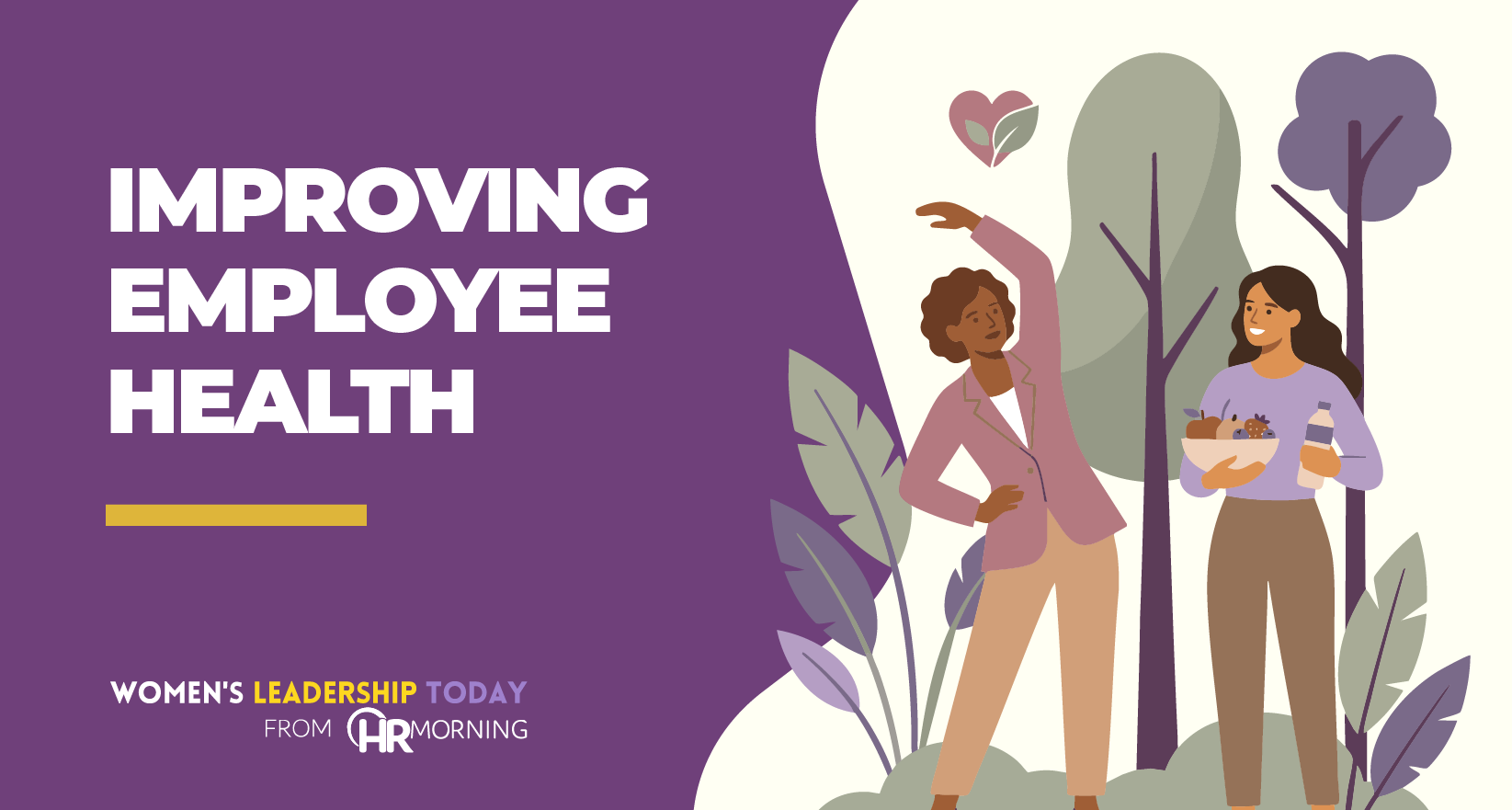
A Corporate Memphis style illustration for an HRMorning and Women's Leadership Today blog titled "Improving Employee Health." Set in a serene outdoor environment, two female professionals prioritize wellness: one performs a physical stretch while the other carries a bowl of fresh fruit and water. This visually represents the integration of movement and nutrition as essential pillars for employee wellbeing and sustainable leadership.

Over the past few years, many companies have been amping up their mental health support for employees.

This is with good reason: Employees who are psychologically healthy and feel their company cares about their well-being are consistently more engaged and motivated at work. Mental health issues also account for a third of short-term disability claims and they’ve been on the rise for years.

That’s why more organizations have shifted from reacting to employee needs and proactively helping with their nutrition, exercise and mental well-being needs.

Why Nutrition, Exercise Matter

In the past five years, I personally have reflected on the impact that my nutrition, exercise and movement, in general, have had on my mental well-being. As a holistic nutritionist who leads workplace wellness programs for North American companies, you would think that health and wellness came easily to me, but it definitely wasn’t always the case.

I grew up playing competitive sports and fitness was definitely part of my younger life but when I went to college, like many people, my physical activity dropped off significantly and I did not eat well at all. Coupled with the stress of school and a lack of quality sleep, my anxiety levels skyrocketed and I struggled with both my mental and physical health throughout my early twenties.

It was only thanks to learning about nutrition and changing my diet, which subsequently gave me the energy and motivation to get moving again, that my mental well-being improved. It wasn’t always easy, but as I experienced these benefits, I was more motivated to continue to make healthier choices.

Improving Employee Mental Health through Nutrition

It may seem obvious that the food you eat has an impact on how you feel mentally, emotionally and physically, but many people don’t think about it.

For example, specific nutrients are associated with better mental well-being. Vitamin D deficiency may be associated with an increased risk or severity of depression. Omega-3s (which play a key role in brain development and signaling) may be effective supplements in the treatment of anxiety and depression. In general, anti-inflammatory dietary patterns that emphasize the consumption of fruits, vegetables, legumes, nuts and seeds, whole grains, and healthy fats have been associated with a reduction in depression and anxiety.

There is also a growing body of evidence linking gut health to mental health. The human GI tract contains trillions of bacteria and hundreds of different species. Many of the brain chemicals that influence our mood, learning and memory, like serotonin for example, are actually created in the gut by these bacteria.

Improving Employee Mental Health through Exercise

By that same token, when people exercise or move their bodies more regularly, they are more likely to experience better mental well-being. Regular aerobic exercise helps the body learn to better cope with stress over time and improves mood and self-esteem.

Research that looked at 15 prospective studies found that those who got the equivalent of 2.5 hours of brisk walking per week were 25% less likely to develop depression compared to those who didn’t exercise at all.

What stands out in this research is that the greatest benefits were achieved when participants went from no physical activity to at least some. Even a single bout of exercise reduces stress. The anti-anxiety effects of aerobic activity can be felt after just 5 minutes, and just a 10-minute walk has been found to have the same anxiolytic and antidepressant benefits as a 45-minute workout.

Benefits coverage for mental counseling, your workplace culture, flexibility and wellness offerings all play a role in supporting your team’s mental well-being. Simply providing education, resources, and guidance to help employees achieve dietary and physical health can help to prevent burnout. Work is where we spend most of our time and companies are often the primary means by which individuals access both physical and mental health services.

Make Changes to Help

I encourage companies to consider the full spectrum of factors when aiming to tackle the current mental health crisis. If you’re looking to better support your teams with their mental health, wellness programs that help teams with their nutrition and movement can make a sizeable difference.

Consider where you can help employees find more ways to move while at work — perhaps walking meetings or on-site exercise opportunities. Or perhaps you can offer opportunities outside of work — fitness class passes or reduced membership fees to gyms.

For nutrition, can you eliminate the not-so-healthy options from your break room? Then stock the break room with healthy snacks, such as fruits, nuts, high-protein bars, trail mixes, Greek yogurt and water (rather than soda or sugary juices).

Filed under
WLT Logo
  • Business Skills
  • Share on

Get the HRMorning Newsletter

With HRMorning arriving in your inbox, you will never miss critical stories on labor laws, benefits, retention and onboarding strategies.

  • This field is for validation purposes and should be left unchanged.
  • This field is hidden when viewing the form
  • This field is hidden when viewing the form
  • This field is hidden when viewing the form
  • This field is hidden when viewing the form
  • This field is hidden when viewing the form
  • This field is hidden when viewing the form
  • This field is hidden when viewing the form
  • This field is hidden when viewing the form
  • This field is hidden when viewing the form
  • This field is hidden when viewing the form
  • This field is hidden when viewing the form
  • This field is hidden when viewing the form
  • This field is hidden when viewing the form
  • This field is hidden when viewing the form
  • This field is hidden when viewing the form
  • This field is hidden when viewing the form
  • This field is hidden when viewing the form
  • This field is hidden when viewing the form
  • This field is hidden when viewing the form
  • This field is hidden when viewing the form
  • This field is hidden when viewing the form
  • This field is hidden when viewing the form
  • This field is hidden when viewing the form
  • This field is hidden when viewing the form
  • This field is hidden when viewing the form
  • This field is hidden when viewing the form
  • This field is hidden when viewing the form
  • This field is hidden when viewing the form
  • This field is hidden when viewing the form
  • This field is hidden when viewing the form
  • This field is hidden when viewing the form
  • This field is hidden when viewing the form
  • This field is hidden when viewing the form
  • This field is hidden when viewing the form
  • This field is hidden when viewing the form
  • This field is hidden when viewing the form
  • This field is hidden when viewing the form
  • This field is hidden when viewing the form
  • This field is hidden when viewing the form
  • This field is hidden when viewing the form
  • This field is hidden when viewing the form
  • This field is hidden when viewing the form
  • This field is hidden when viewing the form
  • This field is hidden when viewing the form
  • This field is hidden when viewing the form
  • This field is hidden when viewing the form
  • This field is hidden when viewing the form
  • This field is hidden when viewing the form
  • This field is hidden when viewing the form
  • This field is hidden when viewing the form
  • This field is hidden when viewing the form
  • This field is hidden when viewing the form
  • This field is hidden when viewing the form
  • This field is hidden when viewing the form
  • This field is hidden when viewing the form
  • This field is hidden when viewing the form

Free Training & Resources

Webinars

Employee Engagement: Strategies for Success With Seth Mattison

Webinars

Unlocking the Power of the Extended Workforce

Webinars

Surviving the Retail Apocalypse: Why Those Committed to Employee Engagement Are Winning

Webinars

Survive and Thrive During the Great Resignation

SPONSORED CONTENT

HR Technology

sponsored content
The Best AI Software for HR Automation

Courtesy of G-P

Talent Management

sponsored content
Powerful Employee Retention Strategies for 2025: How to Keep Your Best People

Courtesy of PEOPLEGURU

Benefits

Health Care

Wellness

sponsored content
Proven Results: 5 Ways Teladoc Health Chronic Condition Management Transforms HR Outcomes

Courtesy of TELADOC HEALTH

Further Reading

  • Business Skills
Setting Healthy Boundaries: 8 Steps to Communicate What You Want

A boundary is a figurative line an individual draws that makes the limits of what they will and won’t tolerate. Healthy boundaries dir...

  • Business Skills
Why ‘Nice Girls’ Finish Last in the Workplace

In the competitive landscape of today’s workplaces, women face a subtle yet significant barrier that often goes unnoticed — the exp...

  • Business Skills
What’s Your Influence Style? Take a 6-Question Quiz to Find Out and Maximize Your Impact

Have you ever found yourself motivated or inspired by someone else and thought, “How did they do that?” That person conjured up in y...

  • Business Skills
5 Critical Keys to Coaching For Everyone, By Everyone

The concept of coaching has evolved from a luxury reserved for senior executives to a vital tool for development at all levels of an organi...

  • Business Skills
Integrating Personal & Professional Growth to Maximize Your Potential

Balanced growth refers to personal and professional development happening simultaneously. For instance, a person may aspire to advance profe...

  • Business Skills
Finding a Mentor and Building a Meaningful Relationship: 3 Important Factors

When you’re new to the professional world, it can be difficult to find your footing and the skills you need to progress. A mentor can hel...

Get the latest from HRMorning in your inbox PLUS immediately access 10 FREE HR guides.

I WANT MY FREE GUIDES
HR Morning Logo
  • Facebook
  • Linked In
  • ABOUT HRMORNING
  • ADVERTISE WITH US
  • WRITE FOR US
  • CONTACT
  • Employment Law
  • Benefits
  • Recruiting
  • Talent Management
  • Performance Management
  • HR Technology
  • Leadership & Strategy
  • Compensation
  • Policy & Procedures
  • Wellness
  • Staff Departure
  • HR Career & Self-Care
  • Health Care
  • Retirement Plans
  • DEI

HRMorning, part of the Rover Insights Network, provides the latest HR and employment law news for HR professionals in the trenches of small-to-medium-sized businesses. Rather than simply regurgitating the day's headlines, HRMorning delivers actionable insights, helping HR execs understand what HR trends mean to their business.

Powered By Rover Insights
Privacy Policy | Terms of Service
Copyright© 2026 Rover Insights
HRMorning Logo

WELCOME BACK!

Enter your username and password below to log in

Forget Your Username or Password?

Reset Password

Lost your password? Please enter your username or email address. You will receive a link to create a new password via email.

Log In

Why do we need your credit card for a free trial?

We ask for your credit card to allow your subscription to continue should you decide to keep your membership beyond the free trial period.  This prevents any interruption of content access.

Your card will not be charged at any point during your 21 day free trial
and you may cancel at any time during your free trial.

During your free trial, you can cancel at any time with a single click on your “Account” page.  It’s that easy.
