Overlooked Tool to Help with Mental Well-Being | 2-Minute Video

When employees struggle with burnout or any other mental well-being issues, they can’t do their jobs on-point.
That’s why you want to help them stay healthy. And the sooner you can help them recover from — or avoid — issues, the better.
What’s Up in This Episode: Mental Well-Being Help
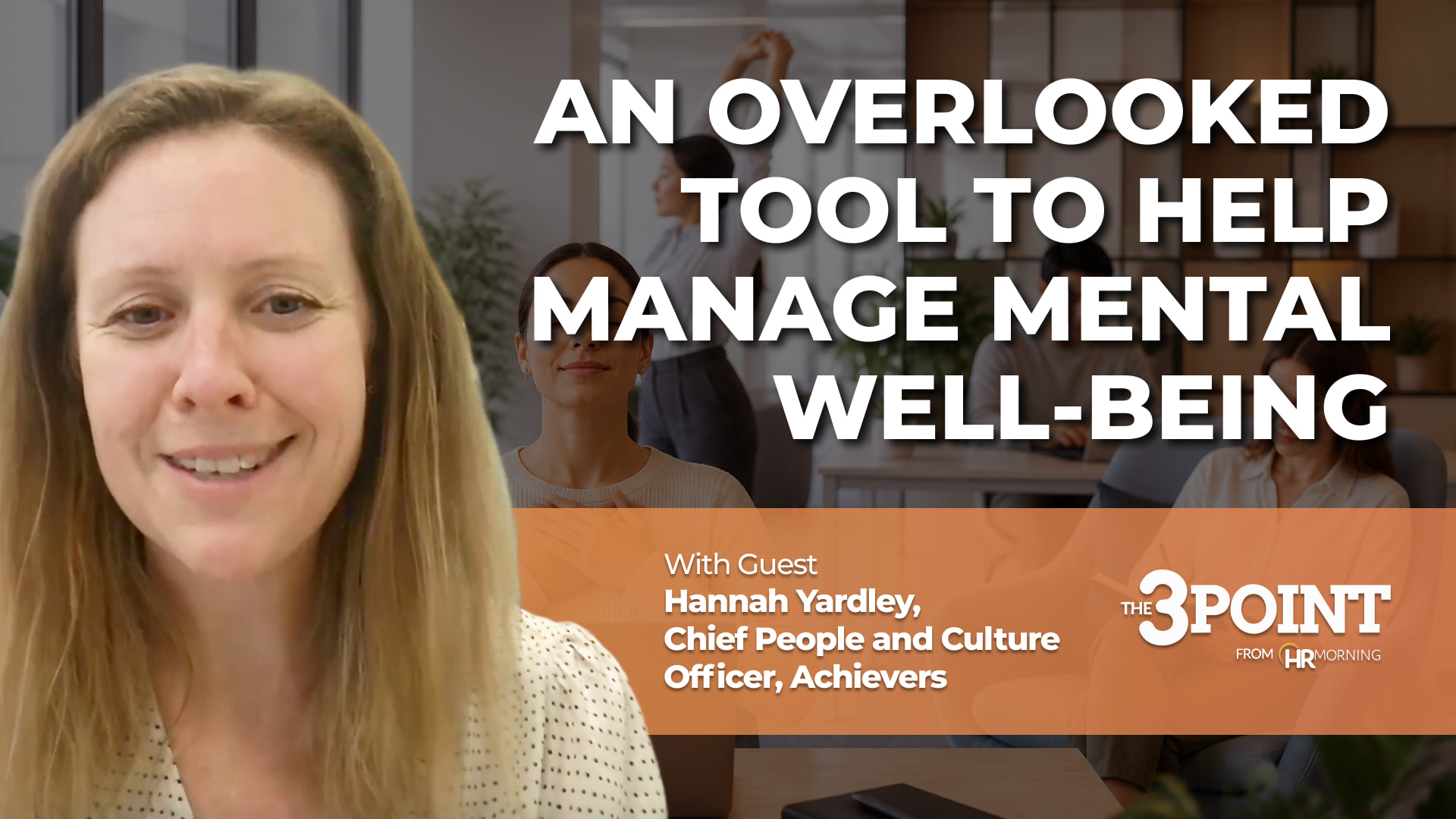
Fortunately, in this episode of HRMorning’s 3-Point, we’re going to uncover an overlooked tool that can help you identify burnout or other potential mental well-being issues so you can help employees faster. Our expert, Hannah Yardley, Chief People and Culture Officer at Achievers, explains what’s at your fingertips and how you can use this tool with a new perspective.
Click, watch and listen for more details on improving employee mental well-being with a tool you already have but aren’t using in this capacity.
Transcript (edited for clarity):
We want our employees to bring their best selves to work every day. That’s why mental well-being has been a hot topic since the pandemic. And we’re going to show you in this episode of the 3-Point that there’s a tool you likely already have in place that can help you spot burnout and manage well-being better. No need for suspense. Let’s hear it from our expert, Hannah Yardley of Achievers …
Hannah Yardley, Chief People and Culture Officer, Achievers: “We often have tools like time tracking that we utilize to understand productivity, a hot word in today’s organizations. But what if we reframe that lens when we saw productivity was down and actually questioned why beyond performance and used that data that a lot of organizations have to actually question whether maybe there’s burnout or some kind of mental health issue that might be going on that’s contributing to that.“
You see what she’s saying? We tend to see a performance issue as that alone. So we think … Trey isn’t keeping up. Or Shenice is falling behind. But these days, there’s a good chance Trey and Shenice face underlying issues – perhaps some stress on their mental well-being. So who can help best?
Yardley: “The first place that I would go to is our middle managers’ level. And we talk about them being super critical so often, but they really are the face of those day-to-day interactions with our employees.“
So front-line managers are the linchpin. They’re keeping their eyes on the performance metrics – and the realities behind the numbers. And that’s when they want to take this approach.
Yardley: “Yeah, that’s part of why I think the middle manager role is so important, is that they know how best that person is going to react. They know that person the best. They know what is motivating to them. They know when behaviors look different, and they know what might be the tactics that they’ve used in the past or to go down that path to be able to unlock what it needs. I think this is very, very personalized in terms of being able to tackle it.“
So, back to the beginning. To help your employees manage their mental well-being, you’ll want to:
- Be resourceful. Use what you already have. The tools you use to measure productivity can signal stress or other mental well-being issues.
- Prepare middle managers. Ensure they’re ready to not only coach employees on how to improve performance but how to address stress.
- Support middle managers. Remember, they’re employees, too. And they likely face extra stress dealing with all of this.
We think this resource can help with that: Coaching Skills for Managers and Supervisors. It’s part of the premium content on HRMorning. You can download it from our site. Thanks for joining me on this episode.
- Share on


Free Training & Resources
EBOOK, White Papers
Provided by Personify Health



