

5 Ways to Settle ‘Sunday Scaries’ — and Have a Week of Less Worry
By
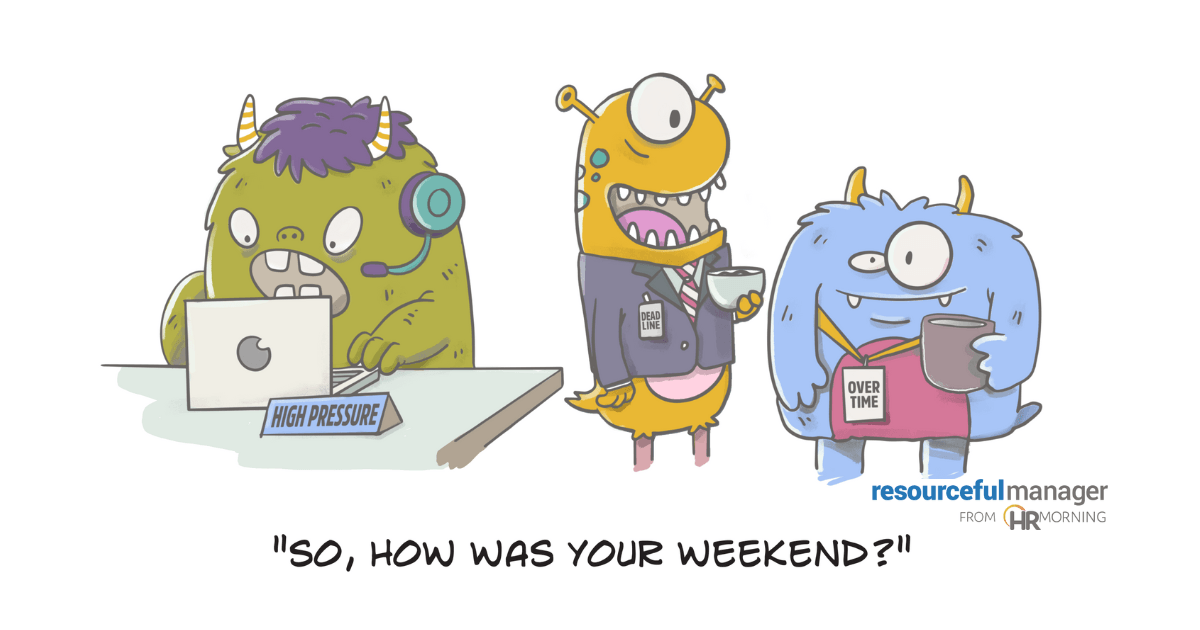
Sunday Scaries are real — a gut-wrenching reaction to the monsters at work.
In fact, more than a third of professionals get anxious about the week ahead on some Sundays. Nearly 15% feel the dread every Sunday, according to research from resume.io.
Too many of us zone out of Sunday Funday. And some of us can’t sleep that night, imagining the day ahead that might feel like Alexander and the Terrible, Horrible, No-Good, Very Bad Day.
What do we dread most? A Zety study found it’s:
- High-pressure work environment
- Heavy workload and overtime
- Colleagues who are bullies (or worse)
- Unfair treatment
- Physical labor demands
- Long commutes and days at work
- Job dissatisfaction
- Lack of internal support, and
- Poor relationships with colleagues.
It can make us stressed or even depressed.
At the Root of Sunday Scaries
“So how can we avoid back-to-work blues for upcoming Mondays?” asks Nicola Hemmings, Head of Workplace Psychology of Koa Health. “Building helpful well-being habits can seem like a lot when you’re first switching back to work mode, but taking small, consistent steps can help.”
Sunday Scaries often worsen personal and professional stress, the work/life imbalance and weakened employee engagement. So if you can turn Sunday Scaries into healthy weekend reprieves, you might be able to alleviate the other issues and build a better work week.
“The rise in Sunday anxiety is a clear signal that our relationship with work needs a reset,” says Amanda Augustine, career expert at resume.io and a Certified Professional Career Coach (CPCC). “Employers need to take this seriously, not only to retain top talent, but to build healthier, more sustainable work cultures. Whether it’s setting clearer boundaries around after-hours communication or offering more meaningful mental health support, even small shifts can make a big difference.”
So whether you suffer from the Sunday Scaries, or you want to help employees who face it, here are five ways to lessen or eliminate them.
1. Try ‘Structured Sundays’
By all means, do the things you enjoy on Sunday (or whatever the day is before you go back to work), but give it a little more structure than you have in the past.
If you plan the things you enjoy — whether it’s yoga, binge-watching, fishing, hiking, cooking or reading — rather than doing something spontaneous, you keep your mind more occupied. And a busy mind and/or body isn’t as likely to start thinking about Monday.
Even better, build a routine with room for spontaneity. More structure=less stress.
2. Identify Anxiety Sources
Sunday Scaries are a form of anxiety — we’re anxious about the known and unknown. And anxiety is a normal human reaction.
So try to pinpoint what’s causing you the anxiety. It might be one thing or it might be several. It might be the same thing or it might change every week. Point is, if you can identify what’s eating at you, you can bite back.
Advertisement
How? Organize a to-do list around the big issue. Lay out a plan for the conversation you want to avoid. Make a priority list so you can tackle the biggest ones first, which might eliminate the lower priorities later.
3. Adjust Your Mindset
Anything we dread is only made worse by thinking “I have to … (get a root canal, go to work tomorrow, pass the test, etc.)” Instead, try to adjust the mindset to “I get to …”
Sometimes, mind tricks actually help.
Replace “I have to stay late to finish everything” with “I get to spend some quiet time in the office and get focused on next quarter.” Or replace “I have to work 50 hours this week,” with “I get to put the finishing touches on the project that will put me in the running for a promotion.”
4. Create Some Excitement
Plan something special for Monday morning — perhaps a quick cup of coffee with a seldom-seen colleague. Or an early lunch date. Or a pre-work walk. Giving yourself something to look forward to will eliminate some dread.
Even better, plan a few exciting things for the week so you maintain the positive momentum. Think of them as rewards for getting through the work you plan to accomplish.
5. Close Sunday Well
Make Sunday evenings a way to ease into the week. When possible, plan for it to be more of a wind-down time and less of a rush to the finish.
HR’s Compliance Toolkit: Stay Ahead of Changing Federal and State Regulations
Limit screen time before bed so you can rest with a clear mind. And try to get the maximum of your normal sleep hours.
“A workforce with stronger mental well-being is more likely to have stronger morale, greater productivity and reduced sick leave and staff churn,” says Hemmings.
Further Reading
4 Ways HR Leaders Can Prepare Managers To Handle Mental Health Disclosures
The right resources for mental well-being help everyone, including managers. The National Alliance on Mental Illness (NAMI) 2026 Workplace Mental Health Poll found that 73% of managers without company-provided mental health resources feel burned out, compared to 45% of managers with them. Responding to Mental Health Disclosures How a manager responds to formal mental health […]
Employee Recognition: 5 Keys to Sustained Employee Motivation
Keeping employees motivated isn’t getting easier. Lean teams, competing priorities, and rising expectations mean HR leaders are being asked to do more with less, while still driving performance, engagement, and retention. The truth is, motivation fuels results. And one of the most effective ways to strengthen it is also one of the most overlooked: meaningful […]
Overlooked Tool to Help with Mental Well-Being | 2-Minute Video
When employees struggle with burnout or any other mental well-being issues, they can’t do their jobs on-point. That’s why you want to help them stay healthy. And the sooner you can help them recover from — or avoid — issues, the better. What’s Up in This Episode: Mental Well-Being Help Fortunately, in this episode of […]
7 Ways Employers Can Reduce Stress in the Workplace
Workplace stress is a big source of day-to-day turmoil for many employees, which is why it’s important employers take an active role to reduce stress. Even better, you can target specifically each year during Stress Awareness Month in April, helping employees identify issues and hopefully manage or overcome them. Good business outcomes depend, in part, […]
Employee Mental Health: 6 Solutions to HR’s Big Challenge This Year
Employee mental health will be one of HR’s biggest challenges this year. But HR professionals have hope that they can help their employees navigate their well-being. The challenge is real: Nearly a third of employees say mental health is their No. 1 safety concern at work, according to Pie Insurance’s newest Employee Voice on Workplace […]
Why ‘Boreout’ Could Cost You as Much as Burnout — and 9 Ways to Fix It
Employees may complain they’re burned out. But they might actually suffer from “boreout.” They’re both damaging, according to new research: Boreout rivals burnout in terms of its financial loss to companies. The study, “The Health and Economic Burden of Employee Burnout to U.S. Employers,” points to the mental-health toll: Disengaged employees — that’s their clinical […]