
5 Tips For Seamless Remote Employee Onboarding
By
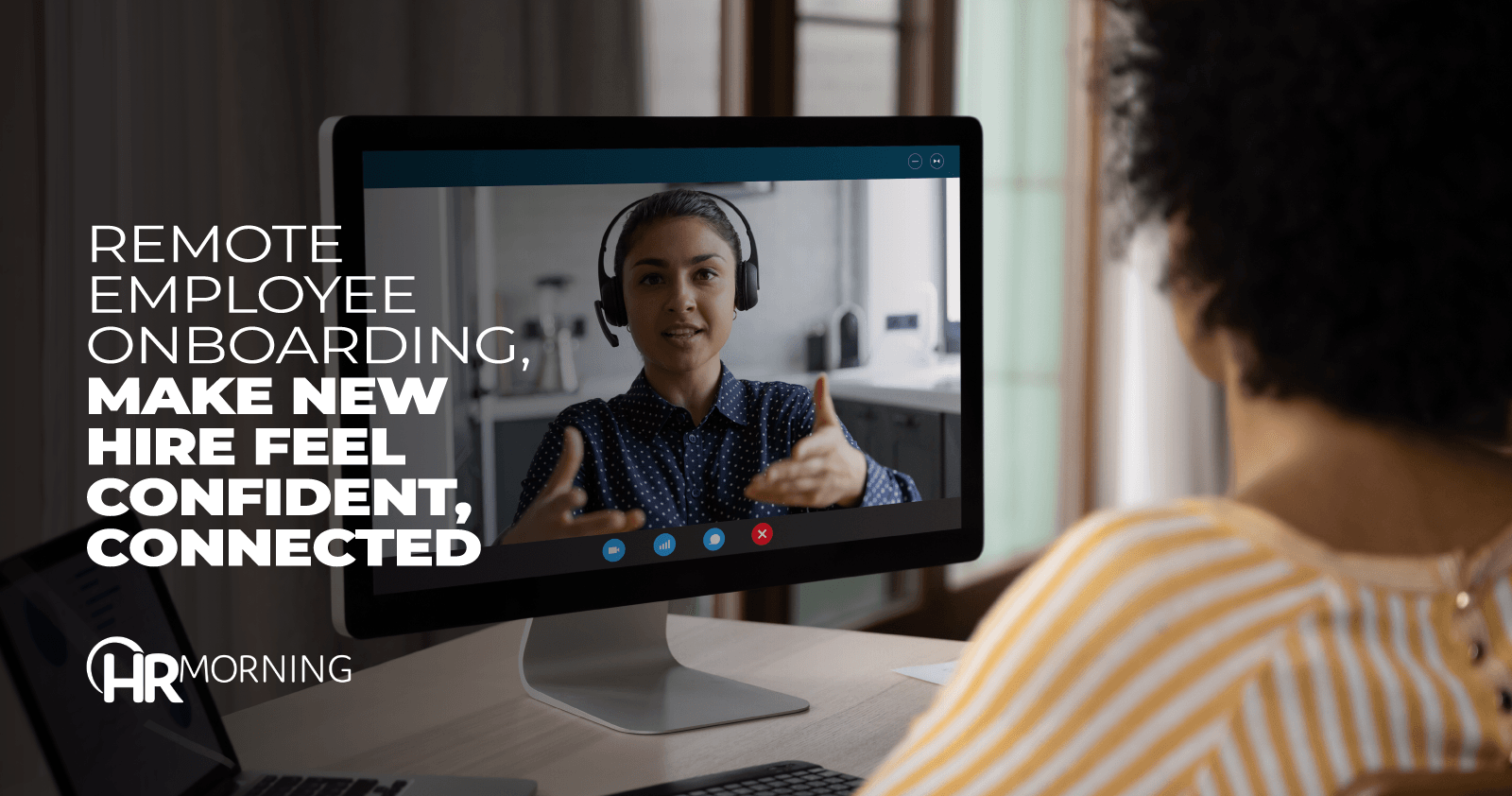
In-person introductions, office setup, a tour of the office and a team lunch are a few things that likely come to mind when you think about onboarding. But when it comes to remote employee onboarding, you need to think outside the box to come up with strategies that get the same job done through online means.
HR pros can help managers and supervisors make all new employees feel confident, connected and prepared for their roles with these tips for onboarding remote employees. From creating a comfortable remote work environment to setting expectations around communication and collaboration to team member introductions, here are some best practices for onboarding remote employees.
Establish a clear remote employee onboarding plan

- Build an onboarding plan. To quote the popular adage: If you fail to plan, you plan to fail. Creating a comprehensive onboarding plan that outlines the onboarding process, expectations and goals is a must. Give the new hire every advantage by telling them exactly what to expect ahead of time. It’s also important to tailor the remote onboarding plan to each individual’s needs, taking into account external factors like time zone differences or potential language barriers.
- Assign a mentor: Assign a dedicated mentor or point of contact for the new hire so that any questions can be answered as soon as they’re asked. The dedicated onboarding mentor must have substantial knowledge of the role as well as any relevant processes or policies the new hire needs to be aware of before getting started. It’s best if the mentor has been with the company for a long time, as they will have more insight into company culture, values and norms.
Starting a job, especially a remote job, can be intimidating. It’s much more difficult to get a feel for the company culture and make friends when you’re not immersed in the same physical work environment and eating lunch with your colleagues. Assigning a dedicated onboarding mentor who can provide personalized guidance provides an invaluable source of insider knowledge for the new hire. Plus, it will help them develop meaningful relationships with their fellow team members right from the start.
Set clear expectations when onboarding remote workers

- Establish the role and responsibilities: Be clear with the new hire about their new role and responsibilities. Ensure you are both aligned on a shared vision of success. Not being clear about employee expectations right from the jump can lead to misunderstandings, disengagement and resentment down the road. Outline the new employee’s role and responsibilities carefully, and ask if they have any questions throughout the onboarding process.
Let the employee know that this is far from the only opportunity they’ll have to ask questions by setting up regular check-ins. - Set up regular check-ins: Get the new hire set up on your communication channels and establish regular check-ins. Onboarding isn’t a one-and-done process. Consider daily check-ins at first over chat or video, then set up weekly one-on-one meetings. These regular check-ins are vital to successful onboarding, especially virtual onboarding, and they can be used to help set expectations, evaluate personal and professional goals, discuss progress and foster meaningful relationships with team members.
They also let the new hire know you’ll be there to answer any questions for as long as they need. This takes off the pressure of asking every possible question on the first day and allows the new hire to acclimate to the job and organization in their own time. - Share company goals, values and policies: Create a digital onboarding manual that details everything from expectations to company policies and goals. Share this with the employee before their first day on the job. Getting the onboarding process started early is called preboarding, and it’s an excellent way to keep the new hire informed and excited about starting their new position.
They will then have time to consider and process all of this information so they’re not overwhelmed with everything on their first day. Sharing these details ahead of the employee’s start date can also help the employee gather their questions in advance so they can make the most of the time they have with their onboarding mentor on the first day.
Provide the necessary tools and resources

- Provide necessary software and equipment: Ensure the new employee has access to the tools they need for their role, such as a laptop or cell phone. If within your organization’s means, provide them with whatever additional equipment they need to do their job to the best of their ability.
What software do they need access to and what logins are necessary to access company tools and resources? As you run through how to access these tools, draw attention to your company’s cybersecurity policies. As a remote team, you’re more susceptible to cyberattacks, and you’re only as strong as your weakest link.
As you get the new hire set up with equipment and software, be sure to emphasize your processes and the importance your company places on password protection and cybersecurity.
- Help set up an ideal home workspace: Their office may be at home, but you and your company can still help the new hire get set up. You might provide an allowance to help them set up their home office or directly ship furniture or equipment they need to do their job effectively. Ensure this preparation is done during the preboarding process so the team member is ready to meet the team, learn about their role and begin working on their goals their first week on the job.
Plus, be sure to send them plenty of company-branded swag to help them feel like a real part of the team as opposed to one individual working on their own. - Provide training and support: Are there any tools, software or equipment the new hire is unfamiliar with? Don’t assume – ask. Provide any necessary training. If needed, pair them with a buddy who can show them the ropes and be available to answer any questions about a specific software, equipment or company process.
As mentioned above, the threat of a cyberattack is real. Cyberattacks increased by 38% in 2022 compared to 2021. Effective cybersecurity training will ensure your organization remains safe while operating primarily online.
Foster a sense of community and connection

- Encourage communication and collaboration: Working remotely, it can be difficult to feel a sense of community within the company, at least at first. Even if you can’t share the same physical space, strive to create a communal, welcoming and inclusive atmosphere while engaging online.
Try activities and games that encourage interaction between team members so that new hires, as well as the company at large, can get to know each other better. Over Slack, Zoom or whatever professional communication platform you use, play virtual trivia or try out some icebreakers, such as Two Truths and a Lie or Would You Rather.
Whatever activity you choose, be true to your own company values and culture when planning how to introduce the new hire and get them involved. - Introduce the team members: Team meetings are another good way to cultivate a sense of community. If it’s not possible to run a team meeting on the employee’s first day, be sure to note when the first team meeting will be and, ideally, hold one soon after the new employee starts. Without a chance to move around a physical office space to meet everyone, these team meetings serve as an ideal and necessary chance for new hires to meet everyone and see the full team in action.
Encourage all team members to introduce themselves and to lead with what they do beyond their title. How will they interact with the new hire? For example, “I’m Suraj. I handle payroll. So any questions about your pay can come straight to me.”
Depending on the bandwidth of the team on the employee’s first day, you might choose to set up a virtual tour or welcome video. This way, they can get to know the people behind the company right away, even if the rest of the team has other commitments that day or time zone restrictions that prevent them from being available. - Provide communication tools and resources: Connect the new hire to their work environment by providing resources like a list of team contacts they can reach out to if they have any questions. You could also consider setting up virtual office hours where team members can drop in and out of a video call to get to know one another.
What are your company’s communication guidelines? Make sure these are clear and easy to access so everyone knows when to be available, how and when to reach out, and expectations for video calls.
Be flexible and adapt

- Customize your approach: Don’t expect a one-size-fits-all onboarding approach to work for every employee, especially when it comes to remote workers. Keep in mind that a huge part of why a remote worker chooses to work remotely is the flexibility and freedom the role provides. They’re able to set up their day how they want and work in the way that best suits them. Therefore, your remote onboarding strategy must be “employee-centric” and adaptable. This shows remote employees you trust them, and it empowers them to do their best work.
What do your new hires need to feel comfortable in their work environment? What will make them more effective at their job? Find these things out and provide them with whatever tools and resources you can. This shows how much you value the new employee and their work. You are investing in their productivity and wellness, which, in turn, inspires them to feel more appreciated and connected to your organization. - Adapt as needed: No matter how much advance planning you put into your remote onboarding process, not everything will go as planned. There will be tech glitches, time constraints, availability issues and so on. These things just happen!
That’s why it’s vital you roll with the punches and adapt. Don’t let your new hire see you get flummoxed. If someone you wanted them to meet isn’t available, reschedule the meeting and move on to the next best person to contact. Above all, make it clear to them that you’re excited to have them join your team. The most important thing is making your new team member feel welcome and included.
Successful remote onboarding
A successful remote onboarding process will help your new hires quickly and comfortably acclimate to their new role within your organization. Studies show that if an employee stays with an organization for 18 months, they’re far more likely to stay with that same organization well into the future. And this is good, as the cost of turnover is typically 150% of an employee’s annual salary.
White Papers
Building an Adoption-Friendly Workplace: Benefits That Help Families Grow and Employees Stay
And the most important part of these 18 months? The first few days and weeks. This is when the new hire decides if you’re a good fit for them or if they should keep looking for other opportunities, which makes an effective remote onboarding program essential to the health and longevity of your organization.
Seamless remote employee onboarding won’t just happen. It takes careful planning and clear communication of expectations. When onboarding a new remote employee, provide them with the necessary training, tools and equipment so they can comfortably hit the ground running. Foster a sense of community by organizing ways the new hire can meet everyone in the company, from an all-hands team meeting to icebreakers to setting them up with a workplace buddy who can answer any questions they have.
But don’t stop there. Schedule regular check-ins to ensure any questions or concerns the new employee has are answered swiftly. And remember, remote employees tend to prioritize freedom and flexibility in their job, so ensure your onboarding plan is adaptable. Every employee is different, so tailor your remote onboarding plan to each individual you welcome into your organization.
For more information on onboarding, download this free eBook to learn how to welcome your new hires to your organization’s values, culture, systems and processes. This Ultimate Guide to Employee Onboarding will not only minimize unnecessary costs but also help further develop your onboarding process – an absolute must for today’s businesses.
Further Reading
When the Big Boss Behaves Badly: 3 Things HR Wants to Do in Wake of Nvidia Scandal
What happens when the big boss behaves badly? It’s a question HR pros are asking in the wake of the Nvidia scandal: The CEO, Jensen Huang, had admitted to one extramarital affair and another is alleged. One of the mistresses is accused of being a Chinese spy, possibly compromising national security. The other is alleged […]
10 Tips to Improve Employee Engagement as Engagement Rates Plummet
HR professionals might consider employee engagement the glue that holds company success together. No matter what you talk about – productivity, leadership, professional growth, retention, recognition, culture, well-being – everything ties back to employee engagement. Not to mention, it is the most important indicator to gauge work satisfaction. But it’s at high risk: Employee engagement […]
Help Employees Customize Their Career Paths | 2-Minute Video
Most employees don’t want to follow the traditional career path these days. Some have a background or experience in one field and get interested in another. Others might see better opportunities outside their current chosen path. So if you want to keep good employees, you’ll also want to help them build a career path that […]
3 Ways to Turn Succession Planning into a Companywide Talent Strategy
Have you named who will fill that role when your tenured leader retires? Will you keep the position limited to one person or will you divide it and create additional roles? Which roles will be backfilled as you move people up? With succession planning in mind, these questions should be top of mind for HR […]
Slowmaxxing: What It Is and Why HR Needs to Be Concerned
Slowmaxxing has hit the workplace. It’s the latest in the world of “maxxing” — when people take an activity to the extreme to get major benefits. Slowmaxxing started as a wellness trend centered on mindfulness and slowing down everyday routines. And according to experts at Owl Labs, it has spilled into the workplace, with employees […]
Could Payroll Your Most Underutilized Retention Tool? 3 Keys to Unlock Its Strategic Value
Most HR leaders spend significant energy on benefits strategy and almost none on payroll strategy, even though payroll is the only touchpoint that reaches every single employee, every pay period. That gap is costing companies more than they realize. The gain in employee retention could be phenomenal. Payroll as a Retention Strategy When something goes […]