AI Skills Gap: The 2026 Questions HR Leaders Are Asking, Answered

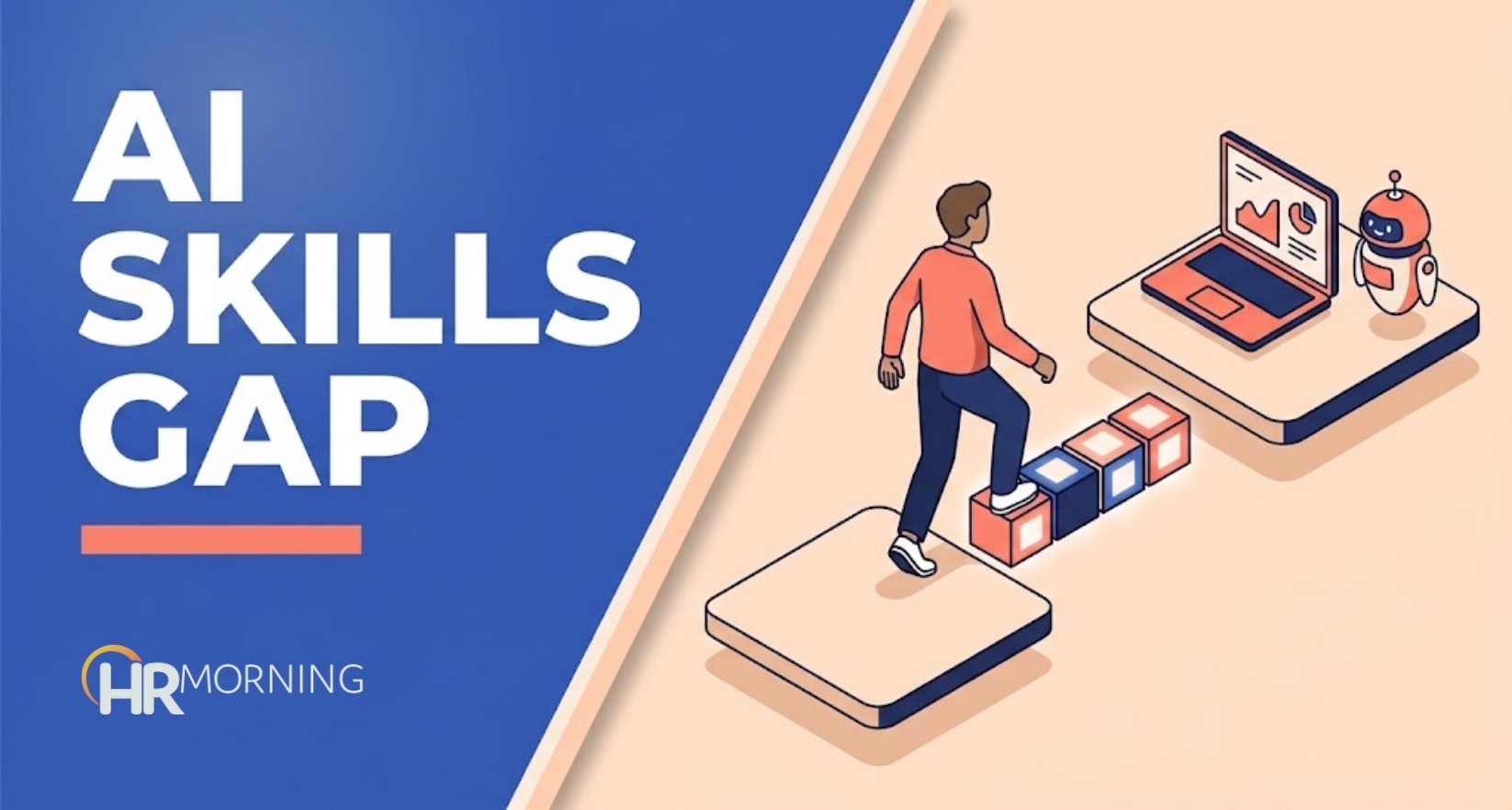
The AI skills gap has moved from a future concern to a current one. It shows up as a requisition that stays open far longer than planned, a pilot that never spreads beyond one team, or a manager who can’t judge whether a direct report’s AI-assisted work is actually good. HRMorning has covered how skills-based approaches help fix skills gaps, and the same thinking now applies to AI. Below are the questions HR leaders are asking most often, and practical answers to each.
Isn’t the AI Skills Gap Just a Training Problem?
It’s tempting to treat it that way. Schedule a course, fund a few certifications and report that the organization is “doing AI.” But training can only teach someone to use a tool. It can’t tell HR which roles are changing fastest, which capabilities the business will need to hire for, or which employees are ready to move into new work.
Those are workforce planning questions, and they cut across recruiting, development, internal mobility and management. Organizations closing the AI skills gap fastest are rebuilding how they identify, develop and deploy talent around AI, rather than layering a learning catalog on top of existing processes.
How Do We Figure Out Where Our Gaps Actually Are?
Start with the work, not the org chart. For each critical role, ask three things: which tasks AI is already changing, what new capabilities those tasks require, and how many people in the role have them today. Customer support, finance operations and marketing often change first, but every function deserves a look.
The result is a map of where the AI skills gap will cost the business first. That’s far more useful than a company-wide training completion rate, because it tells HR exactly where to focus hiring, development and budget.
Should We Hire for AI Skills or Build Them Internally?
Usually both, but the balance matters. Job descriptions written two years ago may screen for the wrong things, so updating them to describe the judgment, data fluency and tool comfort a role now needs helps recruiters find candidates who can do the work as it exists today. It also keeps teams from over-hiring for narrow technical credentials when adaptability matters more.
At the same time, employees who already understand the business are often the fastest route to new capability. When a role changes, look inside first. Identify people with adjacent skills, give them a defined development path and make the move visible so others see what’s possible. Tying this work to succession planning keeps critical roles from becoming single points of failure.
TriNet’s Harvard Business Review AI Talent Playbook walks HR leaders through this balance, from identifying the AI-critical skills a workforce is missing to redesigning hiring, upskilling and internal mobility so capability compounds across the organization. It also covers how to separate AI tools that drive measurable productivity from those that only add complexity.
What Role Do Managers Play?
A bigger one than most talent plans assume. Managers now oversee work that’s partly done by people and partly assisted by software. They need to know how to set expectations for AI use, review output with a critical eye and keep accountability clear when something goes wrong.
Without that preparation, the AI skills gap simply moves up a level. Quality slips quietly, and employees lose confidence in leaders who can’t tell good AI-assisted work from bad.
Why Are Employees Using AI but Not Fully Committing to It?
Because usage often grows faster than trust. Employees may rely on AI tools daily while still doubting their accuracy, worrying about bias or wondering what happens to their data. That gap rarely shows up as open resistance. It shows up as workarounds, half-hearted adoption and disengagement that eventually becomes turnover.
That makes trust a talent issue as much as a technology issue. Human review that employees can see, plain-language explanations of how tools are governed and a clear way to raise concerns all help people commit to new ways of working rather than simply complying. TriNet’s on-demand session The Trust Gap: Why Employees Are Using AI But Don’t Fully Believe In It explores how small and mid-sized businesses can build that confidence. The World Economic Forum’s Future of Jobs Report also lists AI and big data among the fastest-growing skills employers expect to need, which makes the stakes clear.
Where Should We Start This Quarter?
An AI skills gap doesn’t have to be solved all at once. Pick two or three roles where AI is already changing the work, complete the skills inventory for those roles, and use what you learn to update one hiring profile and one internal mobility path. Small, visible progress builds the case for a broader plan and gives leadership something concrete to fund.
Learn more about TriNet’s HR solutions for small and medium-sized businesses at trinet.com.
- Share on