• Skip to primary navigation
  • Skip to main content

HRMorning

  • FREE RESOURCES
  • PREMIUM CONTENT
  • HR DEEP DIVES
  • PODCASTS
    • VOICES OF HR
    • WOMEN’S LEADERSHIP TODAY
  • LOGIN
  • SIGN UP FREE
  • Employment Law
  • Benefits
  • Recruiting
  • HR Technology
  • Payroll
  • Management
  • Women’s Leadership
  • More
    • Talent Management
    • Performance Management
    • Leadership & Strategy
    • Compensation
    • Policy & Procedures
    • Wellness
    • Staff Departure
    • HR Career & Self-Care
    • Health Care
    • Retirement Plans
WLT Logo
  • Leadership & Strategy

Debunking the Confidence Myths

Michelle Myers
By: Michelle Myers
  • Share on

About the Author

Michelle Myers is a dedicated Creative Content Production Manager overseeing the content strategy and execution for Women's Leadership, HRMorning, and Resourceful Finance Pro. With a keen eye for detail and a passion for creating engaging and informative content, Michelle plays a vital role in delivering high-quality resources to professionals in HR, finance, and women's leadership. Her expertise spans across various content formats, ensuring that each platform provides valuable insights and fosters professional growth. Michelle's commitment to excellence and her ability to manage complex production workflows make her an invaluable asset to her team.

Show Less
Last Updated: January 13, 2026
3 minute engagement
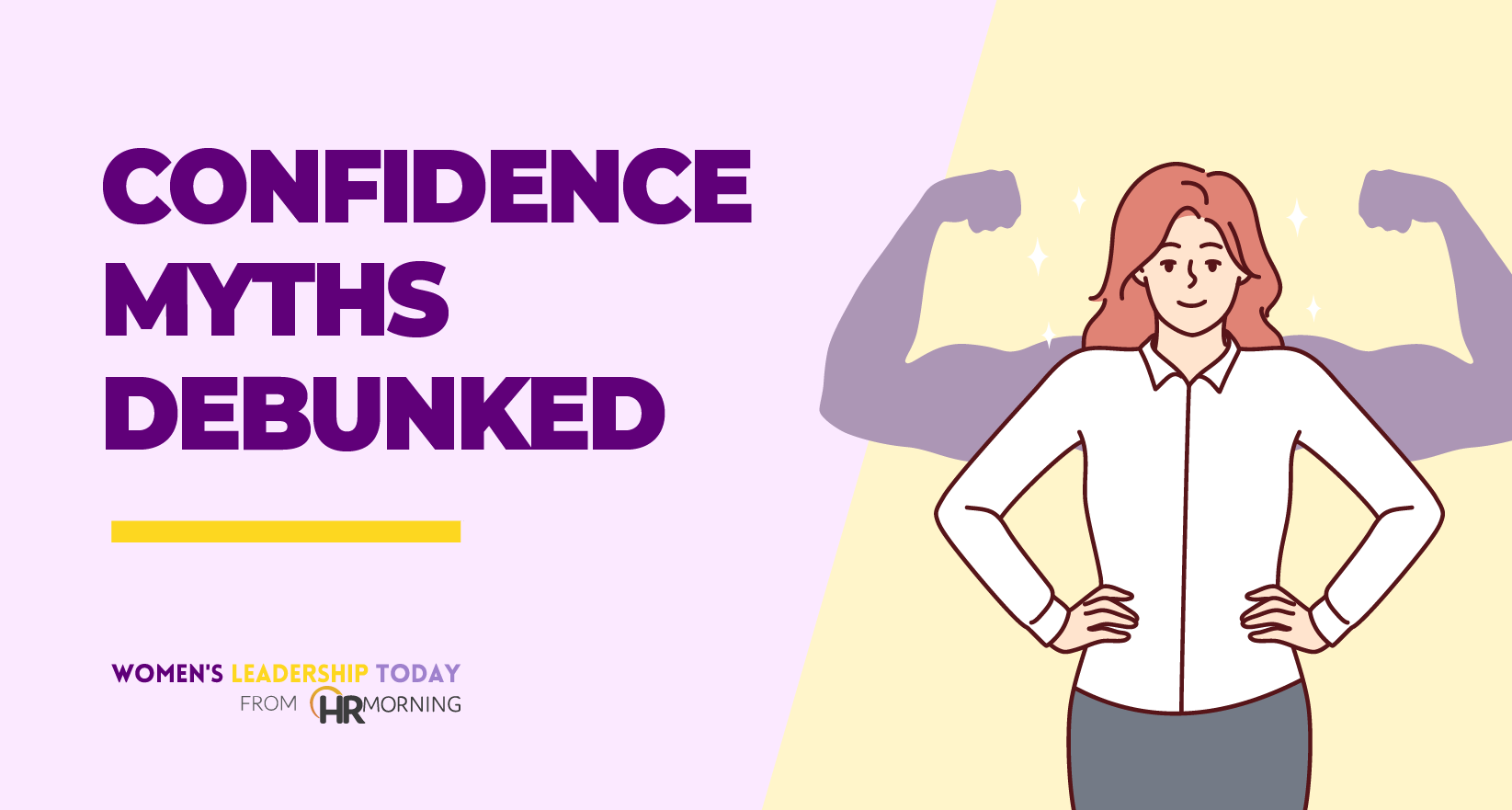
Illustration for a Women’s Leadership Today article debunking confidence myths, featuring a woman in a power pose with a flexed shadow symbolizing inner strength and self-confidence.

Confidence is a highly sought-after quality that many believe is the key to success and happiness.

However, several persistent myths surrounding confidence can lead to misconceptions and impede personal growth.

Four Confidence Myths

In particular, four common myths make confidence seem unattainable.

Overcoming these myths is the first step toward feeling more confident about becoming confident.

Myth 1: Confidence Precedes Action

Many people believe that they need to feel confident before taking on a new challenge or pursuing a goal. However, confidence is the result of taking action, not the prerequisite.

Stepping out of our comfort zones and facing our fears allows us to gain valuable experience and learn that we are capable of more than we initially thought. This process of taking action and achieving small successes builds confidence over time. Waiting to feel confident before taking action can lead to procrastination and missed opportunities.

Focus on taking small, manageable steps toward your goals. Celebrate your progress along the way, and remember that confidence is a byproduct of consistent effort beyond your comfort level.

Myth 2: Success Equals Confidence

While success can boost confidence, it is not a guarantee. Many highly successful individuals struggle with self-doubt and imposter syndrome, feeling as though they are not deserving of their achievements.

Moreover, confidence is not solely dependent on external success. It is possible to be confident in our abilities regardless of external validation. True confidence comes from within and is based on self-awareness, self-acceptance and a growth mindset.

Focus on confidence as a journey, not a destination. Even the most successful people have moments of self-doubt. The key is to develop a strong sense of self and to focus on growth rather than relying solely on recognized achievement.

Myth 3: Confidence Is Aggressive

Some people mistakenly believe that confidence is synonymous with aggression, arrogance or abrasiveness. Individuals who are domineering or pushy are mistakenly considered confident.

However, true confidence isn’t about belittling others or pushing one’s own agenda. Instead, it’s about having the inner strength that allows us to be assertive when necessary while also being respectful towards others. Confident people are often good listeners and collaborators, secure in their own abilities and not threatened by the success of others.

Focus on developing the soft skills that build trust and genuine influence, such as collaboration and emotional intelligence. Building a strong relationship and a foundation of trust with those around you will help you feel secure, which can lead to more confidence.

Myth 4: We’re Born with Confidence

Finally, many people believe that confidence is a fixed personality trait: You either have it or you don’t. This myth can be particularly damaging, as it suggests that confidence can’t be developed or improved over time.

In reality, confidence is a skill that can be cultivated through practice and self-reflection. Like any other skill, it requires effort and dedication to grow and maintain. Everyone has the potential to become more confident, regardless of their natural disposition or past experiences.

Focus on challenging negative self-talk, setting realistic goals, and celebrating small victories along the way. It also involves learning to accept and learn from failures, rather than allowing them to define our self-worth.

Developing a Better Understanding of Confidence

Confidence is a complex and multifaceted quality that is often misunderstood. By debunking these common myths, we can develop a more accurate and empowering understanding of what confidence truly is and how it can be cultivated.

Remember, confidence is not about waiting for the perfect moment, relying on external validation, being aggressive or having a fixed personality trait. Instead, it is about taking action, focusing on personal growth, being respectful and empathetic, and recognizing that confidence is a skill that can be developed over time.

Discover how to foster unshakeable inner confidence, set healthy boundaries, and empower decision-making to achieve success with our program, “Unshakeable Confidence: Conquering Imposter Syndrome for Success.”

Filed under
WLT Logo
  • Leadership & Strategy
  • Share on

Get the HRMorning Newsletter

With HRMorning arriving in your inbox, you will never miss critical stories on labor laws, benefits, retention and onboarding strategies.

  • This field is for validation purposes and should be left unchanged.
  • This field is hidden when viewing the form
  • This field is hidden when viewing the form
  • This field is hidden when viewing the form
  • This field is hidden when viewing the form
  • This field is hidden when viewing the form
  • This field is hidden when viewing the form
  • This field is hidden when viewing the form
  • This field is hidden when viewing the form
  • This field is hidden when viewing the form
  • This field is hidden when viewing the form
  • This field is hidden when viewing the form
  • This field is hidden when viewing the form
  • This field is hidden when viewing the form
  • This field is hidden when viewing the form
  • This field is hidden when viewing the form
  • This field is hidden when viewing the form
  • This field is hidden when viewing the form
  • This field is hidden when viewing the form
  • This field is hidden when viewing the form
  • This field is hidden when viewing the form
  • This field is hidden when viewing the form
  • This field is hidden when viewing the form
  • This field is hidden when viewing the form
  • This field is hidden when viewing the form
  • This field is hidden when viewing the form
  • This field is hidden when viewing the form
  • This field is hidden when viewing the form
  • This field is hidden when viewing the form
  • This field is hidden when viewing the form
  • This field is hidden when viewing the form
  • This field is hidden when viewing the form
  • This field is hidden when viewing the form
  • This field is hidden when viewing the form
  • This field is hidden when viewing the form
  • This field is hidden when viewing the form
  • This field is hidden when viewing the form
  • This field is hidden when viewing the form
  • This field is hidden when viewing the form
  • This field is hidden when viewing the form
  • This field is hidden when viewing the form
  • This field is hidden when viewing the form
  • This field is hidden when viewing the form
  • This field is hidden when viewing the form
  • This field is hidden when viewing the form
  • This field is hidden when viewing the form
  • This field is hidden when viewing the form
  • This field is hidden when viewing the form
  • This field is hidden when viewing the form
  • This field is hidden when viewing the form
  • This field is hidden when viewing the form
  • This field is hidden when viewing the form
  • This field is hidden when viewing the form
  • This field is hidden when viewing the form
  • This field is hidden when viewing the form
  • This field is hidden when viewing the form
  • This field is hidden when viewing the form

Free Training & Resources

White Papers

Employee Discount Program Buyer’s Guide

Provided by Perkspot

White Papers

The New Rules of Engagement: Rethinking How Employees Connect to Work

Provided by Inspirus

Webinars

How HR Teams Can Champion a ‘People-First’ HR Strategy

White Papers

Ultimate Guide to Selecting a Contingent Employer of Record (EOR)

Provided by Magnit

SPONSORED CONTENT

HR Technology

sponsored content
The Best AI Software for HR Automation

Courtesy of G-P

Talent Management

sponsored content
Powerful Employee Retention Strategies for 2025: How to Keep Your Best People

Courtesy of PEOPLEGURU

Benefits

Health Care

Wellness

sponsored content
Proven Results: 5 Ways Teladoc Health Chronic Condition Management Transforms HR Outcomes

Courtesy of TELADOC HEALTH

Further Reading

  • Leadership & Strategy
Who Runs the World? Girls!: Beyoncé and Taylor Swift Lead a New Era of Women Empowerment  

2023 is witnessing a remarkable transformation in the entertainment industry as women take the forefront in both the music and performan...

  • Leadership & Strategy
Answer These Questions and Become Part of the Successful 8%

Over the many years of attempting to change myself by setting New Year’s resolutions, I have painfully become aware of the research that r...

  • Leadership & Strategy
6 Keys to Build the Confidence to Overcome Anything

Building confidence, both in yourself and in others, is a transformative journey that blends self-acceptance, consistent practice and a sup...

  • Leadership & Strategy
The Power of Resolve: 7 Ways to Make This Trait Work Better for You

From subtle biases to outright discrimination, women leaders often face obstacles their male counterparts do not. Cultivating an unshakable...

  • Leadership & Strategy
7 Steps to Build a Team That Outperforms the in Critical Time

A team that succeeds is more than just a group of skilled individuals; it is a cohesive unit that collaborates effectively, adapts to chall...

  • Leadership & Strategy
Insightful Interviewing: 10 Unique Questions to Help You Hire the Right People

Hiring the right people for a position can be tough, especially in a competitive industry. Interviews do not give hiring managers a lot of ...

Get the latest from HRMorning in your inbox PLUS immediately access 10 FREE HR guides.

I WANT MY FREE GUIDES
HR Morning Logo
  • Facebook
  • Linked In
  • ABOUT HRMORNING
  • ADVERTISE WITH US
  • WRITE FOR US
  • CONTACT
  • Employment Law
  • Benefits
  • Recruiting
  • Talent Management
  • Performance Management
  • HR Technology
  • Leadership & Strategy
  • Compensation
  • Policy & Procedures
  • Wellness
  • Staff Departure
  • HR Career & Self-Care
  • Health Care
  • Retirement Plans
  • DEI

HRMorning, part of the Rover Insights Network, provides the latest HR and employment law news for HR professionals in the trenches of small-to-medium-sized businesses. Rather than simply regurgitating the day's headlines, HRMorning delivers actionable insights, helping HR execs understand what HR trends mean to their business.

Powered By Rover Insights
Privacy Policy | Terms of Service
Copyright© 2026 Rover Insights
HRMorning Logo

WELCOME BACK!

Enter your username and password below to log in

Forget Your Username or Password?

Reset Password

Lost your password? Please enter your username or email address. You will receive a link to create a new password via email.

Log In

Why do we need your credit card for a free trial?

We ask for your credit card to allow your subscription to continue should you decide to keep your membership beyond the free trial period.  This prevents any interruption of content access.

Your card will not be charged at any point during your 21 day free trial
and you may cancel at any time during your free trial.

During your free trial, you can cancel at any time with a single click on your “Account” page.  It’s that easy.
