

6 Huge Employee Egos in the Workplace and How to Handle Them
By
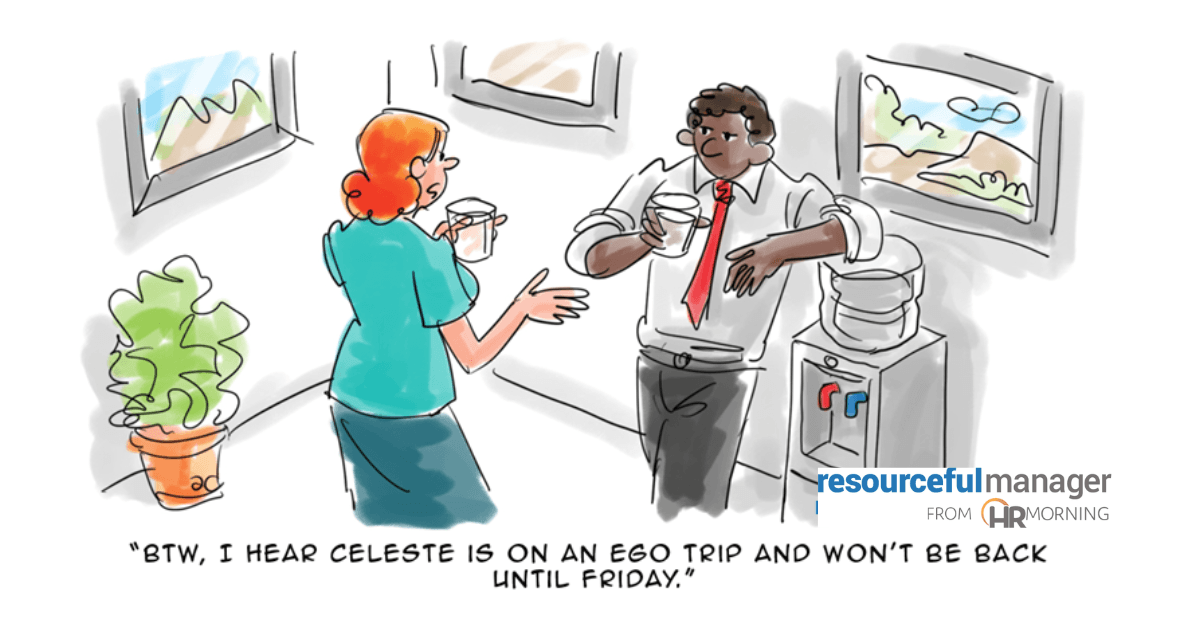
As a manager, it can be difficult to mold competing personalities into a cohesive team — especially if your team is riddled with some employee egos.
Unfortunately, in today’s workplace, many people can’t leave their egos at the door (or behind the Zoom screen).
Instead, they bring it to work and take everyone on their ego trips with them.
Put Employee Egos on the Shelf
The best way to handle huge employee egos? Know them, what’s behind them and what to expect.
It helps to have a road map, even for ego trips. Here’s a primer on some you’ll encounter and what to do:
1. The Criticism Dodger
They say: “Are You Saying I’m WRONG?“
They react poorly to constructive feedback due to their inflated egos. They just can’t imagine they’ve made a mistake. You get the puzzled facial reaction, followed by a barrage of excuses and deflections worthy of a politician.
But you’re the manager, so you get paid to give feedback when needed.
These employees respond best when you frame their mistake or offense as something that might have been unintentional and even may have seemed to make sense. No one likes to be told they made a stupid decision, least of all these employees.
Try: “I don’t blame you for thinking that was the right move, but you might not have had all the information you needed to make a better choice.“
2. The Easily Offended
They say: “I’m outraged!“
There doesn’t seem to be anything that won’t tick off these hyper-egoists. It could be even the smallest of infractions, like being gently interrupted during a meeting, or finding their usual seat in the break room taken by someone else.
Instead of just shrugging it off, these folks give it their all — a full-throated denunciation of whatever is offending them (at the moment).
There’s no use telling these people to calm down. It’s not their nature.
The best approach is to present the silver-lining side of things when you can. Give the person an it’s-not-as-bad-as-it-looks option, or anything that defuses their angst. This also telegraphs that you’re not going to stoop to their level.
Try: “What you’re saying sounds bad; is there anything I could help you with?
3. The Above-It-All Superior
They say: “Do they think I care?“
Their ego tells them to exert control over things they can’t (such as being criticized) by acting as if it doesn’t touch them.
Shrugging off suggestions or constructive feedback gives them the ability to act as if the criticism wasn’t warranted in the first place.
This it-doesn’t-have-an-effect-on-me approach masks insecurity and maybe even fear that they can’t make the situation right, or that giving in to criticism will make them look inferior.
Your first reaction might be to try to make them care, maybe by subtle threats about punishment or job loss. But you’re better off recognizing this for the ego trip it usually is.
So, it pays to invoke a sense of perspective when delivering critiques.
Advertisement
Try: “It might seem like a small issue to you, but I feel you can improve on (X task) and I’d like to see you try harder.“
4. The Petty Backstabber
They say: “We’ll see about THAT!“
No one is safe when these egos stalk the workplace. Even the most innocuous slight gets them in high dudgeon, focused on retribution at all costs, and the sneakier, the better.
Managers who try to cope with employee sabotage sometimes end up in the middle of the fray unintentionally.
Take a firm stand that team back-biting won’t be tolerated.
Try: “I know you have your disagreements with ______, and I’m not asking you to be friends. But I expect you to work together regardless.
5. The Self-Promoter
They say: “Maybe I should really be the boss!’
It’s one thing for an employee to show interest in becoming a leader and rising through the ranks. It’s entirely another for an employee constantly usurping your authority and undermining your position, all under the egotistical guise of being an eager beaver.
It shows up in small ways, like when you’re due to submit a regular department report but find that your underling took the initiative and did it for you.
Good managers know the difference between the two behaviors, but you still might be stuck dealing with an employee’s delusions of grandeur.
You want to steer their ego trip into constructive waters, not by squashing their efforts entirely, but by channeling them.
Try: “You seem to be really interested in how I run the budget; I’ll let you know how you can contribute when the next one is due.“
6. The Overall Expert
They say: “I know exactly how to do this!”
Nothing wrong with tooting your own horn, but this ego-tripper does it for everything. After a while, he gets so annoying that it draws the disdain of other employees.
From Culture to Capability: 3 HR Trends Shaping 2027
Employees can try to inflate themselves this way if they feel inferior to the others in the group for some reason. So, you want to stop this ego trip in its tracks.
Curb the control-freak tendencies by making sure everyone on your team is treated with equal consideration. Let the employee tackle the things he or she is truly good at — and duly praise them for a good job. But make it known they won’t necessarily be tapped for every project or task.
Try: “I know you’ve come up with good solutions in the past, but I’m going to put the decision to a group vote.“
Further Reading
31 Ways to Tell Employees You’re Thankful for Their Efforts
Words can be the most powerful tool you want to thank employees for their efforts. While any day of the year is a good day to praise or thank employees, this time of year reminds us it’s especially important to show employees how thankful we are. Even better, thanking employees isn’t just fluff. It pays […]
Kind v. Nice: It Makes a Big Difference for Employee Feedback | 2-Minute Video
When it comes to giving employee feedback, there’s a difference between being kind and being nice. It’s an important distinction HR pros and front-line managers want to make. What’s Up in This Episode: Kind v. Nice In this episode of HRMorning’s 3-Point, Amy Baker, Managing Partner at Happy Humans Consulting LLC, explains the difference between […]
A Better Way to Give Employees Feedback Now | 2-Minute Video
Giving and receiving feedback can be difficult. Giving and receiving bad feedback is even worse. We’re not talking about negative evaluations. We’re talking about doing a bad job with any kind of performance or behavior conversation. What’s Up in This Episode: Feedback Redo In this episode of HRMorning’s 3-Point, Kathie Leslie, Owner of Kathryn Leslie, […]
Employees Have FOBO: 5 Factors to Manage the AI Anxiety
Many employees are struggling with AI in ways you didn’t even imagine. They have FOBO – fear of becoming obsolete. And that fear has the potential to paralyze them — making the possibility of becoming obsolete a reality. “AI has accelerated that shift over the past year: tasks are being automated and employees are watching […]
4 Ways Workplace Community Drives Collaboration, Innovation and Growth
Across industries, workforce conversations often begin with the candidate experience. Long-term success depends just as much on what happens after someone joins an organization. To build resilient teams, leaders need to create workplaces where people feel connected, supported, authentic and able to envision a future. A strong sense of workplace community can help turn a […]
7 Keys to Give Feedback That’ll Help Employees Grow
Most bosses want to give feedback that helps employees do better. Unfortunately, many give feedback that makes employees feel worse about themselves and their work. It can be so bad that employees feel the impact of feedback delivered badly for years. That’s not the kind of impression leaders want to make. Feedback Gone Bad More […]