

10 Most Regrettable Phrases at Work — And How To Rebound from Them
By
We’ve all said something we would like to take back when our nerves were frazzled.
In fact, almost 90% of people admit that they’ve said things they soon regretted when they were under pressure, according to a study from Preply.
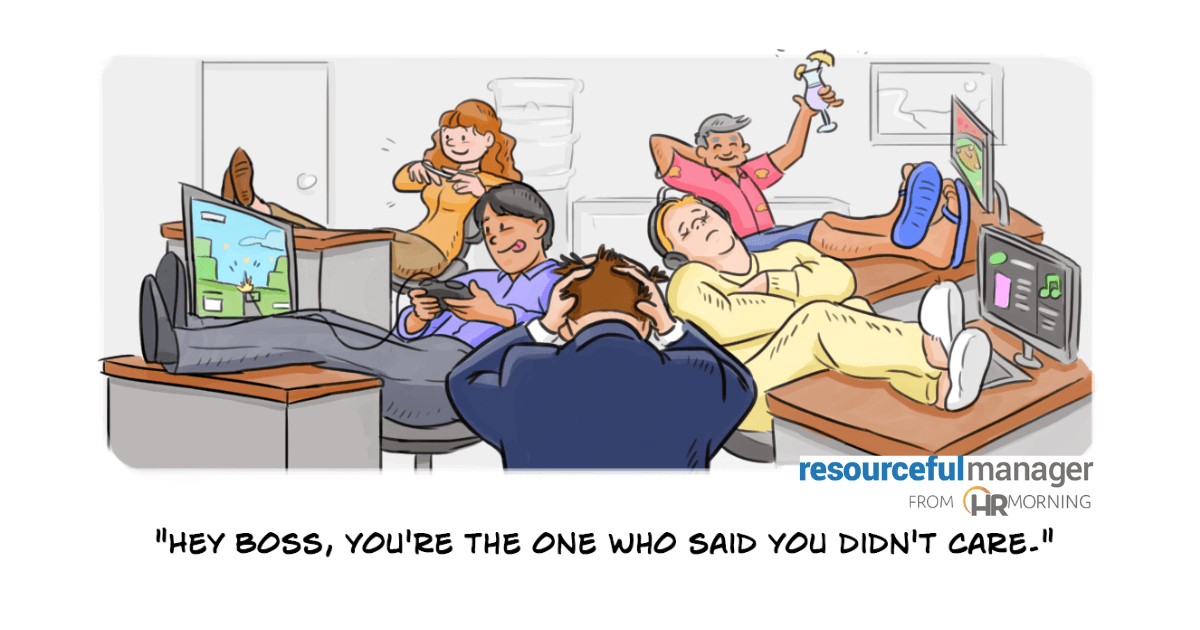
At the top of the list of regrettable phrases: “I don’t care.”
Problems with Regrettable Phrases
Other than feeling like an ass for saying things we wish we hadn’t, regrettable phrases lead to other issues.
They often spark misunderstandings and lead to further conflict. Two-thirds of employees say their motivation and job satisfaction decline when they hear colleagues spew out negative phrases.
Then there’s this: It spills into our personal lives. Most people spend about 11 minutes a day at home venting about what went wrong at work.
But there are ways to avoid the ill effects of regrettable phrases (and behaviors) at work.
“The key is to approach the situation with empathy, transparency, and a commitment to support,” says Sylvia Johnson, a Preply language expert. “The language you use is critical, so use words that inspire calmness and clarity.”
10 Regrettable Phrases
So let’s first look at the phrases people most regret saying in the workplace.

Obviously, the best bet is to avoid saying these phrases at work. But when pressure kicks in, words sometimes spill out before we think them through.
We have two approaches to help curb the regret:
- Tactfully rebound from regrettable phrases, and
- Get into the practice of using more positive, assuring phrases.
More on each below.
Tactic 1: Rebound
Ideally, you never say anything under stress that you’ll regret sooner or later. But when it happens, take these steps to rebound and make amends.
- Own it. Your words likely hurt someone, and you can’t minimize how it made them feel.
- Evaluate the damage. Did you mildly hurt someone’s feelings or ignite a firestorm? This will help you decide how and when to react.
- Give the appropriate amount of time and space. Sometimes it helps to let intense feelings cool a bit before making amends. But don’t wait too long so the situation festers into something worse.
- Skip excuses. Don’t say, “I was stressed out and not thinking clearly” or anything else that might minimize your words and behavior.
- Take responsibility. Admit what you said was wrong and how you can see it negatively impacted others.
- Apologize. A sincere apology goes a long way in making amends. Be sure to say, “I’m sorry,” as it is the most sincere way to show remorse.
- Validate their feelings. Let them know you understand that your words affected them negatively. Say something like, “I know I sounded critical, and I understand why you’re upset.”
- Share your intention to do better. You can’t promise that you’ll never say something you’ll regret again. But you can promise to try your hardest to avoid it.
- Open the dialogue. They might have some things to say in return. Listen carefully. Don’t become defensive.
Tactic 2: Practice Positive Phrases
No matter who’s stressed — whether it’s you or the people you’re working with — everyone can benefit from more positive, reassuring language at work.
Preply found these are the best to use often.

“Use phrases like ‘I understand that this news may be challenging to hear, and I want you to know that I’m here for you,'” suggests Johnson. “Deliver the information straightforwardly, avoiding unnecessary ambiguity.
Advertisement
“Immediately follow up with any available support or potential solutions. This shows that you’re not just delivering bad news but are committed to assisting in navigating the challenges,” she continues. “You could explain, ‘We’re here to support you through this. Let’s discuss how we can work together to find the best way forward.'”
Further Reading
31 Ways to Tell Employees You’re Thankful for Their Efforts
Words can be the most powerful tool you want to thank employees for their efforts. While any day of the year is a good day to praise or thank employees, this time of year reminds us it’s especially important to show employees how thankful we are. Even better, thanking employees isn’t just fluff. It pays […]
Kind v. Nice: It Makes a Big Difference for Employee Feedback | 2-Minute Video
When it comes to giving employee feedback, there’s a difference between being kind and being nice. It’s an important distinction HR pros and front-line managers want to make. What’s Up in This Episode: Kind v. Nice In this episode of HRMorning’s 3-Point, Amy Baker, Managing Partner at Happy Humans Consulting LLC, explains the difference between […]
A Better Way to Give Employees Feedback Now | 2-Minute Video
Giving and receiving feedback can be difficult. Giving and receiving bad feedback is even worse. We’re not talking about negative evaluations. We’re talking about doing a bad job with any kind of performance or behavior conversation. What’s Up in This Episode: Feedback Redo In this episode of HRMorning’s 3-Point, Kathie Leslie, Owner of Kathryn Leslie, […]
Employees Have FOBO: 5 Factors to Manage the AI Anxiety
Many employees are struggling with AI in ways you didn’t even imagine. They have FOBO – fear of becoming obsolete. And that fear has the potential to paralyze them — making the possibility of becoming obsolete a reality. “AI has accelerated that shift over the past year: tasks are being automated and employees are watching […]
4 Ways Workplace Community Drives Collaboration, Innovation and Growth
Across industries, workforce conversations often begin with the candidate experience. Long-term success depends just as much on what happens after someone joins an organization. To build resilient teams, leaders need to create workplaces where people feel connected, supported, authentic and able to envision a future. A strong sense of workplace community can help turn a […]
7 Keys to Give Feedback That’ll Help Employees Grow
Most bosses want to give feedback that helps employees do better. Unfortunately, many give feedback that makes employees feel worse about themselves and their work. It can be so bad that employees feel the impact of feedback delivered badly for years. That’s not the kind of impression leaders want to make. Feedback Gone Bad More […]