

5 Best Boss Behaviors – and How to Avoid What the Worst Bosses Do
By
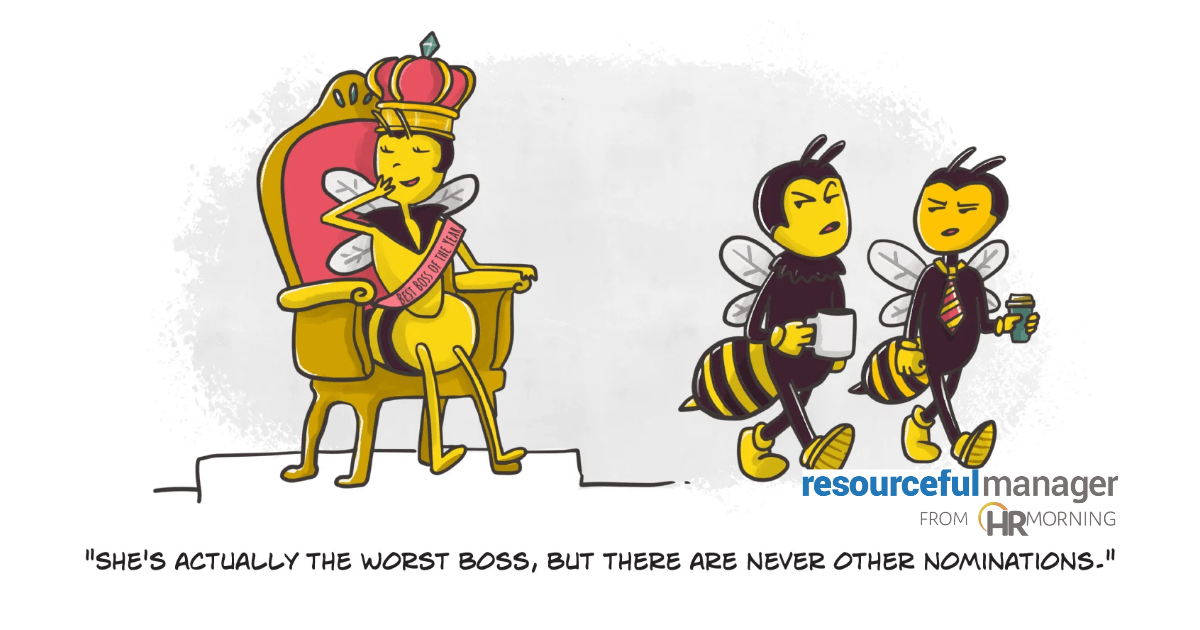
No one wants to be a bad boss. But even good people commit some bad boss behaviors.
Bad v. best boss behaviors make a difference in the employee experience. Under bad bosses, employees are less productive, more stressed and generally unhappy. Under good bosses, they’re more involved, fully engaged and less likely to quit.
Nearly 25% of employees in a Perceptyx study say they work for the worst boss ever. Of those, 75% aren’t fully engaged. On the flip side, people working for the best bosses are almost 2x as likely to be engaged.
Best Boss Behaviors to Embrace
You want to avoid the worst boss behaviors — and pick up more best boss behaviors.
“Organizations that support their mid-level managers can greatly improve employee engagement, boost productivity, and achieve sustainable success. Giving managers the tools and training they need fosters a culture of success and continuous development that pays dividends across the organization,” said Emily Killham, Former Director of Research & Insight at Perceptyx.
The good news here: Most managers are willing to learn more and improve their management techniques. Despite the daily demands, 70% said they have taken action to learn more based on employee feedback.
Regardless of the training — self-guided, formal or informal — managers can hone best boss behaviors. Here are five you want to embrace and hone, plus bad boss behaviors you want to avoid:
Professional v. Incompetent
Best Bosses: Professional. Employees thrive when they work for bosses who treat them with dignity and professionalism. The best bosses engage employees, coach teams and carry the torch toward the goals.
Worst Bosses: Incompetent. Employees can be relatively forgiving, but working for a boss who is incompetent is frustrating. Bad boss’ lack of credibility — usually earned from unfulfilled promises, hype and failure to own mistakes — leaves employees unstable and unsuccessful.
The Great Divide: Incompetent bosses often hide it by claiming they know what to do when they don’t even know where to start. Professional bosses know when to seek more opinions, data and/or best practices — and use it — before making decisions or executing.
Approachable v. Unsupportive
Advertisement
Best Bosses: Approachable. These bosses offer support and make it easy for employees to ask for the advice, opinions and resources they need. They share information — a bounty of professional and an appropriate amount of personal — to make employees feel comfortable sharing their concerns, goals, and personal ambitions and triumphs.
Worst Bosses: Unsupportive. They often hand out assignments and don’t offer support or resources to help employees meet goals. They manage tasks rather than coach performance.
The Great Divide: Unsupportive bosses usually think about one person and one thing — themselves and their success. Approachable, supportive bosses believe in lifting up their employees and helping them thrive.
Respectful v. Disrespectful
Best Bosses: Respectful. The best bosses speak and act fairly and kindly of their company, clients, colleagues, employees, policies and beyond.
Worst Bosses: Disrespectful. One of the worst bad boss behaviors is showing disrespect in the workplace — disrespect for the company, clients, colleagues, employees, policies and beyond. They say and do things that contradict company norms and common decency.
The Great Divide: Disrespectful behaviors will catch up with bad bosses: Their teams will crumble, and their bosses will catch on to their poor leadership skills. Respectful bosses will continue to gain trust, credibility and prominence among peers and leaders.
Trustworthy v. Unfair
Best Bosses: Trustworthy. They work to build trust with employees and colleagues. They’re fair in their decision-making process. They give credit where it’s due and criticize with tact and professionalism. They have and follow a moral code.
Worst Bosses: Unfair. They play favorites with employees, handing out good assignments and praise to their pets, and doling out bad assignments and criticism to the less-favored. They judge and make decisions without all the facts, often relying just on what they want to believe. They sometimes lie and cheat to get what they want.
From Culture to Capability: 3 HR Trends Shaping 2027
The Great Divide: Unfair bosses divide teams and deter progress. Trustworthy, fair bosses help teams work cohesively and achieve goals faster and with better quality.
Caring v. Tyrannical
Best Bosses: Caring. On the complete other end of the spectrum is a caring boss. Almost half of the survey participants said their best boss cared about them, their lives, concerns and future. They showed it through listening and acting on what they heard.
Worst Bosses: Tyrannical. Some employees say their worst bosses were tyrants — people they feared in the workplace. Tyrant bosses holler and intimidate to get what they want, listening only to what they want and say.
The Great Divide: Unfortunately, tyrants do get ahead. But they seldom have a strong team behind them. Caring leaders — who balance compassion with practicality — succeed and keep good teams together.
Further Reading
70+ U.S. Companies Affected by Remote Worker Fraud: FBI Issues New Guidance
You’ve reviewed an applicant’s resume and conducted an interview. But how can you be sure the remote worker you’re planning to bring onto your payroll is who they claim to be? More hiring managers are finding out that a candidate who looks great on paper and interviews well may still be an impostor. In a […]
Post-Election Fallout: 2 Ways to Manage New Tension in the Workplace
With the midterms over, you’d probably like to put the occasional (or frequent?) contentious moments any election can cause behind you. But it’s not likely to end with the last vote cast. HR and other leaders often face a recurring challenge in post-election times: acknowledging and managing politically charged moments that can turn up tension […]
An ‘Insecurity Tax’ Could Hurt Retention: 4 Solutions to Keep Your Talent
The last decade of corporate churn might have revealed this surprising lesson: One of the biggest threats to retention isn’t compensation, remote work or even AI. It could be managerial insecurity. When leadership is rooted in a manager’s personal anxiety, organizational behavior becomes entirely predictable. Micromanagement, hoarding authority, avoiding constructive dissent, and making defensive decisions […]
Politics at Work: An Election-Season Toolkit for HR Leaders
Employers everywhere are bracing for one of the trickiest challenges of the year as the country goes through another contentious election season. Inflammatory political speech in the workplace is disruptive and can lead to a host of workplace issues ranging from frustration and fractured relationships to claims of harassment and workplace violence incidents. With increasing […]
Are You Keeping Workforce Data Longer Than You Need To?
When an employee leaves, HR closes the personnel file, processes the final paycheck, and shuts off system access. Copies of that employee’s information can remain in places HR does not manage: email archives, collaboration platforms, badge-access logs, fleet telematics systems, and the files of recruiting, payroll and benefits vendors. Some of those records have to […]
How Managers Are the Missing Link in Workforce Capability: 3 Solutions
Managers are the bridge between business strategy, day-to-day execution, and organizational growth. Understanding and developing workforce capability has always been central to that role. And for HR leaders, a manager’s ability to do that well impacts everything from internal mobility and succession planning to retention and workforce readiness. The challenge is that workforce capability is […]