Help Employees Customize Their Career Paths | 2-Minute Video

Most employees don’t want to follow the traditional career path these days.
Some have a background or experience in one field and get interested in another. Others might see better opportunities outside their current chosen path.
So if you want to keep good employees, you’ll also want to help them build a career path that fits their life.
What’s Up in This Episode: Right-Fit Career Paths
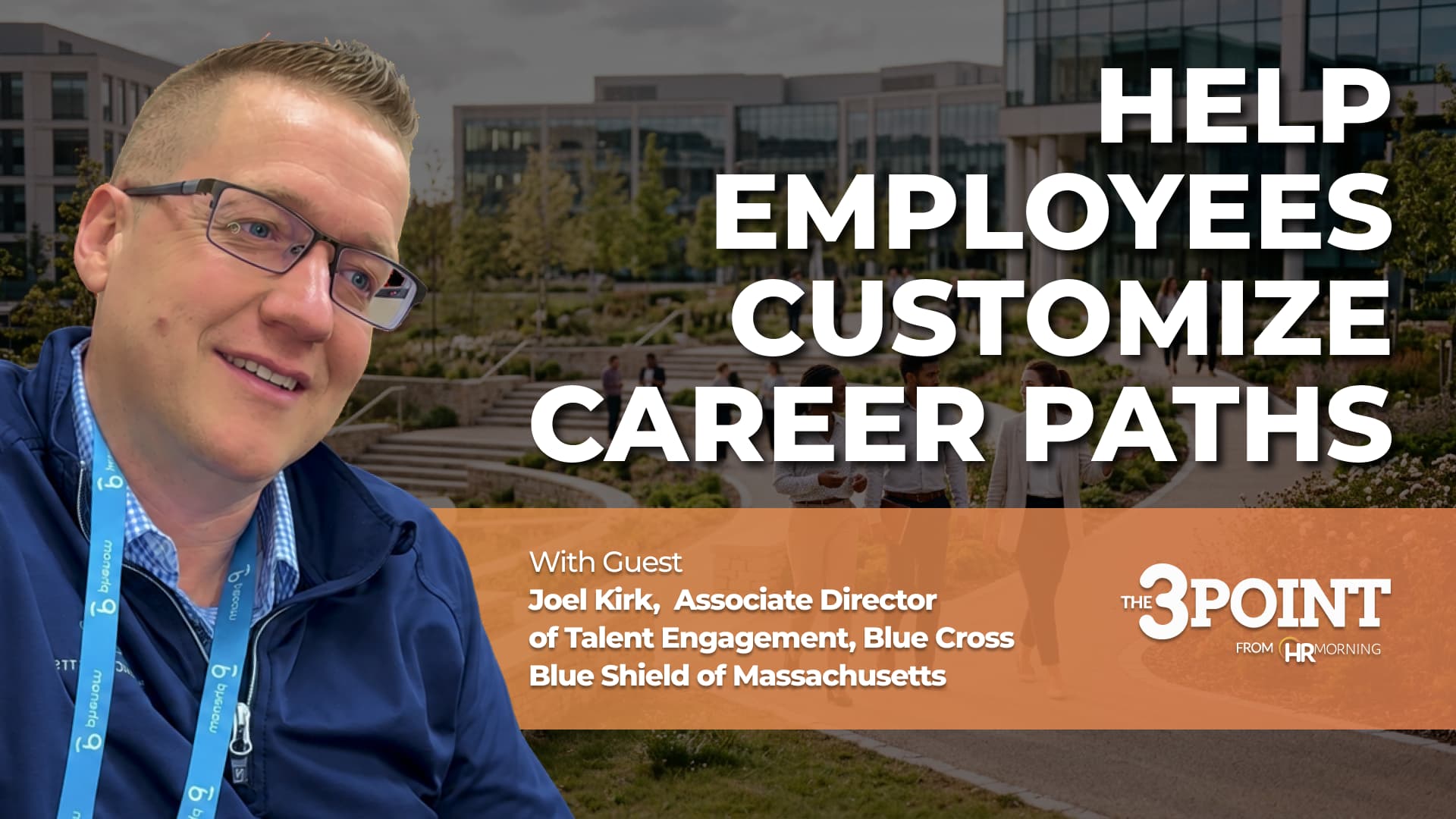
That’s why, in this episode of HRMorning’s 3-Point, our expert, Joel Kirk, Associate Director of Talent Engagement at Blue Cross Blue Shield of Massachusetts, explains how his team is helping employees customize their career paths. It’s a path you can follow as HR leaders … to get your people on the path that’s meant for them. Or, in some cases, adjust as employees’ interests, strengths and lives change throughout their careers with you.
Click, watch and listen for more details on helping employees customize their career paths.
Transcript (edited for clarity):
Only 40% of employees want to follow a traditional career path, according to a Randstad study. And in this episode of the 3-Point, you’ll learn how you can help employees customize their career paths within your organization. Let’s start with what career pathing often looks like.
Joel Kirk, Associate Director of Talent Engagement, Blue Cross Blue Shield of Massachusetts: “Right now, it’s a fragment of conversations here. Or a spreadsheet that someone made a long time ago over there. Or a conversation with an HR business partner and a leader. It’s not, it’s not centralized.”
No one is saying that something terrible is wrong with that. But it’s not the best way to get people into roles where they’ll thrive. Here, Joel Kirk gives us an example of how an employee – a claims processor – can find their next role without following the traditional career path.
Kirk: “Historical data would probably tell that person, ‘Well, your next job is going to be claims processor 2.’ Right? But what if that person doesn’t want to be a claims processor 2. What if they have a degree in marketing and they want to get into communications? How can they see their path going there? What’s the next job they should take — that’s maybe not a claims processor, and it’s not communications — but it helps them get to that spot. What are the classes they should learn? What are the gigs they should take to get the skills needed to go into communications? That’s where the power comes in, right?”
His team is implementing an applied AI platform for internal talent management. They hope it helps employees do exactly what he’s described – find the right roles, gigs and training for their ideal career. But it’s not just about employees’ skills and experience. Also …
Kirk: “It takes that human intention, and really their desires, and makes that part of the factor.“
Even with AI-enabled career pathing, the critical factor is what employees want to do. So, to help employees customize their career paths within your organization:
- Stop fragmenting. Centralize conversations, employee skills and experience into one system.
- Fold the ladder. Create a system that lets employees see where they can go within your organization and provides guidance on how to get there.
- Keep it employee-centric. Employees will stay engaged and loyal when career paths are in line with their intentions.
Now, to note, this career pathing journey didn’t just happen easily. Joel Kirk and his team laid it out intentionally. You can find out more about how to do it in this 3-Point episode: A Communication Plan that Wins Employee Buy-In.
- Share on


Free Training & Resources
EBOOK, White Papers
Provided by Personify Health
White Papers
Provided by Maven Clinic
White Papers
Provided by PerkSpot
White Papers
Provided by Inspirus