

Open Door Policy Nightmares – And 4 Ways To End Them
By
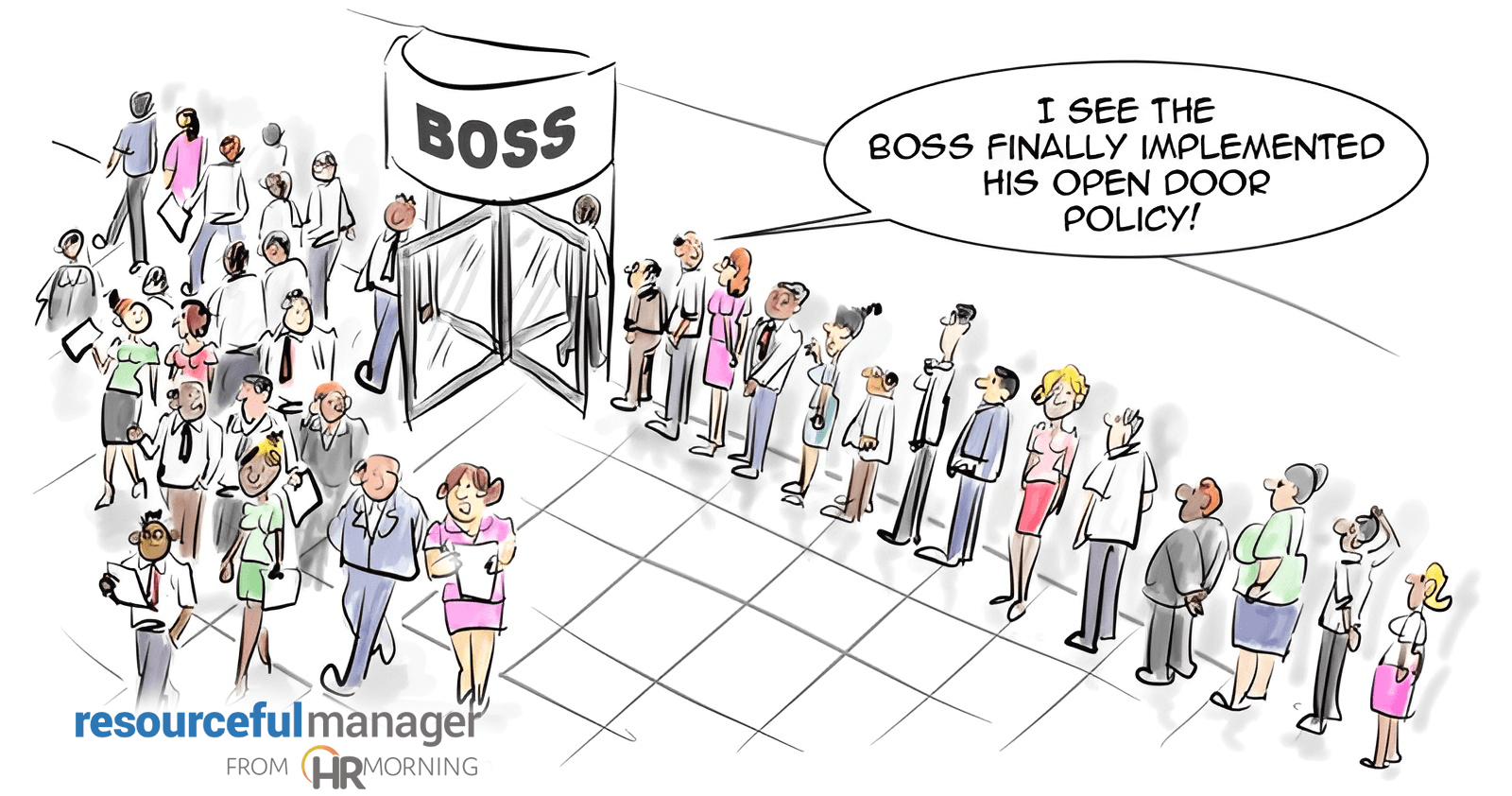
You pride yourself on having an open door policy. After all, employees know you’re receptive to their needs and can talk to you about anything.
That’s great, right?
But what sounds like workplace nirvana can turn into a nightmare. If you’re not careful, you could end up running daily therapy sessions or becoming the de facto office police department.
An open door that allows for constant access to you for every single issue, problem and decision may turn out to be counterproductive to you and your entire department.
White Papers
Building an Adoption-Friendly Workplace: Benefits That Help Families Grow and Employees Stay
How an Open Door Policy Could Backfire
Make no mistake – open door policies can cause more problems than they prevent.
For example:
- A formerly productive work day turns into a steady stream of interruptions to the point where you get nothing done.
- Your office resembles counseling sessions so often, you’re considering buying a couch (and tissues).
- Your office morphs into the Complaint Department – which doesn’t encourage employees to resolve issues if everyone’s coming to you for answers.
- The word is out on your open-door approach, so employees whose managers don’t open their doors are now coming to you for their needs.
- Repeated visits from the same employees can start to look like favoritism.
- Employees start relying on you so much for so many things that they can’t solve even the smallest problem on their own.
- You find yourself mediating more he-said-she-said gossip than a “Real Housewives” episode.
On the Plus Side …
However, with a bit of effort, an open door policy that works the way it should can both showcase your skills as a manager and encourage better communication from employees.
The secret is to make sure it’s used on your terms, and in ways that support your team goals. This is especially important if you’re a new manager.
Done right, an open-door policy can help you adjust to your managerial role faster and help you to build closer working relationships with employees.
Forbes.com lists four top reasons an open-door policy is a good idea:
- It shows your accessibility. You want employees to feel comfortable stopping by for a quick chat to talk about situations or ideas. A closed door can send the message that you’re uninterested and disengaged.
- It encourages the open flow of communication. A closed door could cut you off from what’s going on within your department. You want employees to know they can knock when they have questions or there’s an urgent problem.
- It can get you access to info you otherwise might not get. Your employees can often be the source of new information and happenings around the company. They can keep you in the loop of what’s happening.
- It fosters better working relationships. An open door policy promotes a culture of friendly openness and tells others you want to be actively engaged in their success.
4 Steps To Opening Your Door
So how do you get open-door policies to work without turning into a counselor or micromanager? Apply these guidelines to make it beneficial for both you and your employees:
1. Set Parameters
You don’t have all day. No one does. Just make that clear from the outset. “Open door” shouldn’t mean open-ended. Get across to employees that you’re accessible, but just like everyone else, you’re also on a schedule.
2. Always Listen Intently
Let people speak without interruptions from phones, email or other people. Recap to make sure you fully understand what the employee is saying. The sooner you know what the point of the visit is, the sooner you can take steps to resolve it (and get the employee out of your office).
3. Be Willing to Communicate
Advertisement

If an employee constantly harps on the same issue, there could be a root cause that needs to be addressed. Try not to be dismissive: What you hear as an employee’s venting might reveal a genuine issue behind the frustration.
4. Don’t Let It Be Overused
A key component to a well-oiled open door is that it solves problems. You don’t want to foster the idea that your open door is a revolving one. Make an effort to solve issues the first time. And involve employees directly in the decision-making process.
The message you want your open door policy to send is: I want to hear your concerns, ideas or complaints – but I’m not a therapist or a lawyer. Let’s figure out ways to solve problems and conflicts together.
Further Reading
Post-Election Fallout: 2 Ways to Manage New Tension in the Workplace
With the midterms over, you’d probably like to put the occasional (or frequent?) contentious moments any election can cause behind you. But it’s not likely to end with the last vote cast. HR and other leaders often face a recurring challenge in post-election times: acknowledging and managing politically charged moments that can turn up tension […]
An ‘Insecurity Tax’ Could Hurt Retention: 4 Solutions to Keep Your Talent
The last decade of corporate churn might have revealed this surprising lesson: One of the biggest threats to retention isn’t compensation, remote work or even AI. It could be managerial insecurity. When leadership is rooted in a manager’s personal anxiety, organizational behavior becomes entirely predictable. Micromanagement, hoarding authority, avoiding constructive dissent, and making defensive decisions […]
Politics at Work: An Election-Season Toolkit for HR Leaders
Employers everywhere are bracing for one of the trickiest challenges of the year as the country goes through another contentious election season. Inflammatory political speech in the workplace is disruptive and can lead to a host of workplace issues ranging from frustration and fractured relationships to claims of harassment and workplace violence incidents. With increasing […]
Are You Keeping Workforce Data Longer Than You Need To?
When an employee leaves, HR closes the personnel file, processes the final paycheck, and shuts off system access. Copies of that employee’s information can remain in places HR does not manage: email archives, collaboration platforms, badge-access logs, fleet telematics systems, and the files of recruiting, payroll and benefits vendors. Some of those records have to […]
How Managers Are the Missing Link in Workforce Capability: 3 Solutions
Managers are the bridge between business strategy, day-to-day execution, and organizational growth. Understanding and developing workforce capability has always been central to that role. And for HR leaders, a manager’s ability to do that well impacts everything from internal mobility and succession planning to retention and workforce readiness. The challenge is that workforce capability is […]
14 Fun Fall Team-Building Activities Employees Will Love
The change of seasons brings a unique way to engage your employees, promote team-building and have some fun with employees. And it couldn’t be more important than right now: Employee engagement has recently dropped to its lowest since 2020, according to Gallup research. Regardless of the time of year, it’s important to maintain employee motivation […]