• Skip to primary navigation
  • Skip to main content

HRMorning

  • FREE RESOURCES
  • PREMIUM CONTENT
  • HR DEEP DIVES
  • PODCASTS
    • VOICES OF HR
    • WOMEN’S LEADERSHIP TODAY
  • LOGIN
  • SIGN UP FREE
  • Employment Law
  • Benefits
  • Recruiting
  • HR Technology
  • Payroll
  • Management
  • Women’s Leadership
  • More
    • Talent Management
    • Performance Management
    • Leadership & Strategy
    • Compensation
    • Policy & Procedures
    • Wellness
    • Staff Departure
    • HR Career & Self-Care
    • Health Care
    • Retirement Plans
  • Talent Management

Could Payroll Be Your Most Underutilized Retention Tool? 3 Keys to Unlock Its Strategic Value

Doug Sabella, Expert Contributor
By: Doug Sabella, Expert Contributor
  • Share on

About the Author

Doug Sabella is the CEO and co-founder of Payroll Integrations. Sabella co-founded Payroll Integrations in 2016 to simplify payroll and benefit processes for employers and advance employees’ financial wellness. The company’s technology introduces a direct, two-way connection between payroll systems and benefits providers (401k, HSA/FSA, etc.) to automate the process of onboarding employees, updating benefit plans and managing employer/employee contributions.

Show Less
Last Updated: September 9, 2026
4 minute engagement
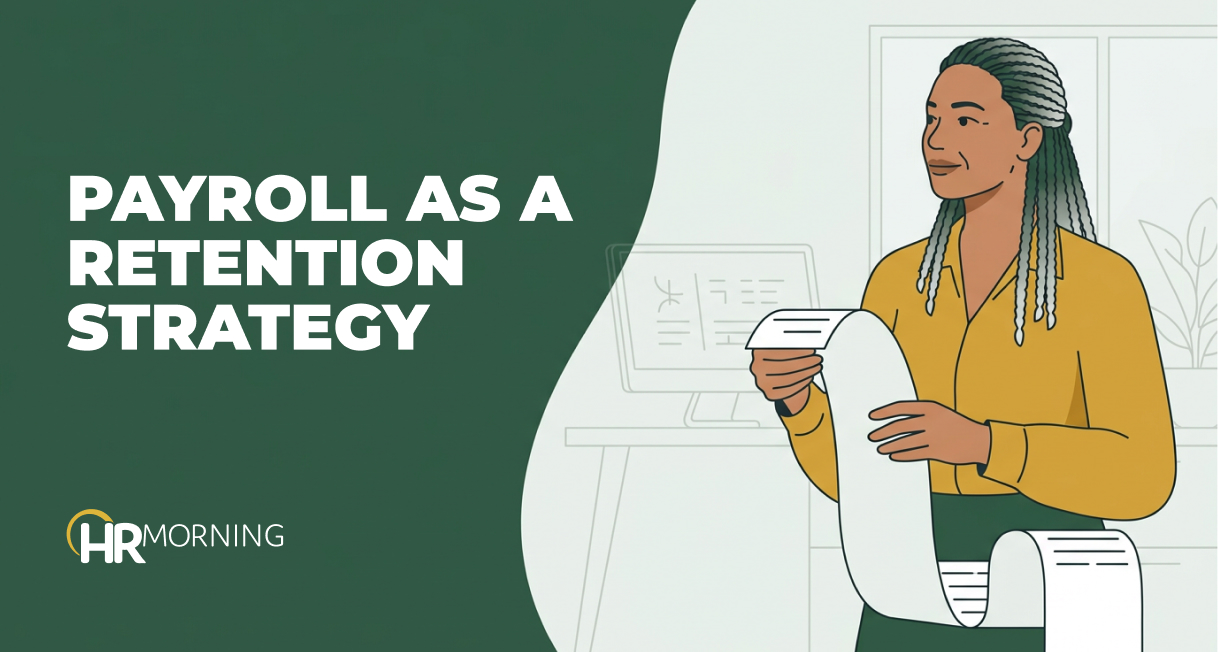
HR leader unrolling a long pay statement revealing far more value than expected, illustrating payroll as a retention strategy.

Most HR leaders spend significant energy on benefits strategy and almost none on payroll strategy, even though payroll is the only touchpoint that reaches every single employee, every pay period.

That gap is costing companies more than they realize. The gain in employee retention could be phenomenal.

Payroll as a Retention Strategy

When something goes wrong with payroll (think: a missed benefit change, a deduction error), the cost isn’t just financial. It erodes employee trust that’s hard to rebuild. And what’s less obvious is the opportunity: everything payroll could be doing and isn’t.

Payroll isn’t just infrastructure to get out checks – it’s a platform that communicates employee value, reduces operational risk across the benefits stack and drives retention and engagement. There’s even a new role emerging to reflect this shift, the payroll strategist. It’s a signal that organizations are starting to treat payroll as a function worth investing in strategically, not only operationally.

For HR leaders ready to make that shift, here are three places to start:

1. Close the Total Compensation Visibility Gap

According to Payroll Integrations’ Employee Financial Wellness Report, 58% of employees say they’re staying in their current role specifically because of their benefits. That’s a significant retention lever but it only works if employees know what they have. Most only know their base salary and not the full value of what they’re receiving: the 401(k) match, the FSA contributions, the health benefits. All of it represents real compensation, but most of it is effectively invisible to the people it’s meant to retain.

Employees may leave for job offers that look better on paper with a higher base or more perks, without accounting for what they’re walking away from. And employers, having invested in robust benefits programs, end up watching their investment fail because it never got communicated.

Using payroll as a communication touchpoint changes this. Total compensation statements, benefits reminders tied to pay cycles, clear visibility into what each deduction is delivering–this is what employees need to hear that can dramatically change how they perceive the value of their role. In fact, nearly half of employees say clearly communicated benefits play a key role in their decision to stay. When people understand what they have, they’re less likely to leave in search of something they think is missing.

2. Integrate Systems to Eliminate Blind Spots, Manual Work

Employers have invested in expanding their benefits offerings because they want to give employees more. But the operational reality compounds with every addition. More benefits mean more platforms, more partners, more workflows to manage. According to our report, more than a third of HR teams (35%) say they spend too much time on manual administrative work, averaging 11 hours a week on payroll and benefits administration alone. Every additional benefit becomes another manual process and another place where something can quietly go wrong.

And the stakes go beyond inconvenience. When an employee updates a 401(k) election or goes on leave and that change isn’t reflected in payroll, the organization is at risk. For many teams, making those updates is a manual task assigned to a specific person. When it doesn’t happen (or happens incorrectly), the downstream effects can include plan non-compliance and costly corrections.

Integration between payroll systems and benefits providers isn’t just an IT project: it’s how companies protect themselves and get time back. When data flows automatically between platforms, the margin for human error shrinks, efficiency improves and HR teams get back the hours they’d rather spend on the work that moves the needle.

3. Elevate Payroll from a Function to a Strategy

Sixty-four percent of employers admit they could be doing more to support employees’ financial wellness, and most already have the platform to do it. What’s missing is strategic ownership.

In practice, closing the gap between operations and strategy looks like a few targeted moves: designating someone to own payroll strategy specifically; auditing where manual processes are creating compliance exposure and communicating total compensation, so employees understand the value of what they’re receiving.

Payroll has always been fundamental. The difference now is about building something that works for your employees and your organization. The HR leaders who figure this out first won’t just run payroll better; they’ll create the kind of experience that retains employees and is hard to compete with.

Filed under
  • Talent Management
  • Share on

Get the HRMorning Newsletter

With HRMorning arriving in your inbox, you will never miss critical stories on labor laws, benefits, retention and onboarding strategies.

  • This field is for validation purposes and should be left unchanged.
  • This field is hidden when viewing the form
  • This field is hidden when viewing the form
  • This field is hidden when viewing the form
  • This field is hidden when viewing the form
  • This field is hidden when viewing the form
  • This field is hidden when viewing the form
  • This field is hidden when viewing the form
  • This field is hidden when viewing the form
  • This field is hidden when viewing the form
  • This field is hidden when viewing the form
  • This field is hidden when viewing the form
  • This field is hidden when viewing the form
  • This field is hidden when viewing the form
  • This field is hidden when viewing the form
  • This field is hidden when viewing the form
  • This field is hidden when viewing the form
  • This field is hidden when viewing the form
  • This field is hidden when viewing the form
  • This field is hidden when viewing the form
  • This field is hidden when viewing the form
  • This field is hidden when viewing the form
  • This field is hidden when viewing the form
  • This field is hidden when viewing the form
  • This field is hidden when viewing the form
  • This field is hidden when viewing the form
  • This field is hidden when viewing the form
  • This field is hidden when viewing the form
  • This field is hidden when viewing the form
  • This field is hidden when viewing the form
  • This field is hidden when viewing the form
  • This field is hidden when viewing the form
  • This field is hidden when viewing the form
  • This field is hidden when viewing the form
  • This field is hidden when viewing the form
  • This field is hidden when viewing the form
  • This field is hidden when viewing the form
  • This field is hidden when viewing the form
  • This field is hidden when viewing the form
  • This field is hidden when viewing the form
  • This field is hidden when viewing the form
  • This field is hidden when viewing the form
  • This field is hidden when viewing the form
  • This field is hidden when viewing the form
  • This field is hidden when viewing the form
  • This field is hidden when viewing the form
  • This field is hidden when viewing the form
  • This field is hidden when viewing the form
  • This field is hidden when viewing the form
  • This field is hidden when viewing the form
  • This field is hidden when viewing the form
  • This field is hidden when viewing the form
  • This field is hidden when viewing the form
  • This field is hidden when viewing the form
  • This field is hidden when viewing the form
  • This field is hidden when viewing the form
  • This field is hidden when viewing the form

Free Training & Resources

White Papers

Supporting employee financial security in 2025: 5 problems and solutions

Provided by HealthEquity

White Papers

2026 State of Leave and Accommodations

Provided by AbsenceSoft

Webinars

Unconscious Bias in Recruitment

Webinars

Prepare for Mid-Year Reviews: How to Reset Goals, Realign Teams, and Drive Greater Results

Provided by Mitratech

SPONSORED CONTENT

HR Technology

sponsored content
The Best AI Software for HR Automation

Courtesy of G-P

Talent Management

sponsored content
Powerful Employee Retention Strategies for 2025: How to Keep Your Best People

Courtesy of PEOPLEGURU

Benefits

Health Care

Wellness

sponsored content
Proven Results: 5 Ways Teladoc Health Chronic Condition Management Transforms HR Outcomes

Courtesy of TELADOC HEALTH

Further Reading

  • Talent Management
5 Ways to Keep Your Best People

Can you keep your best people from walking out the door? Shy of barricading the door, probably not. But you can create a workplace...

  • Talent Management
Employee Training for ‘the Whole Person’ – 7 New Ideas to Check Out

When many workers hear there’s going to be employee training, they usually think of presentations that focus on something that helps them...

  • Talent Management
How to Calculate Your Employee Retention Rate

If you’re searching for a simple and quick explanation of how to calculate your employee retention rate, you’ve come to the right s...

  • Talent Management
The Great Stay: 16 Ways to Maximize Trends, Buck Challenges

The days of the Great Resignation, characterized by rapid turnover and employee flight, seem to be fading into the rearview mirror. A new t...

  • Talent Management
6 Ways to Correct an Employee Without Overwhelming Them

When managers see an employee do something wrong, their instinct is often to call out the behavior and correct it immediately. Unless th...

  • Benefits
  • Recruiting
Need some help recruiting Gen Z talent? Here are some important things to know

The World Economic Forum estimates that by 2025 – two short years away – more than 25% of the workforce will be comprised of Ge...

Get the latest from HRMorning in your inbox PLUS immediately access 10 FREE HR guides.

I WANT MY FREE GUIDES
HR Morning Logo
  • Facebook
  • Linked In
  • ABOUT HRMORNING
  • ADVERTISE WITH US
  • WRITE FOR US
  • CONTACT
  • Employment Law
  • Benefits
  • Recruiting
  • Talent Management
  • Performance Management
  • HR Technology
  • Leadership & Strategy
  • Compensation
  • Policy & Procedures
  • Wellness
  • Staff Departure
  • HR Career & Self-Care
  • Health Care
  • Retirement Plans
  • DEI

HRMorning, part of the Rover Insights Network, provides the latest HR and employment law news for HR professionals in the trenches of small-to-medium-sized businesses. Rather than simply regurgitating the day's headlines, HRMorning delivers actionable insights, helping HR execs understand what HR trends mean to their business.

Powered By Rover Insights
Privacy Policy | Terms of Service
Copyright© 2026 Rover Insights
HRMorning Logo

WELCOME BACK!

Enter your username and password below to log in

Forget Your Username or Password?

Reset Password

Lost your password? Please enter your username or email address. You will receive a link to create a new password via email.

Log In

Why do we need your credit card for a free trial?

We ask for your credit card to allow your subscription to continue should you decide to keep your membership beyond the free trial period.  This prevents any interruption of content access.

Your card will not be charged at any point during your 21 day free trial
and you may cancel at any time during your free trial.

During your free trial, you can cancel at any time with a single click on your “Account” page.  It’s that easy.