• Skip to primary navigation
  • Skip to main content

HRMorning

  • FREE RESOURCES
  • PREMIUM CONTENT
  • HR DEEP DIVES
  • PODCASTS
    • VOICES OF HR
    • WOMEN’S LEADERSHIP TODAY
  • LOGIN
  • SIGN UP FREE
  • Employment Law
  • Benefits
  • Recruiting
  • HR Technology
  • Payroll
  • Management
  • Women’s Leadership
  • More
    • Talent Management
    • Performance Management
    • Leadership & Strategy
    • Compensation
    • Policy & Procedures
    • Wellness
    • Staff Departure
    • HR Career & Self-Care
    • Health Care
    • Retirement Plans
RM Logo
  • Performance Management

7 Deadly Sins of Giving Tough Feedback

Michele McGovern
By: Michele McGovern
  • Share on

About the Author

Michele McGovern writes. A lot. These days, she covers HR, digging deep into company culture, DEI, leadership, management and the everchanging world of work. In the years between getting a BA in journalism from a state school and writing about HR, she wrote about big-city crime for a wire service and small-town life for local newspapers. She’s a mediocre mom, decent wife, wannabe athlete and consummate pursuer of fun - on land, snow and water. Find her on LinkedIn @michele-mcgovern-writer.

Show Less
Last Updated: April 30, 2026
5 minute engagement

Giving tough feedback to employees can be one of the most uncomfortable things a manager has to do.

When you want to maintain good relationships with your employees, it’s only more difficult.

But, it’s not impossible.

If you avoid the seven deadly sins of giving tough feedback, you can make what might be an uncomfortable conversation a productive one.

“There’s a saying that people don’t leave organizations, they leave managers,” says Annie Rosencrans, Director of People Operations at HiBob. “While I don’t believe that’s always true, a poor experience with a manager can often be the impetus behind someone’s job search.”

Make Tough Feedback Palatable

Surely, you don’t want to send good employees packing over feedback that’s meant to help employees improve.

“It’s the responsibility of managers to develop rapport with their direct reports and to be able to grow their staff and teams,” says Rosencrans.

And that’s why you want to know the big issues with giving tough feedback. Then you can avoid them and help everyone move forward effectively.

Here are the seven deadly sins of tough feedback and what to do instead.

1. Being Unprepared

Top of the mistake list: not going in prepared.

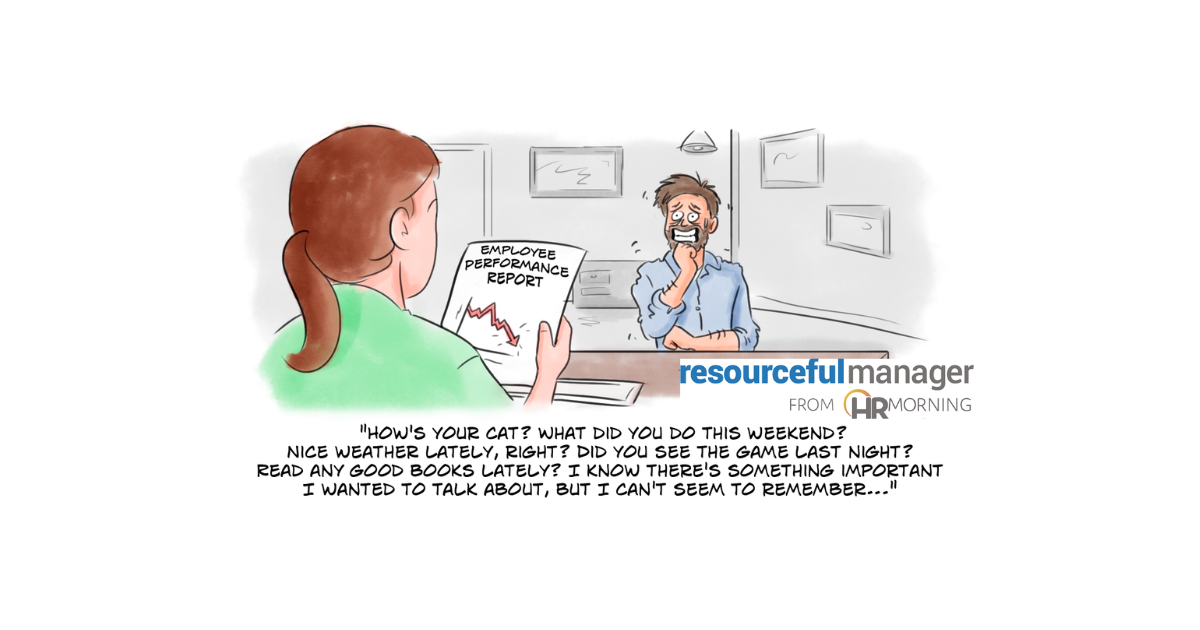
Example: “How’s it going? What’s new? We need to talk about X. But first, what do you think about Y?”

“Managers should make sure they have their talking points down, while at the same time being mindful of coming across as too scripted,” says Rosencrans. “Doing this will make sure that the employee is set up for success ahead of their next review period.”

Better: “Today, I want to talk about X. Let’s identify what’s contributing to this and how it affects you and the team. Then, let’s create a plan that works for both of us to improve.”

2. Generalizing

Sometimes managers want to soften tough feedback, so they generalize and forget to give concrete examples of what’s not working.

Example: “You’re always late, and you need to improve.”

“Managers can often fall into the trap of speaking in generalizations rather than citing examples with specifics, which can leave employees confused or feeling like the feedback isn’t valid,” says Rosencrans. “An example helps make sure the feedback is clear.”

Better: “You were 30 minutes late on Monday. Last week, you came in 20 minutes late on Tuesday and Friday.”

3. Failing to Establish Trust

A Kellogg School of Management researcher found that many first-time managers fail to establish trust with employees before they jump in with any feedback.

Example: “What you’re doing is wrong.”

When you don’t first establish trust with your people, they’ll have a harder time hearing, accepting and acting on your feedback, the researcher found. The key is to get to know your employees — especially their career aspirations and goals. That way, you can tailor feedback toward their goals.

Better: “When I struggled with X, I did Y. You might want to try that, as it’ll help you achieve Z.”

4. Indirectness

Being indirect is like adding a spoonful of sugar to the medicine. It’s sweet and dilutes what needs to be done. It’s often done in the form of the feedback sandwich: nice, not-so-nice, nice.

Example: “Your report was good, but it lacked key details. I can tell you put a lot of effort into it.”

“As managers, we want to make sure we’re empathetic and not too harsh when giving constructive criticism, but if you beat around the bush, they won’t change,” says Rosencrans. “Directness is critical when providing tough feedback in a performance review, as it sets people on the right path and eliminates miscommunications and misunderstandings.”

Better: “Your report lacked key details. Please re-focus on X, Y and Z and turn in a new version by Friday.”

5. Skipping Action

Many times, managers can dish out the feedback effectively, but they miss the opportunity to give actionable tips on how to improve.

Example: “You missed goals this quarter and you need to improve.”

“If you are giving the feedback that someone did not perform something to your satisfaction, you should have an idea of what would have been the ideal action to take,” says Rosencrans. “Come armed with examples and steps an employee can take so they know how to act when a similar situation arises down the line.”

Better: “You missed the goal on the last three sales by 10%. To improve, I suggest you spend one more day each week qualifying prospects or focus on increasing pocket share of your two best customers.”

6. Not Following Up

It doesn’t make sense to give tough feedback and never make sure that it was received and rectified.

Example: “Hope everything is working out.”

It’s critical to follow up for two reasons: You want to be sure your message was clear and accepted. And you want to know the employee is doing what’s expected with the difficult feedback.

“Today’s workers appreciate investment from their managers and will be receptive to a manager who is trying to do their best for them,” says Rosencrans.

Better: “We’ll meet in a month to check your progress on these changes. In the meantime, please send me a report each week with just a few notes on how you feel about the change, your ability to handle it and any more resources you need from me.”

7. Avoiding or Delaying

The worst of the sins: inaction. Some leaders just avoid or dangerously delay tough feedback because they don’t want to deal with the awkward encounter.

Example: Radio silence.

The Kellogg researcher suggested managers be consistent with feedback sessions, building them into the regular way of working. That way, when there is something difficult or negative to address, it’s natural to have the conversation.

Better: “When we last met, we talked about X. Today, let’s address Y. I want us to work on a plan to improve it.”

As Rosencrans says, “If someone doesn’t understand what they did wrong or where they underperformed, they won’t know how to do it differently in the future.”

Filed under
RM Logo
  • Performance Management
  • Share on

Get the HRMorning Newsletter

With HRMorning arriving in your inbox, you will never miss critical stories on labor laws, benefits, retention and onboarding strategies.

  • This field is for validation purposes and should be left unchanged.
  • This field is hidden when viewing the form
  • This field is hidden when viewing the form
  • This field is hidden when viewing the form
  • This field is hidden when viewing the form
  • This field is hidden when viewing the form
  • This field is hidden when viewing the form
  • This field is hidden when viewing the form
  • This field is hidden when viewing the form
  • This field is hidden when viewing the form
  • This field is hidden when viewing the form
  • This field is hidden when viewing the form
  • This field is hidden when viewing the form
  • This field is hidden when viewing the form
  • This field is hidden when viewing the form
  • This field is hidden when viewing the form
  • This field is hidden when viewing the form
  • This field is hidden when viewing the form
  • This field is hidden when viewing the form
  • This field is hidden when viewing the form
  • This field is hidden when viewing the form
  • This field is hidden when viewing the form
  • This field is hidden when viewing the form
  • This field is hidden when viewing the form
  • This field is hidden when viewing the form
  • This field is hidden when viewing the form
  • This field is hidden when viewing the form
  • This field is hidden when viewing the form
  • This field is hidden when viewing the form
  • This field is hidden when viewing the form
  • This field is hidden when viewing the form
  • This field is hidden when viewing the form
  • This field is hidden when viewing the form
  • This field is hidden when viewing the form
  • This field is hidden when viewing the form
  • This field is hidden when viewing the form
  • This field is hidden when viewing the form
  • This field is hidden when viewing the form
  • This field is hidden when viewing the form
  • This field is hidden when viewing the form
  • This field is hidden when viewing the form
  • This field is hidden when viewing the form
  • This field is hidden when viewing the form
  • This field is hidden when viewing the form
  • This field is hidden when viewing the form
  • This field is hidden when viewing the form
  • This field is hidden when viewing the form
  • This field is hidden when viewing the form
  • This field is hidden when viewing the form
  • This field is hidden when viewing the form
  • This field is hidden when viewing the form
  • This field is hidden when viewing the form
  • This field is hidden when viewing the form
  • This field is hidden when viewing the form
  • This field is hidden when viewing the form
  • This field is hidden when viewing the form
  • This field is hidden when viewing the form

Free Training & Resources

White Papers

Your guide to navigating CFO benefits questions

Provided by Maven Clinic

Webinars

The Cost-Effective Benefits that Top Candidates Want

Webinars

The Benefits Gap: How SMBs Can Compete for Talent Against Fortune 500 Companies

Provided by Trinet

White Papers

The HR Leader’s Guide to Bringing Leave and Accommodations In-House

Provided by AbsenceSoft

SPONSORED CONTENT

HR Technology

sponsored content
The Best AI Software for HR Automation

Courtesy of G-P

Talent Management

sponsored content
Powerful Employee Retention Strategies for 2025: How to Keep Your Best People

Courtesy of PEOPLEGURU

Benefits

Health Care

Wellness

sponsored content
Proven Results: 5 Ways Teladoc Health Chronic Condition Management Transforms HR Outcomes

Courtesy of TELADOC HEALTH

Further Reading

  • Performance Management
7 Keys to Help Employees Navigate Change in Uncertain Times

Change is about the only certain thing in the workplace today. So HR pros need to help employees navigate change year-round.  In fa...

  • Performance Management
Employee Recognition Letters: 6 Examples and Templates

When to Use Each Employee Recognition Letter [id] { scroll-margin-top: 160px; } Performance Recognition Letter – Reinforce res...

  • Performance Management
Transform Performance Management With 5 Strategic Moves

As organizations grapple with talent retention and employee satisfaction, it’s clear that once-a-year, rate-and-rank review systems n...

  • Performance Management
6 of the Most Annoying Employees & How to Handle Them

Whiners. Cynics. Bullies. Complainers. They’re some of the most annoying employees (if not THE most annoying). Your workplace is p...

  • Performance Management
5 Cool Ways to Celebrate Employee Appreciation Day

Employee Appreciation Day is March 6th this year, and it’s one of the best opportunities to convey value, support and recognition to the ...

  • Performance Management
5 steps to build more effective teams in your workplace

HR leaders and front-line managers regularly have to pull together teams to execute plans, meet goals or complete projects. There’s a lot...

Get the latest from HRMorning in your inbox PLUS immediately access 10 FREE HR guides.

I WANT MY FREE GUIDES
HR Morning Logo
  • Facebook
  • Linked In
  • ABOUT HRMORNING
  • ADVERTISE WITH US
  • WRITE FOR US
  • CONTACT
  • Employment Law
  • Benefits
  • Recruiting
  • Talent Management
  • Performance Management
  • HR Technology
  • Leadership & Strategy
  • Compensation
  • Policy & Procedures
  • Wellness
  • Staff Departure
  • HR Career & Self-Care
  • Health Care
  • Retirement Plans
  • DEI

HRMorning, part of the Rover Insights Network, provides the latest HR and employment law news for HR professionals in the trenches of small-to-medium-sized businesses. Rather than simply regurgitating the day's headlines, HRMorning delivers actionable insights, helping HR execs understand what HR trends mean to their business.

Powered By Rover Insights
Privacy Policy | Terms of Service
Copyright© 2026 Rover Insights
HRMorning Logo

WELCOME BACK!

Enter your username and password below to log in

Forget Your Username or Password?

Reset Password

Lost your password? Please enter your username or email address. You will receive a link to create a new password via email.

Log In

Why do we need your credit card for a free trial?

We ask for your credit card to allow your subscription to continue should you decide to keep your membership beyond the free trial period.  This prevents any interruption of content access.

Your card will not be charged at any point during your 21 day free trial
and you may cancel at any time during your free trial.

During your free trial, you can cancel at any time with a single click on your “Account” page.  It’s that easy.