

11 Rules Every Manager Should Break – At Least Once
By
Go ahead, admit it. You’d like to break or bend a rule every once in a while.
Here’s the good news: There are quite a few well-established workplace rules and customs that every manager should try to break — at least once.
Breaking Rules, Breaking Barriers
We know, we know: Most people in leadership roles stay between the lines. You follow the rules.
But, once in a while, breaking the rules can help you become a better leader.
Of course, we aren’t suggesting you do anything unethical, immoral or illegal. And you may not want to actually break anything.
But if you bend one or two to test new boundaries now and then, you open up the potential to new possibilities, and greater opportunities and improve operations or performance.
Choosing the Right Rules
There are a lot — perhaps too many! — workplace and management rules. And most of them are in place to keep people safe and operations fluid.
But some are made to be questioned or tested. So here are 11 that are worth pushing the envelope on to achieve better things.
1. Pick One Thing and Do It Well
Sure, you can pick one thing and do it well … if your job is tap dancing. Or horseshoes.
But if your job is managing a team of people, it’s good to pick one thing and do it well and then pick six other things and do all those just as well. You’ll be better for it — and employed for longer periods at a time.
2. Big Risks Reap Big Rewards
What are you, a cliff diver? No, you’re a manager. Don’t be foolish. Come back in here off that ledge and help get your team through another successful day.
There’s a lot that can go wrong in a busy organization, and you’re not even going to see it coming if you’re too self-absorbed by the thrill of plunging off a sheer cliff just so you can fancy yourself a risk-taker.
3. Don’t Put Off to Tomorrow What You Can Do Today
That really depends, doesn’t it? Especially when it comes to sharing information.
You want to be sure to get the most impact from delivering it in the timeliest fashion. So, if it’s going to have a better impact in the morning, it’s best to put it off.
4. Squelch the Rumor Mill
It’s surprising that this bit of advice persists. You hear it all the time: How to stop the rumor mill. How to squelch the rumor mill. Put an end to the rumor mill, once and for all.
Advertisement
But you really can’t, so don’t try (unless, of course, it’s harmful, possibly a form of harassment or violates worker protections). You’ll just beat your head against the wall.
If people are going to gossip, by the very nature of the definition, there’s nothing you can do to stop it. But here’s the caveat: You can feed it with honest, useful, refreshing and insightful information. That way, you can help control the rumor mill, and move it in positive directions.
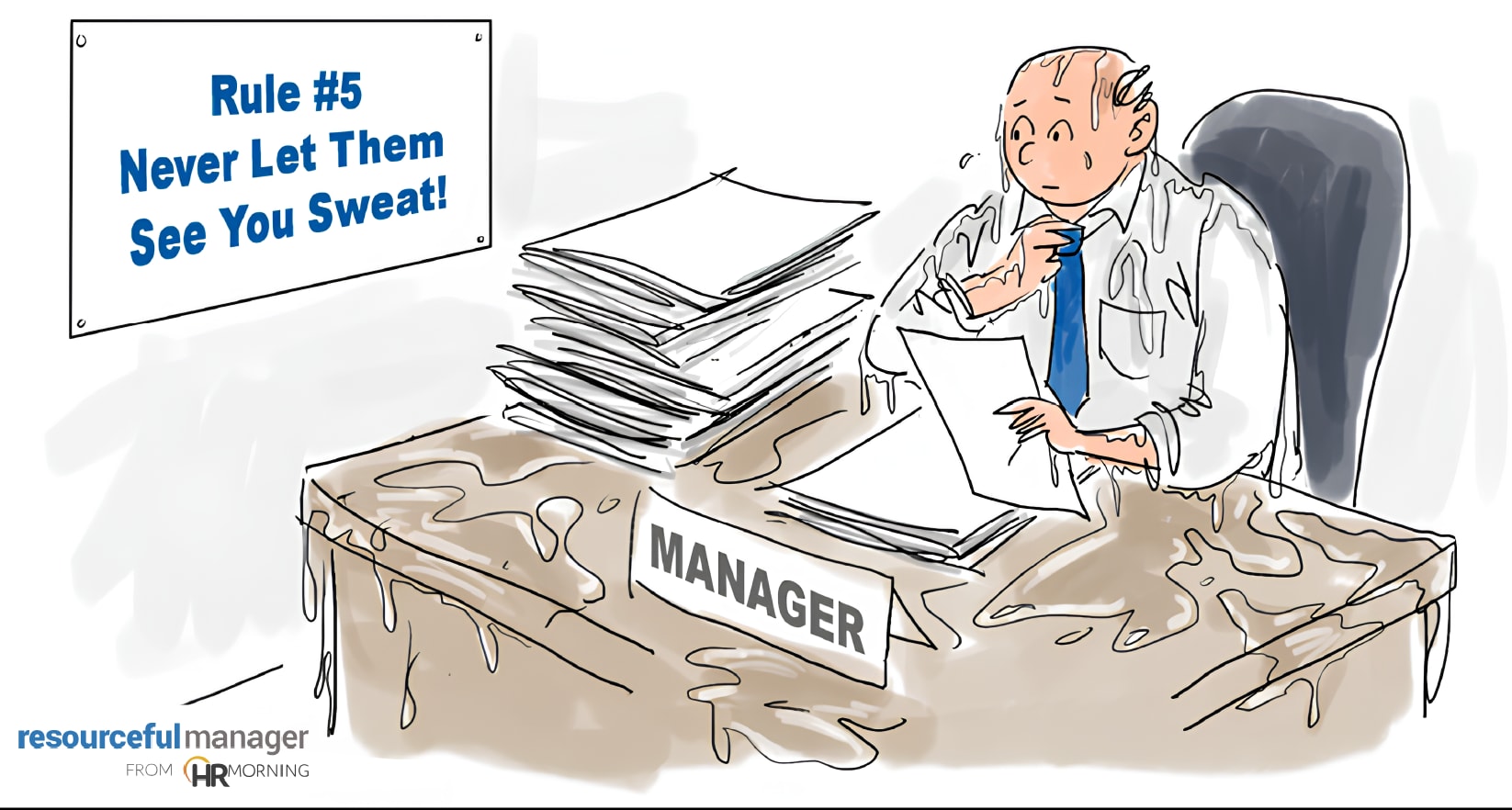
5. Never Let Them See You Sweat
While it’s true you don’t want to go around day after day appearing exhausted and stressed by all the work you do, there are times you want to be darn sure the powers-that-be get a good long look at you working very hard, even sweating it out.
And then see how well you handled it! You can’t beat that kind of exposure.
6. Trust Your Gut
We all hate admitting when we’re wrong. Hence, managers don’t always fully appreciate how many times they trusted their gut, and got it wrong.
So yeah, trust your gut, except when you shouldn’t. And if you don’t know when that is, well, it’s your gut so you’re on your own.
7. Always Play to People’s Strengths
It’s a good piece of advice, but there’s one issue: the word “always.”
Good people grow best when put in positions outside their knowledge base. It’s been said we are all prisoners of the familiar, right? So sometimes it pays to push people in directions they might not feel suits them.
8. Encourage All Opinions and Ideas
That can be a long day right there. And on the days you do have that kind of time to commit, by all means unleash your benevolent side, and sit and listen.
But there should be a point at which attentive managers know how various people on the staff feel about particular things that you can’t or won’t change. So in those cases, you should NOT be encouraging them by asking their opinions.
HR’s Compliance Toolkit: Stay Ahead of Changing Federal and State Regulations
9. Treat People the Same
Thought leader and advisor Susan Reilly Salgado said, “Your ability to fairly and deftly manage the particular needs of individual employees and provide a unique experience that leaves each team member feeling valued, is the ultimate goal.”
It’s also the opposite of treating everyone the same.
10. Don’t Take Sides
No? Don’t take sides? That’s hard not to do on important issues. Just ask the people who’ve run Switzerland over the years.
When there’s true injustice, you have to take sides.
11. Don’t Hire Friends and Family
There are strong opinions on both sides of this one, but you can go for it when the time is right. People close to you care about you and your success.
They’ll be more open with their opinions (which you’ll certainly need to manage) on things. But they’ll also be generally more trustworthy than outsiders. And while you are sure to have some contentious times, they should have your best interest at heart.
Further Reading
Post-Election Fallout: 2 Ways to Manage New Tension in the Workplace
With the midterms over, you’d probably like to put the occasional (or frequent?) contentious moments any election can cause behind you. But it’s not likely to end with the last vote cast. HR and other leaders often face a recurring challenge in post-election times: acknowledging and managing politically charged moments that can turn up tension […]
An ‘Insecurity Tax’ Could Hurt Retention: 4 Solutions to Keep Your Talent
The last decade of corporate churn might have revealed this surprising lesson: One of the biggest threats to retention isn’t compensation, remote work or even AI. It could be managerial insecurity. When leadership is rooted in a manager’s personal anxiety, organizational behavior becomes entirely predictable. Micromanagement, hoarding authority, avoiding constructive dissent, and making defensive decisions […]
Politics at Work: An Election-Season Toolkit for HR Leaders
Employers everywhere are bracing for one of the trickiest challenges of the year as the country goes through another contentious election season. Inflammatory political speech in the workplace is disruptive and can lead to a host of workplace issues ranging from frustration and fractured relationships to claims of harassment and workplace violence incidents. With increasing […]
Are You Keeping Workforce Data Longer Than You Need To?
When an employee leaves, HR closes the personnel file, processes the final paycheck, and shuts off system access. Copies of that employee’s information can remain in places HR does not manage: email archives, collaboration platforms, badge-access logs, fleet telematics systems, and the files of recruiting, payroll and benefits vendors. Some of those records have to […]
How Managers Are the Missing Link in Workforce Capability: 3 Solutions
Managers are the bridge between business strategy, day-to-day execution, and organizational growth. Understanding and developing workforce capability has always been central to that role. And for HR leaders, a manager’s ability to do that well impacts everything from internal mobility and succession planning to retention and workforce readiness. The challenge is that workforce capability is […]
14 Fun Fall Team-Building Activities Employees Will Love
The change of seasons brings a unique way to engage your employees, promote team-building and have some fun with employees. And it couldn’t be more important than right now: Employee engagement has recently dropped to its lowest since 2020, according to Gallup research. Regardless of the time of year, it’s important to maintain employee motivation […]