6 Ways to Help Your Team Thrive In Change

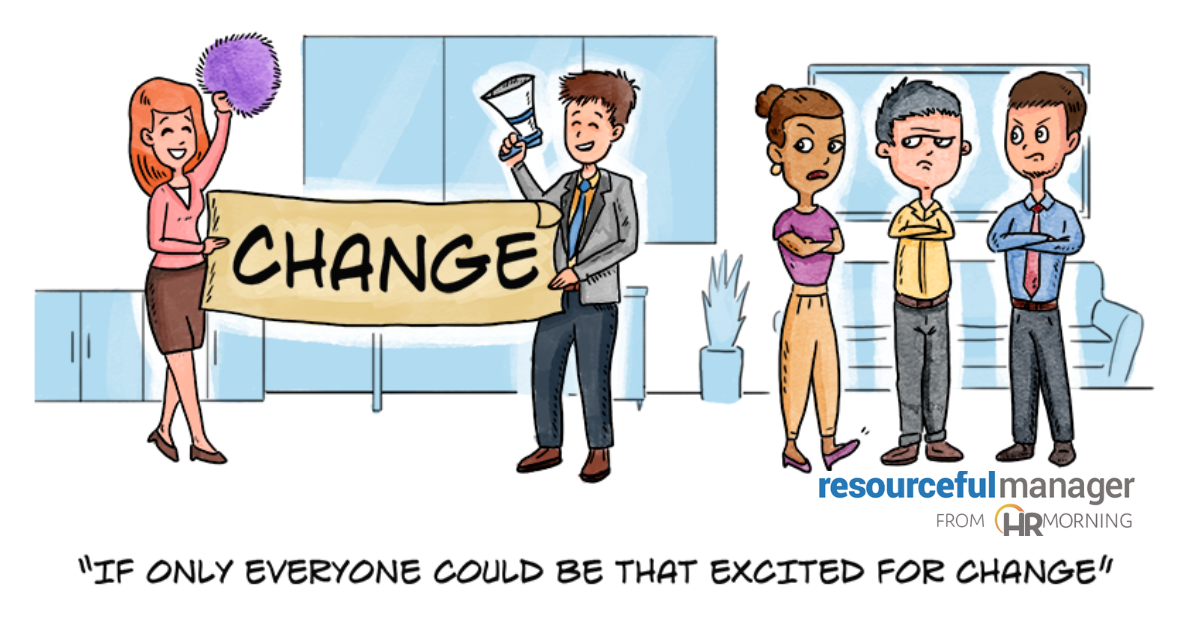
Tired of change? Probably. Able to stop change? Not likely.
With AI disrupting almost all workplaces, change is inevitable. And difficult: Less than a third of leaders actually get employees to adopt workplace changes in a healthy way, a Gartner study found.
Why is healthy adaptation so low? Most employees don’t trust organizational change because they feel skeptical about past decisions and future initiatives — Fool me once, shame on you. Fool me twice, shame on me.
Leadership Needed to Thrive in Change
But when there’s transformation, “people gravitate to the person who seems to have it together,” says Lolly Daskal, author of The Leadership Gap: What Gets Between You and Your Greatness, in her podcast In The Hour. “That’s why it starts with self-leadership. Even if you’re feeling crazy. Even if you’re feeling scared. Even if you’re feeling things are out of control, tap into the one thing you can control.
“People will be more influenced by the power of your example than by the example of your power,” Daskal says.
Managers are often the agents of change – and guide employees through it. So you likely need the power of example and practical tools to carry often reluctant employees through it.
Here are six ways to help employees handle and thrive in change:
1. Show Some Empathy
Showing empathy should be the first step. But it could be the most difficult, Daskal admits.
What makes it so difficult? Leaders might not be keen on what’s happening either. Or, they know it’s important to charge ahead – and they expect their employees to do that, too, with no backlash.
Resist the urge. Listen to their concerns, recognize their difficulties and explain how you and the organization are there to support them throughout the transition so they thrive.
2. Communicate Clearly
We often encourage amped-up communication through difficult times. When it comes to shifts in the workplace, you don’t necessarily need to over-communicate, but you need to communicate with full clarity.
Employees who are expected to make things happen and who are affected by the changes, need to know all the details, plus the expectations for outcomes. When they know what’s behind decisions and what’s ahead for everyone, they’re more likely to execute as expected.
But if they don’t understand everything, they’ll fill in the holes with gossip and false expectations.
When you communicate, make sure every message contains:
- Where the decision came from
- Why the change is important
- What needs to be done (action or knowledge retention), and
- The expectations for next steps.
With that level of clarity, employees will feel better about what’s ahead.
3. Regularly Assess the Situation
Managers sometimes make changes and other times implement them from above. Regardless of where it came from, it’s still in everyone’s best interest to regularly assess how it’s going.
You want to check if changes are temporary (until the new norm is reached) or systemic (another one in a constant state of flux).
When the transformation – and the overload it causes – is temporary, work with employees to determine how you’ll outlast the challenging time.
When the transformation appears to be systemic, you’ll likely have a bigger project on your hands. Talk with colleagues, your boss and employees about aligning strategy, systems and new ways of working.
4. Manage Priorities
When you’ve assessed the transformation, be realistic about what can be accomplished in a certain amount of time. Set priorities.
Most importantly, set realistic priorities.
A good example of this comes from Apple Founder, the late Steve Jobs: He told his management team to cut their list of priorities to 10. Then, when he met with them, he crossed off four through 10. “We can only do three,” he said, reminding them to manage the right priorities.
Another approach to managing priorities is the One-for-One Rule: For every new priority, drop another.
To manage the developments and help employees thrive through it, you want to limit priorities so everyone can stay focused.
5. Act and React
When most people hear there’s a need to transform, they get overwhelmed and rush to do everything quickly, which can be a change-management mistake.
Instead, experiment with ways to make and manage the differences, say the authors of the Association for Talent Development’s Guide, Leading When There’s Too Much Change. Aim for incremental adjustments to move toward the overall mission.
Most importantly, “Try new things and then dedicate time to assessing what you have learned. There will be things you wish to continue or spread more widely and other things that just don’t work for you,” the authors say.
6. Establish a Change Routine
The Gartner researchers found that most companies focus on inspiring people to change. But establishing a change routine is three times more effective.
That’s a matter of teaching employees to build “change reflexes” — core skills that become second nature through regular practice.
Start by figuring out which change skills mattered most during recent initiatives. Perhaps that was through online, on-demand tutorials. Perhaps it was a matter of trying a new step in the process every day, rather than learning it all at once. Or maybe it was a 10-minute practice session at the start of every day.
The key to building those reflexes is through small, everyday tasks that mirror the bigger transformation.

- Share on


Free Training & Resources
EBOOK, White Papers
Provided by Personify Health