• Skip to primary navigation
  • Skip to main content

HRMorning

  • FREE RESOURCES
  • PREMIUM CONTENT
  • HR DEEP DIVES
  • PODCASTS
    • VOICES OF HR
    • WOMEN’S LEADERSHIP TODAY
  • LOGIN
  • SIGN UP FREE
  • Employment Law
  • Benefits
  • Recruiting
  • HR Technology
  • Payroll
  • Management
  • Women’s Leadership
  • More
    • Talent Management
    • Performance Management
    • Leadership & Strategy
    • Compensation
    • Policy & Procedures
    • Wellness
    • Staff Departure
    • HR Career & Self-Care
    • Health Care
    • Retirement Plans
RM Logo
  • Talent Management

7 Ways To Show The Respect Employees Crave

Michele McGovern
By: Michele McGovern
  • Share on

About the Author

Michele McGovern writes. A lot. These days, she covers HR, digging deep into company culture, DEI, leadership, management and the everchanging world of work. In the years between getting a BA in journalism from a state school and writing about HR, she wrote about big-city crime for a wire service and small-town life for local newspapers. She’s a mediocre mom, decent wife, wannabe athlete and consummate pursuer of fun - on land, snow and water. Find her on LinkedIn @michele-mcgovern-writer.

Show Less
Last Updated: August 24, 2026
4 minute engagement

There’s one attainable way to get employees to do their best possible work, teams to hit goals and colleagues to support your ideas.

Show them all some respect.

Respect from the boss is a research-proven want to improve just about everything in the workplace.

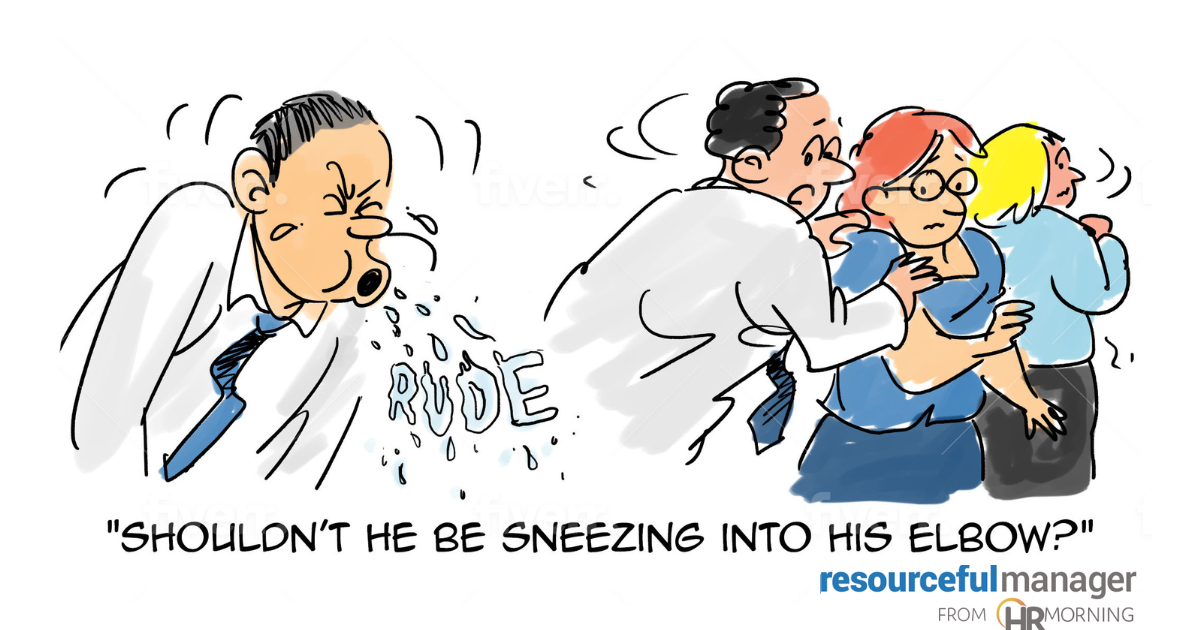
Rudeness: The Enemy of Respect

And while respect is as important as ever, it seems more difficult than ever. U.S. employees experience 74,758,050 acts of incivility per day in the workplace, according to SHRM data. Even worse, long-standing research found that rudeness is about as contagious as the common cold.

That’s where respect — especially between managers and employees – comes in.

“Roughly one out of 25 colleagues … feel they are not respected, that they don’t belong, or perhaps even feel inferior. It’s hard to imagine that people who feel this way are able to do their best work or reach their potential,” said Joseph Folkman in an episode of the 90th Percentile Podcast. He’s the president of Zenger/Folkman and coauthor of The Trifecta of Trust: The Proven Formula for Building and Restoring Trust.

Folkman and his (dare we say, respected) colleague, the late Jack Zenger, did a multi-year study of almost 5,000 employees to find the state of respect. More importantly, they found seven behaviors that most likely make employees feel they’re respected.

Here’s what to do:

1. Keep a Finger on the Pulse

In the throes of managing projects, processes and people, many managers struggle to find time to take an interest in their employees’ personal lives. Some prefer to keep a distance, believing they can’t be friends with subordinates.

But the researchers say you don’t have to be friends to show concern, compassion and interest in employees’ lives. Ideally, you just want to let employees know you’re there if they want to talk about sensitive issues or deep concerns.

Make a point to reach out when you don’t need anything and ask questions such as, “Do you feel we are making it possible for you to balance your work and your personal life?” or “How is your family doing at this moment?”

2. Establish Trust

Here’s the bad news: If one person on your team doesn’t trust you, it lowers the level of trust from the rest of the team. Intentional or not, the non-truster can easily poison the well.

The good news: You can build trust by establishing positive relationships, sharing expertise and knowledge, and being consistent. The binding agent here is consistency. Being a positive realist and sharing with the intent to help, not brag, all the time helps employees understand what they can expect from you.

3. Make Peace

Conflict is usually part of healthy teams. Respectful conflict sparks creativity and improves problem-solving. But petty conflict can break down teams and build a culture of disrespect.

While managers want to let respectful conflict do its magic, they want to stop destructive conflict early. Ignoring issues — or just letting employees “work it out” — can cause significant damage. Use an even hand — the same level of involvement for all team members — to mend conflicts and maintain harmony.

4. Balance Results with Realities

Employees feel disrespected when the boss prioritizes results over all else — most especially, their well-being. For instance, a manager demands overtime when she knows an employee is struggling with childcare.

The best leaders balance results with the realities of the people who produce them. We refer to work/life balance so often these days, it’s practically cliché. But it’s real — and respected managers continually check that their employees are achieving it, recognizing that sometimes work gets more attention and sometimes life gets more attention.

5. Be Open to Differences

Just asking employees for their opinion is a sign of respect. But failing to listen to, accept different perspectives or implement their ideas is the exact opposite.

Leaders want to ask for, listen to and engage with employees‘ opinions. Even better, encourage them to bring perspectives that challenge yours to the table. It proves that you’re open to new ideas and interested in understanding more.

6. Give Honest Feedback

Honest feedback — even when it’s critical — given directly and in the right way builds a culture of respect.

Feedback should be a fair and balanced reflection of what’s going on. For instance, if someone makes mistakes 10% of the time, then you should give 10% negative feedback. The rest should be positive feedback.

Let employees know you see what they do well, not just where there’s room for improvement.

7. Embrace Diversity

In their research, Zenger and Folkman often heard employees who felt disrespected say, “I’m different” or “I don’t fit in.”

Many leaders unintentionally make employees feel that way through unconscious biases, personal blind spots and confirmation biases. Bottom line, many leaders tend to under- or overrate their ability to treat everyone equally.

Fixing this can be difficult because we’re usually blind to our biases. So ask trusted colleagues — with differing perspectives — to check your decisions and behaviors for bias.

Filed under
RM Logo
  • Talent Management
  • Share on

Get the HRMorning Newsletter

With HRMorning arriving in your inbox, you will never miss critical stories on labor laws, benefits, retention and onboarding strategies.

  • This field is for validation purposes and should be left unchanged.
  • This field is hidden when viewing the form
  • This field is hidden when viewing the form
  • This field is hidden when viewing the form
  • This field is hidden when viewing the form
  • This field is hidden when viewing the form
  • This field is hidden when viewing the form
  • This field is hidden when viewing the form
  • This field is hidden when viewing the form
  • This field is hidden when viewing the form
  • This field is hidden when viewing the form
  • This field is hidden when viewing the form
  • This field is hidden when viewing the form
  • This field is hidden when viewing the form
  • This field is hidden when viewing the form
  • This field is hidden when viewing the form
  • This field is hidden when viewing the form
  • This field is hidden when viewing the form
  • This field is hidden when viewing the form
  • This field is hidden when viewing the form
  • This field is hidden when viewing the form
  • This field is hidden when viewing the form
  • This field is hidden when viewing the form
  • This field is hidden when viewing the form
  • This field is hidden when viewing the form
  • This field is hidden when viewing the form
  • This field is hidden when viewing the form
  • This field is hidden when viewing the form
  • This field is hidden when viewing the form
  • This field is hidden when viewing the form
  • This field is hidden when viewing the form
  • This field is hidden when viewing the form
  • This field is hidden when viewing the form
  • This field is hidden when viewing the form
  • This field is hidden when viewing the form
  • This field is hidden when viewing the form
  • This field is hidden when viewing the form
  • This field is hidden when viewing the form
  • This field is hidden when viewing the form
  • This field is hidden when viewing the form
  • This field is hidden when viewing the form
  • This field is hidden when viewing the form
  • This field is hidden when viewing the form
  • This field is hidden when viewing the form
  • This field is hidden when viewing the form
  • This field is hidden when viewing the form
  • This field is hidden when viewing the form
  • This field is hidden when viewing the form
  • This field is hidden when viewing the form
  • This field is hidden when viewing the form
  • This field is hidden when viewing the form
  • This field is hidden when viewing the form
  • This field is hidden when viewing the form
  • This field is hidden when viewing the form
  • This field is hidden when viewing the form
  • This field is hidden when viewing the form
  • This field is hidden when viewing the form

Free Training & Resources

White Papers

The FMLA Paperwork Trap: Why Manual Leave Management Is Costing You More Than Time

Provided by AbsenceSoft

White Papers

The Executive’s Guide to Choosing the Right HR Tech

Provided by Paycom

Webinars

What Trends Are Impacting HR in 2025?

Provided by Paycom

Webinars

Don’t Lose Great Employees to a Bad Commute

SPONSORED CONTENT

HR Technology

sponsored content
The Best AI Software for HR Automation

Courtesy of G-P

Talent Management

sponsored content
Powerful Employee Retention Strategies for 2025: How to Keep Your Best People

Courtesy of PEOPLEGURU

Benefits

Health Care

Wellness

sponsored content
Proven Results: 5 Ways Teladoc Health Chronic Condition Management Transforms HR Outcomes

Courtesy of TELADOC HEALTH

Further Reading

  • Recruiting
  • Talent Management
Talent pipeline: Definition, benefits and management

Creating a talent pipeline is a proactive recruiting technique where, instead of filling roles when there’s a vacancy, you consider what ...

  • Talent Management
The Great Stay: 16 Ways to Maximize Trends, Buck Challenges

The days of the Great Resignation, characterized by rapid turnover and employee flight, seem to be fading into the rearview mirror. A new t...

  • Talent Management
Where Manager Training Falls Short — and 5 Ways to Fix It Now

For HR teams, the importance of investing in robust manager training has never been more pressing. Yet, many companies still underinvest in...

  • Talent Management
4 Surprising Reasons Employees Quit Today

The reasons employees quit today are surprising … even for veteran HR professionals. They run deeper than better pay, more flexibi...

  • Talent Management
Bored at Work: 6 Ways to Dump the Slump

I’m bored at work. My daughter is bored at work. For very different reasons, we’re bored. And it’s the perfect exam...

  • Talent Management
20 Employee Incentive Program Ideas to Boost Engagement

As any HR pro knows, employees are the lifeblood of every business. If your team is unhappy, productivity slows, employee retention suffers...

Get the latest from HRMorning in your inbox PLUS immediately access 10 FREE HR guides.

I WANT MY FREE GUIDES
HR Morning Logo
  • Facebook
  • Linked In
  • ABOUT HRMORNING
  • ADVERTISE WITH US
  • WRITE FOR US
  • CONTACT
  • Employment Law
  • Benefits
  • Recruiting
  • Talent Management
  • Performance Management
  • HR Technology
  • Leadership & Strategy
  • Compensation
  • Policy & Procedures
  • Wellness
  • Staff Departure
  • HR Career & Self-Care
  • Health Care
  • Retirement Plans
  • DEI

HRMorning, part of the Rover Insights Network, provides the latest HR and employment law news for HR professionals in the trenches of small-to-medium-sized businesses. Rather than simply regurgitating the day's headlines, HRMorning delivers actionable insights, helping HR execs understand what HR trends mean to their business.

Powered By Rover Insights
Privacy Policy | Terms of Service
Copyright© 2026 Rover Insights
HRMorning Logo

WELCOME BACK!

Enter your username and password below to log in

Forget Your Username or Password?

Reset Password

Lost your password? Please enter your username or email address. You will receive a link to create a new password via email.

Log In

Why do we need your credit card for a free trial?

We ask for your credit card to allow your subscription to continue should you decide to keep your membership beyond the free trial period.  This prevents any interruption of content access.

Your card will not be charged at any point during your 21 day free trial
and you may cancel at any time during your free trial.

During your free trial, you can cancel at any time with a single click on your “Account” page.  It’s that easy.
