• Skip to primary navigation
  • Skip to main content

HRMorning

  • FREE RESOURCES
  • PREMIUM CONTENT
  • HR DEEP DIVES
  • PODCASTS
    • VOICES OF HR
    • WOMEN’S LEADERSHIP TODAY
  • LOGIN
  • SIGN UP FREE
  • Employment Law
  • Benefits
  • Recruiting
  • HR Technology
  • Payroll
  • Management
  • Women’s Leadership
  • More
    • Talent Management
    • Performance Management
    • Leadership & Strategy
    • Compensation
    • Policy & Procedures
    • Wellness
    • Staff Departure
    • HR Career & Self-Care
    • Health Care
    • Retirement Plans
RM Logo
  • Leadership & Strategy

Have to Do Some Public Speaking? 7 Ways to Nail It

Michele McGovern
By: Michele McGovern
  • Share on

About the Author

Michele McGovern writes. A lot. These days, she covers HR, digging deep into company culture, DEI, leadership, management and the everchanging world of work. In the years between getting a BA in journalism from a state school and writing about HR, she wrote about big-city crime for a wire service and small-town life for local newspapers. She’s a mediocre mom, decent wife, wannabe athlete and consummate pursuer of fun - on land, snow and water. Find her on LinkedIn @michele-mcgovern-writer.

Show Less
Last Updated: September 29, 2026
4 minute engagement

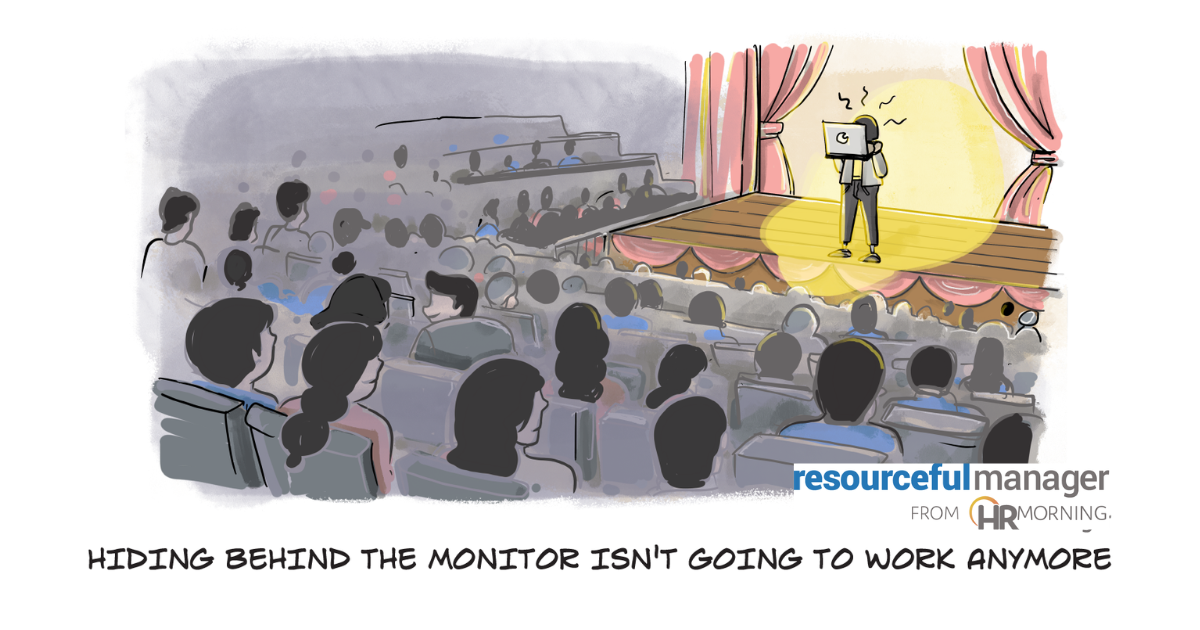
You’re great at what you do. Others can learn from what you know.

That’s why you have been — or will be — asked to do some public speaking. You need to share your expertise.

But you might fear speaking in front of a group more than death – as Jerry Seinfeld famously coined. And your moment in the spotlight will likely have a longer life, as it’ll probably be recorded.

Dust Off, Pick Up Public Speaking Skills

But stop worrying now. You can dust off those public speaking skills. Or pick them up if your leadership role is relatively new.

Even better, improving public speaking will help boost your career. Communication skills are at the top of LinkedIn’s Most In-Demand Skills list.

Here are seven tips to become effective and commanding at public speaking – whether it’s in front of a training group, the C-Suite or a whole conference.

1. Know the Audience

You won’t engage an audience if you don’t know at least as much about them as they know about you. Even if you’re speaking in front of a group of colleagues, you’ll want to learn a little more about them before taking center stage.

Do some research – even if it’s a few informal conversations – ahead of time to gauge what they know about the subject, what they expect to hear from you and what interests them. It’ll help you tailor the talk to the group.

2. Ease the Speaking Burden

Think of public speaking as more conversation, less monologue. That’ll serve two purposes: You don’t have to worry about doing all the talking, and you boost audience engagement by getting them to talk.

When preparing to speak, add questions, polls and talking points to throw out to the audience. But don’t let it derail what you have to cover. Keep an eye on discussion time, reel in off-subject chatter and note if anything should be discussed offline.

3. Add Humor, Intimacy

You have three ways to immediately gain your audience’s attention: make them laugh, move closer to them or talk off script (or at least pretend you’re talking off script). Colin Boyd, a public speaking expert, says that when speakers do one of those three things, audience attention peaks.

If you’re using humor, be cautious. Run jokes or any other attempt at being funny past a variety of colleagues before using them with an audience to make sure they hit the right tone.

4. Know the Limits

Talk too much, and you’ll lose the audience. Talk too little, and you’ll never get them. If you try to jam everything you know about a subject into the presentation, you’ll overwhelm the group. If you don’t include enough, you’ll appear unprepared.

Although the right timing and information vary for subjects, audiences and settings, whittle down your first go at the presentation by 25%. Hold onto the other information if you need it to fill space, time or questions.

5. Use Your Voice

If you’re nervous about public speaking, the last thing you want to do is be someone you aren’t. Don’t try to imitate great orators or experts in the field.

Instead, lean into what you know best – you’ll feel most comfortable talking in your expert zone anyway – and a tone you naturally use.

6. Limit the Aids

As a nervous speaker, you might be tempted to lean on a crutch that seems suitable for a presentation – PowerPoint slides, handouts, videos or anything that isn’t you. But if all the information is elsewhere, there’s no sense in presenting it.

Instead, focus on making your words matter. Slides and handouts should contain no more than bullet points – avoid full sentences and paragraphs. And don’t read them verbatim. If you want to use video, keep it under two minutes and place it at the beginning or end of your public speaking.

7. Work New Mediums

Public speaking isn’t limited to classrooms and conferences these days. Many leaders will take on podcasts or create training videos. While they’re still a form of public speaking, they aren’t the same as standing in front of a live audience.

You’ll still want to research the audience and prepare to share your expertise. But approach podcasts and video with even less formality. You’ll want to use a more conversational tone and integrate more stories or anecdotes that make the information come alive.

Filed under
RM Logo
  • Leadership & Strategy
  • Share on

Get the HRMorning Newsletter

With HRMorning arriving in your inbox, you will never miss critical stories on labor laws, benefits, retention and onboarding strategies.

  • This field is for validation purposes and should be left unchanged.
  • This field is hidden when viewing the form
  • This field is hidden when viewing the form
  • This field is hidden when viewing the form
  • This field is hidden when viewing the form
  • This field is hidden when viewing the form
  • This field is hidden when viewing the form
  • This field is hidden when viewing the form
  • This field is hidden when viewing the form
  • This field is hidden when viewing the form
  • This field is hidden when viewing the form
  • This field is hidden when viewing the form
  • This field is hidden when viewing the form
  • This field is hidden when viewing the form
  • This field is hidden when viewing the form
  • This field is hidden when viewing the form
  • This field is hidden when viewing the form
  • This field is hidden when viewing the form
  • This field is hidden when viewing the form
  • This field is hidden when viewing the form
  • This field is hidden when viewing the form
  • This field is hidden when viewing the form
  • This field is hidden when viewing the form
  • This field is hidden when viewing the form
  • This field is hidden when viewing the form
  • This field is hidden when viewing the form
  • This field is hidden when viewing the form
  • This field is hidden when viewing the form
  • This field is hidden when viewing the form
  • This field is hidden when viewing the form
  • This field is hidden when viewing the form
  • This field is hidden when viewing the form
  • This field is hidden when viewing the form
  • This field is hidden when viewing the form
  • This field is hidden when viewing the form
  • This field is hidden when viewing the form
  • This field is hidden when viewing the form
  • This field is hidden when viewing the form
  • This field is hidden when viewing the form
  • This field is hidden when viewing the form
  • This field is hidden when viewing the form
  • This field is hidden when viewing the form
  • This field is hidden when viewing the form
  • This field is hidden when viewing the form
  • This field is hidden when viewing the form
  • This field is hidden when viewing the form
  • This field is hidden when viewing the form
  • This field is hidden when viewing the form
  • This field is hidden when viewing the form
  • This field is hidden when viewing the form
  • This field is hidden when viewing the form
  • This field is hidden when viewing the form
  • This field is hidden when viewing the form
  • This field is hidden when viewing the form
  • This field is hidden when viewing the form
  • This field is hidden when viewing the form
  • This field is hidden when viewing the form

Free Training & Resources

Webinars

5 Compliance Signals HR Should Review Before 2027

Provided by Navex

White Papers

Your Compensation Toolkit to Help Get Your Pay Right

Provided by Marsh

White Papers

TriNet AI in HR eGuide 2026

White Papers

The True Cost of a Delayed Diagnosis

SPONSORED CONTENT

Employment Law

Policy & Procedures

sponsored content
Policy Rollout: 4 Checkpoints That Show Employees Got the Message

Courtesy of NAVEX

Benefits

Staff Administration

sponsored content
PEO ROI: 3 Numbers to Know Before You Leave Patchwork HR

Courtesy of TRINET

Talent Management

sponsored content
Employee Retention Strategies: 5 That Work When You Can’t Pay More

Courtesy of INSPIRUS

Further Reading

  • Leadership & Strategy
5 employee retention strategies HR can put into action right now

The key to employee retention isn’t just about drilling down to find the reasons for turnover at your organization. You also need to ...

  • Leadership & Strategy
7 Leadership Lessons From Pope Francis: What You Can Learn

In memory of Pope Francis, whose recent passing has touched hearts around the world, we look back on a story from the early days of his pap...

  • Leadership & Strategy
14 Fun Fall Team-Building Activities Employees Will Love

The change of seasons brings a unique way to engage your employees, promote team-building and have some fun with employees.  And it...

  • Leadership & Strategy
The Kiss Cam Scandal: 3 Overlooked Implications for HR

You’ve seen the kiss cam scandal. And you’ve probably thought of how it affects HR. After all, one of the culprits involved ...

  • Leadership & Strategy
6 End-of-Year Reminders That Save HR Time

As 2025 winds down, HR teams face a familiar challenge: preventable end-of-year cleanup that slows payroll and benefits administration. Add...

  • Leadership & Strategy
4 Different Types of Company Culture: Which One Are You?

Company culture is generally defined as a shared set of goals, values and practices that make up an organization. It influences every aspec...

Get the latest from HRMorning in your inbox PLUS immediately access 10 FREE HR guides.

I WANT MY FREE GUIDES
HR Morning Logo
  • Facebook
  • Linked In
  • ABOUT HRMORNING
  • ADVERTISE WITH US
  • WRITE FOR US
  • CONTACT
  • Employment Law
  • Benefits
  • Recruiting
  • Talent Management
  • Performance Management
  • HR Technology
  • Leadership & Strategy
  • Compensation
  • Policy & Procedures
  • Wellness
  • Staff Departure
  • HR Career & Self-Care
  • Health Care
  • Retirement Plans
  • DEI

HRMorning, part of the Rover Insights Network, provides the latest HR and employment law news for HR professionals in the trenches of small-to-medium-sized businesses. Rather than simply regurgitating the day's headlines, HRMorning delivers actionable insights, helping HR execs understand what HR trends mean to their business.

Powered By Rover Insights
Privacy Policy | Terms of Service
Copyright© 2026 Rover Insights
HRMorning Logo

WELCOME BACK!

Enter your username and password below to log in

Forget Your Username or Password?

Reset Password

Lost your password? Please enter your username or email address. You will receive a link to create a new password via email.

Log In

Why do we need your credit card for a free trial?

We ask for your credit card to allow your subscription to continue should you decide to keep your membership beyond the free trial period.  This prevents any interruption of content access.

Your card will not be charged at any point during your 21 day free trial
and you may cancel at any time during your free trial.

During your free trial, you can cancel at any time with a single click on your “Account” page.  It’s that easy.
