• Skip to primary navigation
  • Skip to main content

HRMorning

  • FREE RESOURCES
  • PREMIUM CONTENT
  • HR DEEP DIVES
  • PODCASTS
    • VOICES OF HR
    • WOMEN’S LEADERSHIP TODAY
  • LOGIN
  • SIGN UP FREE
  • Employment Law
  • Benefits
  • Recruiting
  • HR Technology
  • Payroll
  • Management
  • Women’s Leadership
  • More
    • Talent Management
    • Performance Management
    • Leadership & Strategy
    • Compensation
    • Policy & Procedures
    • Wellness
    • Staff Departure
    • HR Career & Self-Care
    • Health Care
    • Retirement Plans
RM Logo
  • Performance Management

7 Ways to Rebound from a Setback

Michele McGovern
By: Michele McGovern
  • Share on

About the Author

Michele McGovern writes. A lot. These days, she covers HR, digging deep into company culture, DEI, leadership, management and the everchanging world of work. In the years between getting a BA in journalism from a state school and writing about HR, she wrote about big-city crime for a wire service and small-town life for local newspapers. She’s a mediocre mom, decent wife, wannabe athlete and consummate pursuer of fun - on land, snow and water. Find her on LinkedIn @michele-mcgovern-writer.

Show Less
Last Updated: November 24, 2025
5 minute engagement

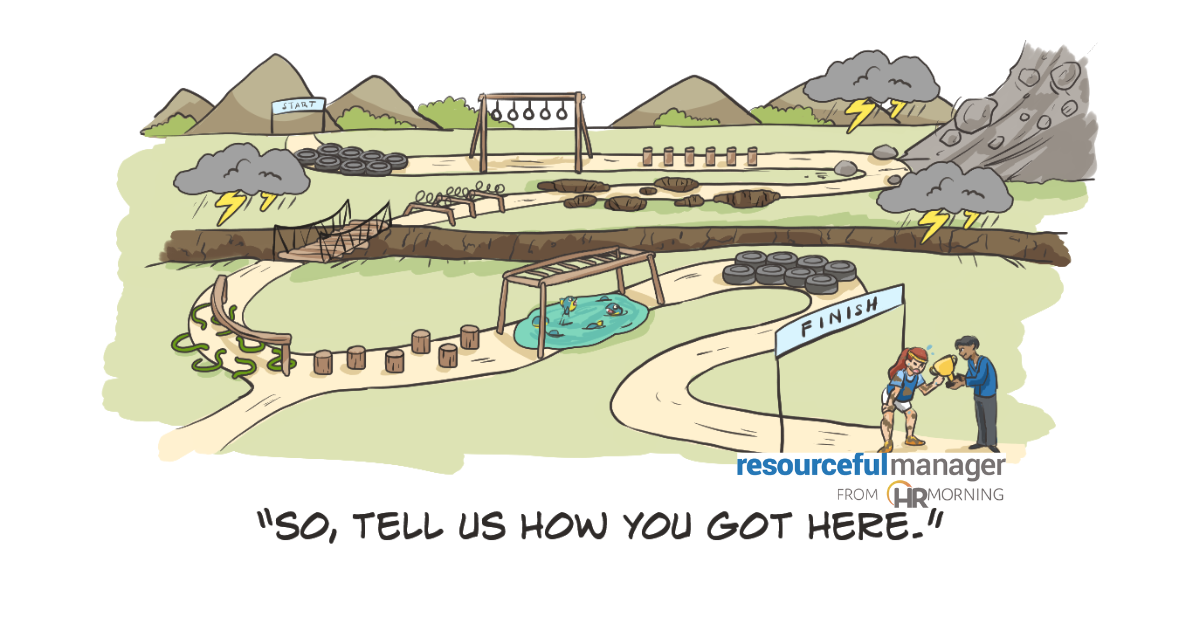
You missed a deadline. Your team fell short on this quarter’s goal. You didn’t land the deal. Your boss said she was disappointed in your team’s work.

They aren’t full-on failures. They’re setbacks. And they suck. But they don’t have to suck the life out of you.

You — and your team — can rebound from a setback.

2 Kinds of Setbacks

Understandably, people become more frustrated and less enthusiastic about their work when they experience a setback. But here’s the good news: Those reactions are relatively short-lived, according to University of Waterloo researchers. In fact, most frustration and enthusiasm return to their previous levels once the momentum picks up in a day or two.

Interestingly enough, not all setbacks are created equal. The researchers differentiate them as:

  • Distance setbacks. They’re a loss of progress — such as when you lose part or all of a report because your computer crashes, or
  • Velocity setbacks. These are glitches that cause us to lose our steam. You don’t actually lose progress, but the future progress will be slower. For instance, a virus causes your computer to slow down so you’re forced to work at a slower pace.

Rebound from a Setback

“Managers should be cognizant of the fact that workers are likely to be upset following setbacks, and this may detract from motivation and performance moving forward,” said one of the researchers, James Beck, Ph.D., an associate professor of industrial/organizational psychology at the University of Waterloo. “This may be particularly true following velocity setbacks.”

More importantly, though, is that there are ways to rebound from a setback. And we have seven strategies here:

1. Own Up to What’s Going On

The fastest way to turn a setback into a full-on failure: Ignore what’s going on.

That’s why this first tip is critical: The sooner you acknowledge the setback on your hands, the sooner you can rebound.

We sometimes ignore the setback warning signs because it seems difficult to turn back or reverse course. Big mistake.

Tip: Don’t shoulder this alone. Encourage employees to call out setbacks. Then pause long enough to assess what’s gone wrong and how you can move forward.

2. Gauge Your Control Level

Setbacks at work happen for a variety of reasons — poor planning, lack of resources, unhealthy team dynamics, lack of commitment, etc.

You and your team will want to understand the glitch — and what you can and can’t control. That’s helpful because “understanding the cause and effect of what went wrong can help you avoid the mistake in the future,” says Frances Weir, associate principal at Korn Ferry Advisory.

Tip: Get perspective on this issue. Sometimes we think we can control things that we can’t — or vice versa. So ask a trusted colleague if you see your capabilities and limits properly.

3. Change the Mindset

Many times, all a setback needs is a mindset change. But people and teams are stuck in their ways and struggle to adopt a growth mindset, according to Amy Shoenthal, author of The Setback Cycle.

“When someone is too focused on the original plan, it can be hard to adapt when things change,” Shoenthal says. “A setback is the perfect moment to harness a growth mindset, enabling your team to seize the opportunity for learning.”

Tip: Use setbacks as the catalyst for growth. Prompt change and growth with questions such as, “If X wasn’t a factor, how could we accomplish Y?” Or “What do you suggest we do to hit this goal now?”

4. Talk to ‘Experts’

Guess who the biggest experts on setbacks are? People who’ve experienced them and charged through. And they’re all around in the workplace. Tell colleagues, mentors and bosses about your setback and ask them if they can share stories of setbacks (or failures) and how they overcame those.

Truth is, many people are open to talking about missteps.

“It’s the largest struggles that lead to the most learning and growth,” Weir says.

Tip: Not everyone can identify their “ah-ha” moment when they overcame the obstacle. So be prepared to probe. Ask, “When did you feel like you had turned the corner on that problem? What happened just before that?”

5. Realign Expectations

Because a setback changes the trajectory, you aren’t aiming for the original target. So you’ll need a new one.

“Managers may be wise to communicate to their subordinates that they understand the source of the slowed progress,” says Beck. “Doing so may help employees reappraise the situation, form new internal guidelines for reasonable rates of progress, and remain committed to completing the task on time.”

Tip: Get the team involved in setting the new goal and expectations on how you’ll reach it. This next step will help with that.

6. Make an ABC Plan

This tip comes from Shoenthal’s book. To improve the chance of success going forward, build a new:

  • Plan A. That’s your ideal plan — the outcome you want.
  • Plan B. This is the backup plan — something that is more attainable and still valuable.
  • Plan C. This is the safety net — you change focus but it’s still something meaningful.

Tip: This approach to goal setting is best used after setbacks, as opposed to original planning, because it’s more like a springboard for getting back in the game.

7. Have a Short Memory

Once you and your team assess and realign after a setback, put the setback behind you. The Korn Ferry folks likened it to sports: Does a quarterback stop passing after an interception? Does a baseball player refuse to bat again after striking out? No.

Tip: Remind yourself — and encourage your team — to stay resilient and shake off the setback and look forward to the final accomplishment.

Filed under
RM Logo
  • Performance Management
  • Share on

Get the HRMorning Newsletter

With HRMorning arriving in your inbox, you will never miss critical stories on labor laws, benefits, retention and onboarding strategies.

  • This field is for validation purposes and should be left unchanged.
  • This field is hidden when viewing the form
  • This field is hidden when viewing the form
  • This field is hidden when viewing the form
  • This field is hidden when viewing the form
  • This field is hidden when viewing the form
  • This field is hidden when viewing the form
  • This field is hidden when viewing the form
  • This field is hidden when viewing the form
  • This field is hidden when viewing the form
  • This field is hidden when viewing the form
  • This field is hidden when viewing the form
  • This field is hidden when viewing the form
  • This field is hidden when viewing the form
  • This field is hidden when viewing the form
  • This field is hidden when viewing the form
  • This field is hidden when viewing the form
  • This field is hidden when viewing the form
  • This field is hidden when viewing the form
  • This field is hidden when viewing the form
  • This field is hidden when viewing the form
  • This field is hidden when viewing the form
  • This field is hidden when viewing the form
  • This field is hidden when viewing the form
  • This field is hidden when viewing the form
  • This field is hidden when viewing the form
  • This field is hidden when viewing the form
  • This field is hidden when viewing the form
  • This field is hidden when viewing the form
  • This field is hidden when viewing the form
  • This field is hidden when viewing the form
  • This field is hidden when viewing the form
  • This field is hidden when viewing the form
  • This field is hidden when viewing the form
  • This field is hidden when viewing the form
  • This field is hidden when viewing the form
  • This field is hidden when viewing the form
  • This field is hidden when viewing the form
  • This field is hidden when viewing the form
  • This field is hidden when viewing the form
  • This field is hidden when viewing the form
  • This field is hidden when viewing the form
  • This field is hidden when viewing the form
  • This field is hidden when viewing the form
  • This field is hidden when viewing the form
  • This field is hidden when viewing the form
  • This field is hidden when viewing the form
  • This field is hidden when viewing the form
  • This field is hidden when viewing the form
  • This field is hidden when viewing the form
  • This field is hidden when viewing the form
  • This field is hidden when viewing the form
  • This field is hidden when viewing the form
  • This field is hidden when viewing the form
  • This field is hidden when viewing the form
  • This field is hidden when viewing the form
  • This field is hidden when viewing the form

Free Training & Resources

White Papers

The Business Case for Maven Clinic

Provided by Maven Clinic

White Papers

Experience & Loyalty Insights: A Research-Based Review

Provided by Conduent

Webinars

Smarter Hiring: Data-Driven Recruiting and Inclusive Talent Strategies

Provided by Asure

Webinars

Scaling Together: Ensuring HR Evolves as the Business Grows

Provided by Insperity

SPONSORED CONTENT

HR Technology

sponsored content
The Best AI Software for HR Automation

Courtesy of G-P

Talent Management

sponsored content
Powerful Employee Retention Strategies for 2025: How to Keep Your Best People

Courtesy of PEOPLEGURU

Benefits

Health Care

Wellness

sponsored content
Proven Results: 5 Ways Teladoc Health Chronic Condition Management Transforms HR Outcomes

Courtesy of TELADOC HEALTH

Further Reading

  • Performance Management
4 Signs of a Micromanager & How to Help Them Overcome It

No one wants to be the dreaded micromanager — the one who breaks down manager-employee relationships, leads employees to quiet quitti...

  • Performance Management
How to Write an Employee Evaluation in 10 Steps

Regular employee evaluations are a great way to gauge an employee’s progress, praise their accomplishments and collaborate on goals to im...

  • Performance Management
What is edutainment – and how can it keep employees engaged?

In 2023, keeping employees engaged is the name of the game. From quiet quitting to Bare Minimum Mondays, “The Great Disengagement’ is w...

  • Performance Management
5 Problem-Solving Tactics Employees Will Love

One of the biggest productivity-killers managers face every day is interruptions. And one of the most frequent interruptions is employee...

  • Performance Management
Performance Reviews: 5 Things We’re Not Telling Employees

Despite the evidence that employees need — and want — more feedback than annual performance reviews, the yearly talk is still t...

  • Performance Management
  • Staff Departure
‘Get Laid Off With Me’ videos going viral: 3 HR layoff lessons

TikTok is known for “Get Ready With Me” videos, where influencers talk to the camera while putting on makeup or doing their hai...

Get the latest from HRMorning in your inbox PLUS immediately access 10 FREE HR guides.

I WANT MY FREE GUIDES
HR Morning Logo
  • Facebook
  • Linked In
  • ABOUT HRMORNING
  • ADVERTISE WITH US
  • WRITE FOR US
  • CONTACT
  • Employment Law
  • Benefits
  • Recruiting
  • Talent Management
  • Performance Management
  • HR Technology
  • Leadership & Strategy
  • Compensation
  • Policy & Procedures
  • Wellness
  • Staff Departure
  • HR Career & Self-Care
  • Health Care
  • Retirement Plans
  • DEI

HRMorning, part of the Rover Insights Network, provides the latest HR and employment law news for HR professionals in the trenches of small-to-medium-sized businesses. Rather than simply regurgitating the day's headlines, HRMorning delivers actionable insights, helping HR execs understand what HR trends mean to their business.

Powered By Rover Insights
Privacy Policy | Terms of Service
Copyright© 2026 Rover Insights
HRMorning Logo

WELCOME BACK!

Enter your username and password below to log in

Forget Your Username or Password?

Reset Password

Lost your password? Please enter your username or email address. You will receive a link to create a new password via email.

Log In

Why do we need your credit card for a free trial?

We ask for your credit card to allow your subscription to continue should you decide to keep your membership beyond the free trial period.  This prevents any interruption of content access.

Your card will not be charged at any point during your 21 day free trial
and you may cancel at any time during your free trial.

During your free trial, you can cancel at any time with a single click on your “Account” page.  It’s that easy.
