
4 Signs of a Micromanager & How to Help Them Overcome It
By
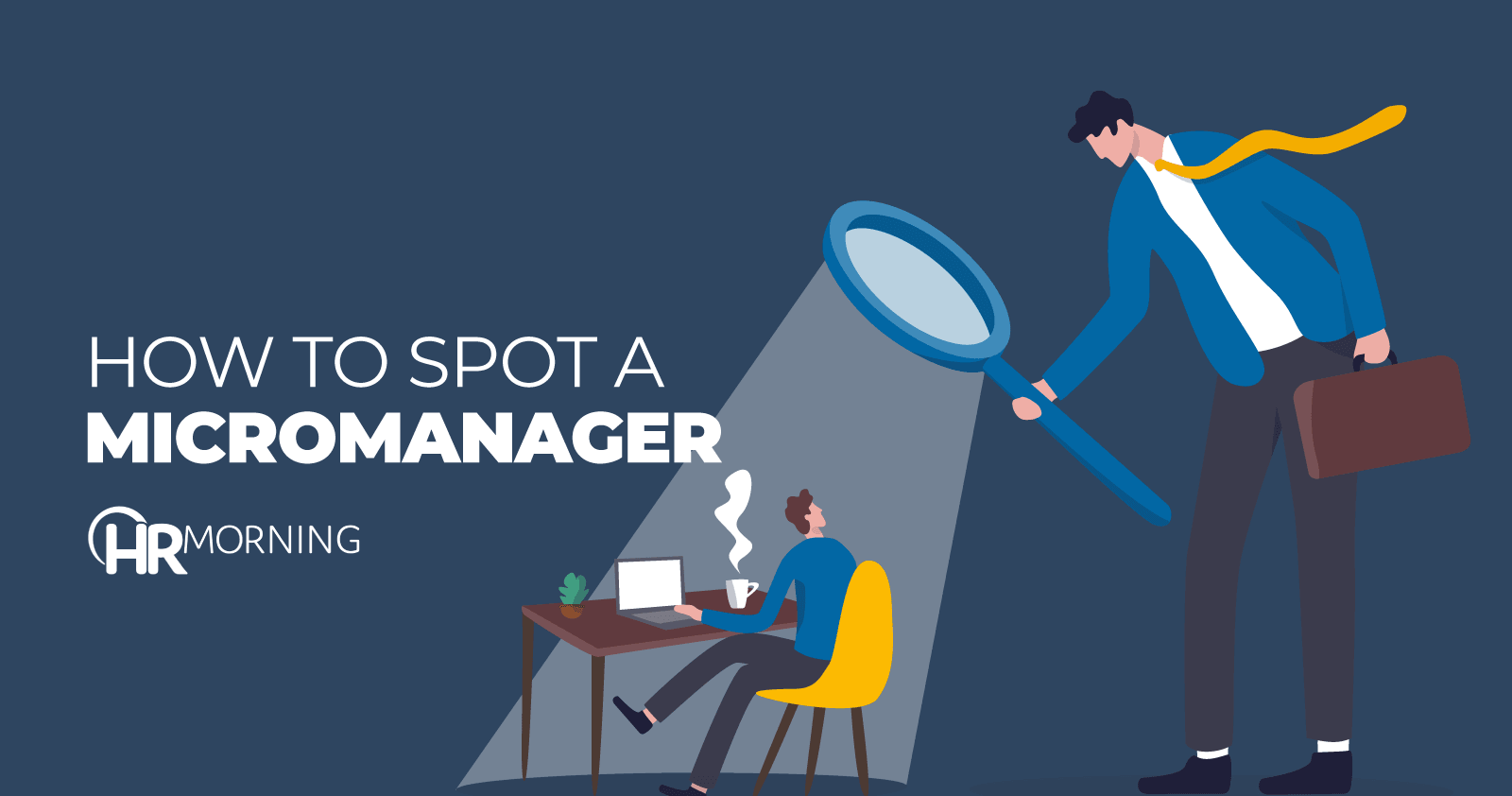
No one wants to be the dreaded micromanager — the one who breaks down manager-employee relationships, leads employees to quiet quitting and more.
In Micromanagement and Its Impact on Millennial Followership Styles, researchers noted that 39% of respondents agreed that micromanaging was the worst quality in a supervisor.
If you’re getting complaints about a micromanager, don’t let them damage your workplace.
What Micromanagers Look Like at Work
Here are four signs you’ve got a micromanager on your hands and how HR can help change those habits to promote employee growth.
1. They’re Overly Involved
No manager needs to be CC’d on every email.
If a manager is looming over their team instead of giving them autonomy to do their work independently, there’s a good chance they’re micromanaging their employees.
Despite having the best intentions, managers who stay too involved in projects can take away the chance for employees to find new and unique ways to solve problems.
Instead: Encourage the manager to take a step back and try seeing what happens when they stop hovering. Chances are, the world won’t end, and they may even find that team members will flourish with their independence. Remind managers to be very clear on necessary updates beforehand, so everyone’s clear on expectations.
2. They Focus Too Much on Details
Micromanagers, true to their name, tend to focus on the smaller steps rather than the bigger picture. It’s typical to want to monitor an employee’s progress on a task, but focusing on the smaller details of the work instead of the end goal can be the trademark of a micromanager.
However, chances are that it’s not as big of a deal as it feels. Brains work differently, and what works for one person may not work for another. Different does not mean wrong, and a different approach to the same task may be more efficient for the employee and keep productivity high.
Instead: Encourage managers to keep their hands off employees’ work and an open mind when faced with an employee doing a task differently. Try to get micromanagers to focus on objective standards, goal achievement and milestones instead of the smaller details. Remind the manager that as long as what the employee is doing gets the team to the shared end goal, give employees as much autonomy as possible on the details.
3. They Require Constant Updates and Reports
It’s understandable: A manager assigns a task and wants to make sure it gets done. But oftentimes, daily check-ins for the same task can cause more harm than good. It may end up lowering productivity and causing unneeded stress for both the manager and the employee.
Advertisement
Instead: Have managers set early boundaries with check-ins, such as a standing weekly or bi-weekly one-on-one to ensure progress is being made. Establish clear expectations on progress to help keep employees accountable.
4. Their Team is Afraid to Come to Them for Help
No one wants to be the unapproachable manager, but micromanagers can often create an environment where the team doesn’t want to ask for help because they’re afraid of failure or reprisal, which will break down manager-employee relationships and cause more problems.
Plus, micromanagers often chastise employees for making decisions independently, even if they’re the right decisions, which can make an employee feel like they don’t have autonomy over decisions.
Most often, micromanagers don’t realize they’re creating this culture, so the problem goes unaddressed and breaks down relationships and employee trust.
Instead: Encourage all managers to be proactive, not reactive, about creating a positive culture. They may want to stay aware of the way that they interact with their team via pulse surveys or quarterly check-ins, to make sure there are no issues that need to be addressed.
Further Reading
Kind v. Nice: It Makes a Big Difference for Employee Feedback | 2-Minute Video
When it comes to giving employee feedback, there’s a difference between being kind and being nice. It’s an important distinction HR pros and front-line managers want to make. What’s Up in This Episode: Kind v. Nice In this episode of HRMorning’s 3-Point, Amy Baker, Managing Partner at Happy Humans Consulting LLC, explains the difference between […]
A Better Way to Give Employees Feedback Now | 2-Minute Video
Giving and receiving feedback can be difficult. Giving and receiving bad feedback is even worse. We’re not talking about negative evaluations. We’re talking about doing a bad job with any kind of performance or behavior conversation. What’s Up in This Episode: Feedback Redo In this episode of HRMorning’s 3-Point, Kathie Leslie, Owner of Kathryn Leslie, […]
Employees Have FOBO: 5 Factors to Manage the AI Anxiety
Many employees are struggling with AI in ways you didn’t even imagine. They have FOBO – fear of becoming obsolete. And that fear has the potential to paralyze them — making the possibility of becoming obsolete a reality. “AI has accelerated that shift over the past year: tasks are being automated and employees are watching […]
4 Ways Workplace Community Drives Collaboration, Innovation and Growth
Across industries, workforce conversations often begin with the candidate experience. Long-term success depends just as much on what happens after someone joins an organization. To build resilient teams, leaders need to create workplaces where people feel connected, supported, authentic and able to envision a future. A strong sense of workplace community can help turn a […]
7 Keys to Give Feedback That’ll Help Employees Grow
Most bosses want to give feedback that helps employees do better. Unfortunately, many give feedback that makes employees feel worse about themselves and their work. It can be so bad that employees feel the impact of feedback delivered badly for years. That’s not the kind of impression leaders want to make. Feedback Gone Bad More […]
Build the Relationships That Matter Most at Work | 2-Minute Video
When it comes to recognition, the person who gives it is just as important as the message. Sure, it’s important for the boss to recognize employees. But peer-to-peer recognition packs the most punch: Employee relationships matter most. What’s Up in This Episode: Building Better Relationships That’s based on research and observation from Awardco. In this […]