• Skip to primary navigation
  • Skip to main content

HRMorning

  • FREE RESOURCES
  • PREMIUM CONTENT
  • HR DEEP DIVES
  • PODCASTS
    • VOICES OF HR
    • WOMEN’S LEADERSHIP TODAY
  • LOGIN
  • SIGN UP FREE
  • Employment Law
  • Benefits
  • Recruiting
  • HR Technology
  • Payroll
  • Management
  • Women’s Leadership
  • More
    • Talent Management
    • Performance Management
    • Leadership & Strategy
    • Compensation
    • Policy & Procedures
    • Wellness
    • Staff Departure
    • HR Career & Self-Care
    • Health Care
    • Retirement Plans
RM Logo
  • Leadership & Strategy

5 Toxic Bosses — and How To Never Be One of Them

Michele McGovern
By: Michele McGovern
  • Share on

About the Author

Michele McGovern writes. A lot. These days, she covers HR, digging deep into company culture, DEI, leadership, management and the everchanging world of work. In the years between getting a BA in journalism from a state school and writing about HR, she wrote about big-city crime for a wire service and small-town life for local newspapers. She’s a mediocre mom, decent wife, wannabe athlete and consummate pursuer of fun - on land, snow and water. Find her on LinkedIn @michele-mcgovern-writer.

Show Less
Last Updated: January 29, 2026
5 minute engagement

Ask anyone to tell you about a toxic boss, and you might as well sit down for a while.

There are a LOT of stories about bad bosses.

And even though good bosses — those like you, of course — outnumber toxic bosses, it’s the bad leaders who employees talk about, remember and curse most often.

But toxic bosses don’t just make fodder for watercooler talk; they hurt business.

Toxic Bosses Harm Business

Half of the employees who work for toxic bosses say it messes with their mental well-being, according to a CIPD study. And 70% of employees working for toxic bosses aren’t satisfied or engaged at work.

“Workers who serve a bad leader experience helplessness, lack agency to effect change, feel that they are underpaid and underappreciated, don’t like their colleagues: Bad leaders hire bad people, don’t respect their leaders, and are looking for a side hustle. They do not feel like the best version of themselves at work,” says Laura Gassner Otting, a #1 Mindset Coach and author of Wonderhell and Limitless.

So who are the worst — and how can you NOT be that boss?

When I asked colleagues, friends and family for personal toxic boss stories, they were quick and eager to share. Their experiences are examples of the typical toxic bosses out there.

1. The Bully

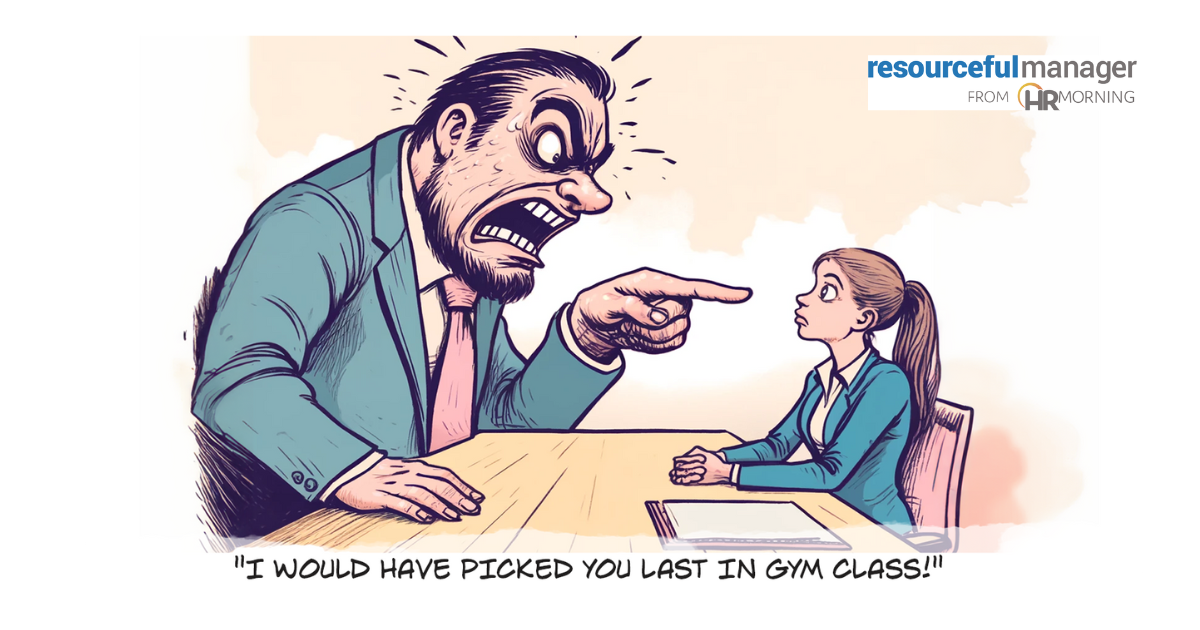
Unfortunately, bullies exist in the workplace nearly as much as they did in school. Worse yet, they get promoted to management.

Case in point from a colleague: “I had one boss who would tell me, ‘I would never have picked them,’ or ‘I would have picked them last in gym class,’ in nearly every meeting. It was incredibly awkward.”

Awkward is the understatement. It’s cruel to tell people you don’t want them on your team!

2. The Plow

Some toxic bosses plow $#!^ up and down the line to make themselves look better.

Meanwhile, the Plow also likes to push BS up the ladder, either exaggerating wins or downplaying losses so they look successful, often at the expense of their team.

Take this as an example: “A supervisor in the company tried to get me to hire someone from their team into mine. I flat out refused because I knew the person had problems — drinking at lunch and was not able to perform in the current role. I was told I wasn’t a team player because I didn’t take someone who wanted to stay in the company. The supervisor also said he needed to move the employee somewhere that he didn’t have to think. So, thanks for calling my team dumb!”

3. The Cheat

Some toxic bosses will try to get blood from a stone. They might demand more from employees rather than jump in to help. Or they steal ownership of good ideas from employees. Some might take credit for work and successes that were a team or another individual’s.

Then there’s this guy: “I once had a boss who just didn’t pay me despite working as a paid intern. He eventually paid, but not the full amount.”

4. The Diva

Another breed of toxic bosses is the Diva — the manager who looks the part, but doesn’t play it well (kind of like the golfer who has all the latest equipment and clothes and shoots a 106).

Example from a friend: “This manager was sharp and dressed well. But he wasn’t a team player. He never stepped up to help when we needed it. It was so bad, there was a petition to get him fired.”

Mutiny at its best! (Or is that its worst?)

Divas tend to keep themselves in the limelight — and cast a shadow over their people.

5. The Nitpicker

The Nitpicker finds fault, however small and unimportant, in everything around them — most especially their employees’ work.

If you think you’ve worked for a nitpicker, this probably sounds familiar: “He nitpicked and made changes to everything, questioning minor details and wasting everyone’s time. And he took turns on who he would nitpick — me one week, someone else the next week. It was basically demoralizing.”

Don’t Be a Toxic Boss

That’s pretty much what all toxic bosses do — suck the morale out of their teams.

But you want to continue being a good boss who’s talked about at the watercooler for the right reasons.

“You can determine if you are a good boss by asking your team if they feel empowered to ask for feedback, have agency/influence about how they work, and understand why their work matters. And if your promises are tied to date-specific deadlines or metric-specific outcomes, on which you follow through,” says Gassner Otting.

Try to incorporate more of these everyday great boss behaviors:

  • Greet your people. Say, “Good morning,” or “Hello.” When you acknowledge your people early, daily and often, you let them know you’re there, ready to work alongside them and appreciate them.
  • Point your finger in the right direction. Give everyone credit for wins, especially when you’re praised for them. Be hesitant to blame others for losses. While you don’t have to take sole blame for what goes wrong, you don’t want to point at anyone for that either.
  • Give constructive criticism. It leads to opportunities for learning and growth. Cryptic criticism without reason — which toxic bosses are notorious for giving — leaves fellow employees guessing and resentful.
  • Set the example. Keep your work-life balance in check. And encourage your employees to do the same. Don’t send requests after hours, and don’t expect employees to respond or act outside your normal business work norms. A team is only as strong as the example its leader sets.
  • Roll up your sleeves. Help employees get the work done when they’re under a group deadline or lack the resources to achieve the goal.

“Acknowledge your team, ask about their weekends, share a bit about yours; you can be friendly without being friends, and fill in the cracks with personable relationship-building anecdotes,” says Gassner Otting. “Criticism should be timely, prompt, and constructive, pushing toward the future, not wallowing in the past.

“Finally, spreading credit and sharing the spotlight is free, and makes people feel seen and appreciated because (spoiler alert!), our research told us that every generation wants to get gold stars and feel important, wanted, needed, and appreciated.”

Filed under
RM Logo
  • Leadership & Strategy
  • Share on

Get the HRMorning Newsletter

With HRMorning arriving in your inbox, you will never miss critical stories on labor laws, benefits, retention and onboarding strategies.

  • This field is for validation purposes and should be left unchanged.
  • This field is hidden when viewing the form
  • This field is hidden when viewing the form
  • This field is hidden when viewing the form
  • This field is hidden when viewing the form
  • This field is hidden when viewing the form
  • This field is hidden when viewing the form
  • This field is hidden when viewing the form
  • This field is hidden when viewing the form
  • This field is hidden when viewing the form
  • This field is hidden when viewing the form
  • This field is hidden when viewing the form
  • This field is hidden when viewing the form
  • This field is hidden when viewing the form
  • This field is hidden when viewing the form
  • This field is hidden when viewing the form
  • This field is hidden when viewing the form
  • This field is hidden when viewing the form
  • This field is hidden when viewing the form
  • This field is hidden when viewing the form
  • This field is hidden when viewing the form
  • This field is hidden when viewing the form
  • This field is hidden when viewing the form
  • This field is hidden when viewing the form
  • This field is hidden when viewing the form
  • This field is hidden when viewing the form
  • This field is hidden when viewing the form
  • This field is hidden when viewing the form
  • This field is hidden when viewing the form
  • This field is hidden when viewing the form
  • This field is hidden when viewing the form
  • This field is hidden when viewing the form
  • This field is hidden when viewing the form
  • This field is hidden when viewing the form
  • This field is hidden when viewing the form
  • This field is hidden when viewing the form
  • This field is hidden when viewing the form
  • This field is hidden when viewing the form
  • This field is hidden when viewing the form
  • This field is hidden when viewing the form
  • This field is hidden when viewing the form
  • This field is hidden when viewing the form
  • This field is hidden when viewing the form
  • This field is hidden when viewing the form
  • This field is hidden when viewing the form
  • This field is hidden when viewing the form
  • This field is hidden when viewing the form
  • This field is hidden when viewing the form
  • This field is hidden when viewing the form
  • This field is hidden when viewing the form
  • This field is hidden when viewing the form
  • This field is hidden when viewing the form
  • This field is hidden when viewing the form
  • This field is hidden when viewing the form
  • This field is hidden when viewing the form
  • This field is hidden when viewing the form
  • This field is hidden when viewing the form

Free Training & Resources

Webinars

Surviving as a One Person HR Department in a Post-Pandemic World

Webinars

Serena Williams and Paycom: A Conversation About Purpose, Success and Work Ethic

Provided by Paycom

White Papers

8 Best Practices for HR Compliance

Provided by Asure

Webinars

How HR Teams Can Champion a ‘People-First’ HR Strategy

SPONSORED CONTENT

HR Technology

sponsored content
The Best AI Software for HR Automation

Courtesy of G-P

Talent Management

sponsored content
Powerful Employee Retention Strategies for 2025: How to Keep Your Best People

Courtesy of PEOPLEGURU

Benefits

Health Care

Wellness

sponsored content
Proven Results: 5 Ways Teladoc Health Chronic Condition Management Transforms HR Outcomes

Courtesy of TELADOC HEALTH

Further Reading

  • HR Career & Self-Care
  • Leadership & Strategy
Dreaming of moving into a CEO role? What CHROs need to advance

As an HR leader, you’ve become well-versed in formulating and executing people strategy – a good foundation for becoming a succ...

  • Leadership & Strategy
New Spin on Constructive Feedback: 3 Keys to Constructive Praise

You might call it constructive feedback when you have to correct an employee. But to the employee, it sounds like negative feedback. Des...

  • Leadership & Strategy
8 of the Most Powerful Words Leaders Can Use

Choose your words carefully. And to make an even bigger impact, choose powerful words carefully in the workplace. Whether you lead an HR...

  • Leadership & Strategy
6 Signs You Under-Communicate and 5 Fixes

Your team is smart and industrious and ready to hit the ground running. Then why is it they sometimes don’t seem to know what the...

  • Leadership & Strategy
HR’s Critical Role in Building Organizational Resilience

If nothing else is true in HR, this is: Resilience makes a difference. It seems that all recent years are filled with volatility, uncert...

  • Leadership & Strategy
4 Leadership Tricks Managers Get Wrong

The road to team success is a lot like the one to hell. Both are paved with good intentions. While you mean well in all you do, som...

Get the latest from HRMorning in your inbox PLUS immediately access 10 FREE HR guides.

I WANT MY FREE GUIDES
HR Morning Logo
  • Facebook
  • Linked In
  • ABOUT HRMORNING
  • ADVERTISE WITH US
  • WRITE FOR US
  • CONTACT
  • Employment Law
  • Benefits
  • Recruiting
  • Talent Management
  • Performance Management
  • HR Technology
  • Leadership & Strategy
  • Compensation
  • Policy & Procedures
  • Wellness
  • Staff Departure
  • HR Career & Self-Care
  • Health Care
  • Retirement Plans
  • DEI

HRMorning, part of the Rover Insights Network, provides the latest HR and employment law news for HR professionals in the trenches of small-to-medium-sized businesses. Rather than simply regurgitating the day's headlines, HRMorning delivers actionable insights, helping HR execs understand what HR trends mean to their business.

Powered By Rover Insights
Privacy Policy | Terms of Service
Copyright© 2026 Rover Insights
HRMorning Logo

WELCOME BACK!

Enter your username and password below to log in

Forget Your Username or Password?

Reset Password

Lost your password? Please enter your username or email address. You will receive a link to create a new password via email.

Log In

Why do we need your credit card for a free trial?

We ask for your credit card to allow your subscription to continue should you decide to keep your membership beyond the free trial period.  This prevents any interruption of content access.

Your card will not be charged at any point during your 21 day free trial
and you may cancel at any time during your free trial.

During your free trial, you can cancel at any time with a single click on your “Account” page.  It’s that easy.