

Ewww! 7 Worst Work Behaviors
By
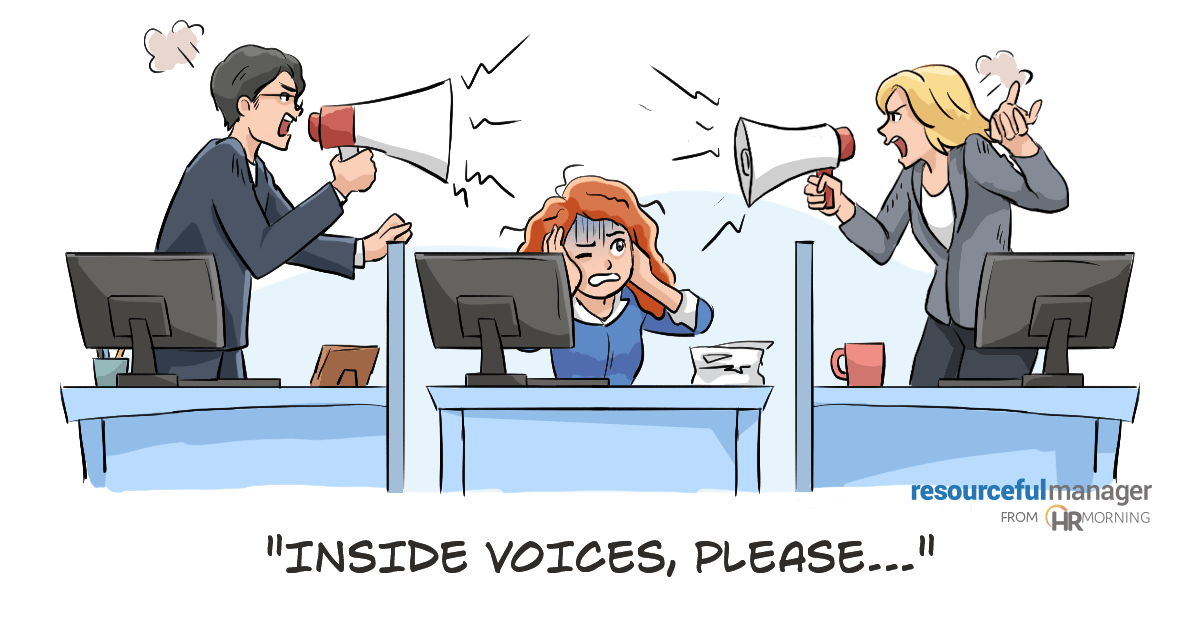
Leave the worst work behaviors at the door. And remind your employees to do the same.
From gossiping and flirting to sarcasm and cursing, many people are sick of how their colleagues behave.
When employees — and their leaders — are annoyed by those around them, they aren’t going to be engaged at work.
The frustrations will likely only rise soon because more people are back in offices together. Office occupancy is around 53% compared to pre-pandemic levels, according to data from Kastle Systems. And 90% of companies with office space plan to have staff back on site by the end of the year, according to a Resume Builder study.
If everyone can avoid the things that bother co-workers when they’re back in the office, you’ll likely have a more engaged team that’s productive. Plus, it’ll be a generally nicer place to work.
The Worst Work Behaviors
So what’s the etiquette — or lack of it — that employees hate the most at work? Our friends at TollFreeForwarding.com surveyed 1,000 workers to find out which behaviors employees find unacceptable in the workplace.
White Papers
Building an Adoption-Friendly Workplace: Benefits That Help Families Grow and Employees Stay
Here’s what they find most bothersome. We dig deeper into each topic below the graphic.

Drinking
OK, this one should go without saying, but about 90% of employees feel drinking alcohol at work is inappropriate.
So we won’t spend much space here explaining why: People do stupid things when they drink — and you don’t want to do stupid things at work or with colleagues. Period.
Gossiping
Gossiping comes in right behind drinking when it comes to Ewww Behaviors. Almost 90% of employees consider it a workplace faux pas.
Take the lead on gossip — and understand that you’ll never be able to prevent it all — with these tips:
- Tell the truth, or as much of it as you can without revealing confidential information.
- Make promises you can keep. And remind employees to do the same.
- Be upbeat and honestly optimistic with the information you share.
- Ask employees to come to you when they hear rumors so they don’t fill voids with more unknowns. Then give them the information you have.
Shouting
Raising voices at colleagues gets disapproval from about 90% of employees.
Here’s the thing about shouting anywhere: Some people think that’s the way to get their point across, be heard or win an argument. It’s not.
Instead, leaders want to help employees focus on solutions when they run into issues that might tempt them to shout. You don’t have to referee, but you do want to give them tools — likely via training that your company provides or through free or low-cost online training — on how to handle difficult conversations.
Getting Too Personal
Just under 90% of employees say it’s inappropriate to discuss intimacies at work. And really, isn’t bedroom talk TMI anywhere outside of the relationship?
Still, people discuss inappropriate and uncomfortable things at work. And as a manager, you likely want to curb it because those conversations have the potential to be construed as harassment.
While you can’t monitor employees’ conversations at all times, you can lay out subjects that are inappropriate to discuss at work — sex being at the top of the list. Ideally, work with HR to create etiquette policies, plus procedures to handle situations when they’re violated.
Flirting
Along the lines of sharing too much personal information is acting too personal with colleagues. Almost 85% of employees say flirting at work is inappropriate. And while office romances happen — and can even turn into lifetime relationships — flirting to get ahead professionally almost always leads to trouble.
Advertisement
Many organizations maintain office romance policies. If your company has one, remind employees what it covers at regular intervals when they review and sign off on all appropriate policies.
Swearing
About 80% of employees feel swearing in the workplace is inappropriate. And quite honestly, this was an eye-opening statistic and bitter pill for me to swallow: I’ve been accused of cursing like a drunken sailor (chalk up two inappropriate office behaviors there!)
So, for one, I need to bite my tongue more often at work. And for you: Set the example, as well. When the boss doesn’t curse, it’s likely that employees won’t either.
Sarcasm
Finally, nearly 70% of employees say “Ewww” when their co-workers are sarcastic at work.
This could be one of the behaviors that are difficult for leaders to curb. Some people are sarcastic by nature — and they almost always don’t recognize it. Best bet: Give employees tips on how to communicate with clarity.
It’s interesting to see how your work communication might be getting on your colleagues’ nerves or making them uncomfortable,” says Jason O’Brien, COO of TollFreeForwarding.com. “Over a third of people thought sarcasm wasn’t acceptable in the workplace, and most people think gossiping is a strict no-no. It is important to sense the tone with your communication, remain professional and bear in mind colleagues of all ages and temperaments.”
Further Reading
Kind v. Nice: It Makes a Big Difference for Employee Feedback | 2-Minute Video
When it comes to giving employee feedback, there’s a difference between being kind and being nice. It’s an important distinction HR pros and front-line managers want to make. What’s Up in This Episode: Kind v. Nice In this episode of HRMorning’s 3-Point, Amy Baker, Managing Partner at Happy Humans Consulting LLC, explains the difference between […]
A Better Way to Give Employees Feedback Now | 2-Minute Video
Giving and receiving feedback can be difficult. Giving and receiving bad feedback is even worse. We’re not talking about negative evaluations. We’re talking about doing a bad job with any kind of performance or behavior conversation. What’s Up in This Episode: Feedback Redo In this episode of HRMorning’s 3-Point, Kathie Leslie, Owner of Kathryn Leslie, […]
Employees Have FOBO: 5 Factors to Manage the AI Anxiety
Many employees are struggling with AI in ways you didn’t even imagine. They have FOBO – fear of becoming obsolete. And that fear has the potential to paralyze them — making the possibility of becoming obsolete a reality. “AI has accelerated that shift over the past year: tasks are being automated and employees are watching […]
4 Ways Workplace Community Drives Collaboration, Innovation and Growth
Across industries, workforce conversations often begin with the candidate experience. Long-term success depends just as much on what happens after someone joins an organization. To build resilient teams, leaders need to create workplaces where people feel connected, supported, authentic and able to envision a future. A strong sense of workplace community can help turn a […]
7 Keys to Give Feedback That’ll Help Employees Grow
Most bosses want to give feedback that helps employees do better. Unfortunately, many give feedback that makes employees feel worse about themselves and their work. It can be so bad that employees feel the impact of feedback delivered badly for years. That’s not the kind of impression leaders want to make. Feedback Gone Bad More […]
Build the Relationships That Matter Most at Work | 2-Minute Video
When it comes to recognition, the person who gives it is just as important as the message. Sure, it’s important for the boss to recognize employees. But peer-to-peer recognition packs the most punch: Employee relationships matter most. What’s Up in This Episode: Building Better Relationships That’s based on research and observation from Awardco. In this […]