• Skip to primary navigation
  • Skip to main content

HRMorning

  • FREE RESOURCES
  • PREMIUM CONTENT
  • HR DEEP DIVES
  • PODCASTS
    • VOICES OF HR
    • WOMEN’S LEADERSHIP TODAY
  • LOGIN
  • SIGN UP FREE
  • Employment Law
  • Benefits
  • Recruiting
  • HR Technology
  • Payroll
  • Management
  • Women’s Leadership
  • More
    • Talent Management
    • Performance Management
    • Leadership & Strategy
    • Compensation
    • Policy & Procedures
    • Wellness
    • Staff Departure
    • HR Career & Self-Care
    • Health Care
    • Retirement Plans
RM Logo
  • Talent Management

5 Ways to Keep Your Best People

Michele McGovern
By: Michele McGovern
  • Share on

About the Author

Michele McGovern writes. A lot. These days, she covers HR, digging deep into company culture, DEI, leadership, management and the everchanging world of work. In the years between getting a BA in journalism from a state school and writing about HR, she wrote about big-city crime for a wire service and small-town life for local newspapers. She’s a mediocre mom, decent wife, wannabe athlete and consummate pursuer of fun - on land, snow and water. Find her on LinkedIn @michele-mcgovern-writer.

Show Less
Last Updated: October 27, 2025
3 minute engagement

Can you keep your best people from walking out the door?

Shy of barricading the door, probably not.

But you can create a workplace where your best people want to stay.

The key: Start focusing more on retaining the top performers and less on controlling low performers. That’s the gist of research from Neel Doshi and Lindsay McGregor, co-authors of Primed to Perform: How to Build the Highest Performing Cultures Through the Science of Total Motivation.

“For many reasons … many companies build cultures that are focused on controlling the output of low performers, rather than growing and unlocking everyone’s skills,” the authors say. “Organizations need to build cultures that are obsessed with high performers, focusing the culture on keeping high performers and making new ones.”

Keep Your Best People (& Others)

OK, OK, we won’t advocate that you get rid of all other performers. Quite honestly, you need steady performers. They keep departments and companies afloat by doing what needs to be done.

And those underperformers? They make up just about 5% of the working population, according to Culture Amp data. So leaders don’t want to spend much more than 5% of their time trying to improve their performance.

Instead, this story is about doing what’s necessary to keep your best people happy and on the job.

Here are five tactics:

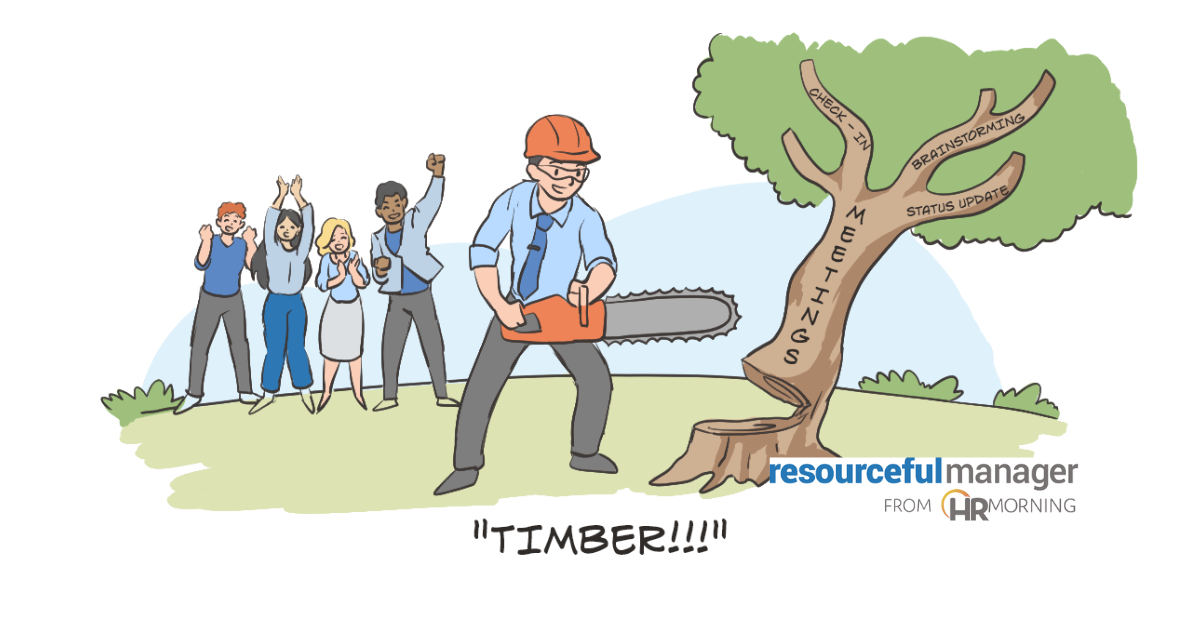
1. Cut Their Meetings

First key in creating a culture where high performers thrive: Get them the hell out of so many meetings.

Reduce meetings to free up your top talent’s time for work that truly matters. Establish a simple, predictable weekly meeting schedule for the team.

The researchers suggested this cadence:

  • Prioritization Monday to align strategy
  • Problem-solving Wednesday to discuss challenges (or skip if there aren’t any), and
  • Pencils-down Friday to review completed work, share feedback and align on next steps.

2. Do Better One-on-Ones

While we’re in meetings, let’s talk about one-on-ones and how to make them better for people who already perform well.

They aren’t as necessary as you might think. Good performers often see them as a roadblock to doing their work. They don’t want to analyze what they’re doing. They want to do it.

So talk with top performers to find out how often they want to meet and the kind of feedback they desire. Then custom-design those meetings.

3. Measure Motivation

Top performers aren’t always self-motivated. They hit ruts. They have highs. They go through lulls.

You want to use surveys to assess everyone’s motivation and understand what excites them — and what creates stress. And you want to do this regularly because if you’ve been a leader/parent/child/human long enough, you know these things change over time.

The researchers suggest these questions:

  • What are you excited about working on in the upcoming quarter?
  • What might be causing you anxiety or pressure?
  • What habits do you want to improve?
  • What are some specific ideas to improve those habits?
  • What did you do really well last quarter that you should maintain?

4. Be a Mentor

Flip the switch on performance reviews. Instead of focusing on past results — and looking for failures so you have something to mark — focus on advice for development and growth.

Anchor the conversation around concrete skills to improve their performance even more, increase their stock and help their career.

“This shifts the mindset from evaluation on past actions to learning for the future,” the authors said.

Try to find one concrete, high-leverage skill — such as problem-solving, leadership or emotional intelligence — for them to improve in the next quarter. Then give them resources and time to pursue that.

5. Give Them Wings, Roots

If you’ve never heard this mantra, it’s about giving people a strong sense of self and belonging, plus the ability to spread their wings and fly to new things. That’s exactly how you want to treat high performers.

Remind them regularly of your confidence in their abilities to make good decisions and get things done well. Encourage them to take calculated risks and try new things to do even better work. Then step back, and don’t micromanage.

Filed under
RM Logo
  • Talent Management
  • Share on

Get the HRMorning Newsletter

With HRMorning arriving in your inbox, you will never miss critical stories on labor laws, benefits, retention and onboarding strategies.

  • This field is for validation purposes and should be left unchanged.
  • This field is hidden when viewing the form
  • This field is hidden when viewing the form
  • This field is hidden when viewing the form
  • This field is hidden when viewing the form
  • This field is hidden when viewing the form
  • This field is hidden when viewing the form
  • This field is hidden when viewing the form
  • This field is hidden when viewing the form
  • This field is hidden when viewing the form
  • This field is hidden when viewing the form
  • This field is hidden when viewing the form
  • This field is hidden when viewing the form
  • This field is hidden when viewing the form
  • This field is hidden when viewing the form
  • This field is hidden when viewing the form
  • This field is hidden when viewing the form
  • This field is hidden when viewing the form
  • This field is hidden when viewing the form
  • This field is hidden when viewing the form
  • This field is hidden when viewing the form
  • This field is hidden when viewing the form
  • This field is hidden when viewing the form
  • This field is hidden when viewing the form
  • This field is hidden when viewing the form
  • This field is hidden when viewing the form
  • This field is hidden when viewing the form
  • This field is hidden when viewing the form
  • This field is hidden when viewing the form
  • This field is hidden when viewing the form
  • This field is hidden when viewing the form
  • This field is hidden when viewing the form
  • This field is hidden when viewing the form
  • This field is hidden when viewing the form
  • This field is hidden when viewing the form
  • This field is hidden when viewing the form
  • This field is hidden when viewing the form
  • This field is hidden when viewing the form
  • This field is hidden when viewing the form
  • This field is hidden when viewing the form
  • This field is hidden when viewing the form
  • This field is hidden when viewing the form
  • This field is hidden when viewing the form
  • This field is hidden when viewing the form
  • This field is hidden when viewing the form
  • This field is hidden when viewing the form
  • This field is hidden when viewing the form
  • This field is hidden when viewing the form
  • This field is hidden when viewing the form
  • This field is hidden when viewing the form
  • This field is hidden when viewing the form
  • This field is hidden when viewing the form
  • This field is hidden when viewing the form
  • This field is hidden when viewing the form
  • This field is hidden when viewing the form
  • This field is hidden when viewing the form
  • This field is hidden when viewing the form

Free Training & Resources

Webinars

Build and Scale a Fully Remote Onboarding Process that Actually Works

White Papers

The Business Case for Maven Clinic

Provided by Maven Clinic

Webinars

How to Maintain Culture Continuity During COVID-19

White Papers

Your guide to navigating CFO benefits questions

Provided by Maven Clinic

SPONSORED CONTENT

HR Technology

sponsored content
The Best AI Software for HR Automation

Courtesy of G-P

Talent Management

sponsored content
Powerful Employee Retention Strategies for 2025: How to Keep Your Best People

Courtesy of PEOPLEGURU

Benefits

Health Care

Wellness

sponsored content
Proven Results: 5 Ways Teladoc Health Chronic Condition Management Transforms HR Outcomes

Courtesy of TELADOC HEALTH

Further Reading

  • Talent Management
Hybrid Work Realities: 5 Trends for HR

Is hybrid work the cure-all we expected? Not exactly. At one point, employers needed hybrid work – a way to keep employees saf...

  • Talent Management
3 Ways Taylor Swift Will Affect Your Office Productivity

Taylor Swift will probably affect employee productivity. From days off to office distractions, the newly engaged pop star is making her ...

  • Talent Management
7 Ways to Nurture Employee Curiosity

Are you unintentionally stifling employee curiosity? Are you glossing over the questions they have, the clarifications they desire or th...

  • Talent Management
Engage Your People Through the Great Stability | 2-Minute Video

The good news: It’s the Great Stability. Employees want to stay employed with you. But that doesn’t mean you just rest on y...

  • Performance Management
  • Talent Management
How to conduct an employee performance review: A 5-step guide

As you take your first steps into your new managerial position, one of the key functions you’ll be required to do is employee performance...

  • Talent Management
The ‘Great Flattening’: 5 Ways To Handle This New Work Trend

The Great Flattening is expanding and its impact could be detrimental to workplaces. The flattening — eliminating middle managers to c...

Get the latest from HRMorning in your inbox PLUS immediately access 10 FREE HR guides.

I WANT MY FREE GUIDES
HR Morning Logo
  • Facebook
  • Linked In
  • ABOUT HRMORNING
  • ADVERTISE WITH US
  • WRITE FOR US
  • CONTACT
  • Employment Law
  • Benefits
  • Recruiting
  • Talent Management
  • Performance Management
  • HR Technology
  • Leadership & Strategy
  • Compensation
  • Policy & Procedures
  • Wellness
  • Staff Departure
  • HR Career & Self-Care
  • Health Care
  • Retirement Plans
  • DEI

HRMorning, part of the Rover Insights Network, provides the latest HR and employment law news for HR professionals in the trenches of small-to-medium-sized businesses. Rather than simply regurgitating the day's headlines, HRMorning delivers actionable insights, helping HR execs understand what HR trends mean to their business.

Powered By Rover Insights
Privacy Policy | Terms of Service
Copyright© 2026 Rover Insights
HRMorning Logo

WELCOME BACK!

Enter your username and password below to log in

Forget Your Username or Password?

Reset Password

Lost your password? Please enter your username or email address. You will receive a link to create a new password via email.

Log In

Why do we need your credit card for a free trial?

We ask for your credit card to allow your subscription to continue should you decide to keep your membership beyond the free trial period.  This prevents any interruption of content access.

Your card will not be charged at any point during your 21 day free trial
and you may cancel at any time during your free trial.

During your free trial, you can cancel at any time with a single click on your “Account” page.  It’s that easy.