

7 Team Leadership Rules from the GOAT
By
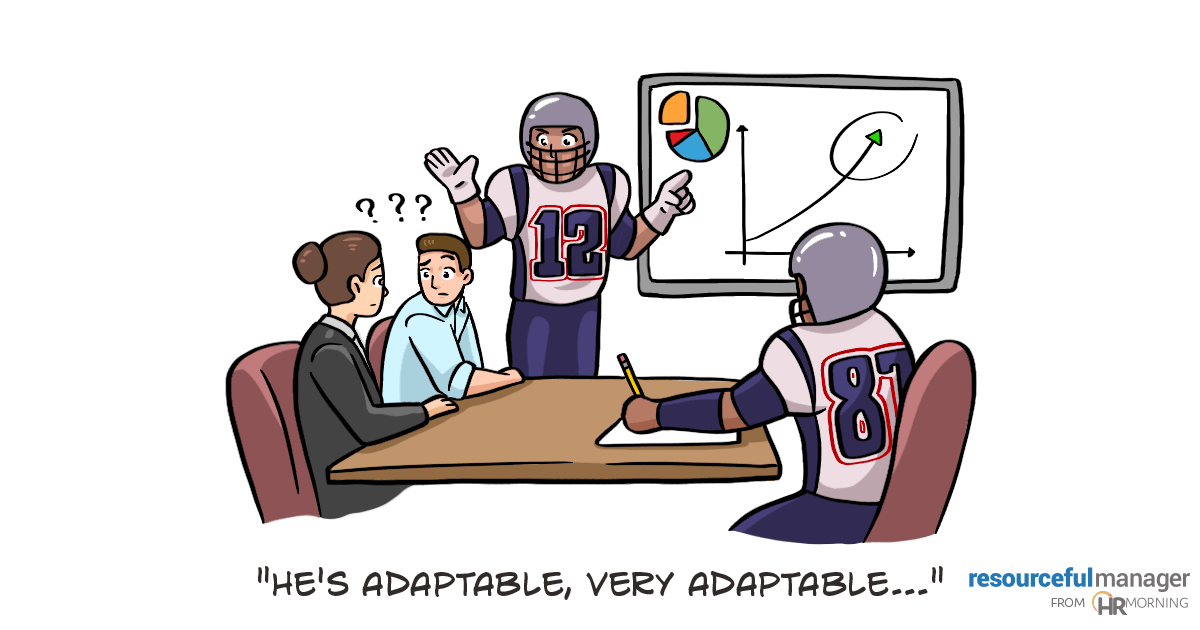
As the first weekend of the newest NFL season winds down — and the season winds up — let’s talk about leadership football-style.
If you have to lead a team, you might as well do it like you’re the Greatest of All Time — Tom Brady, the GOAT quarterback.
Here’s the good news: The former NFL superstar isn’t shy about sharing his secrets on team leadership.
In fact, in retirement, he shared lots of leadership secrets with the Harvard Business Review (but not too many football success secrets because, you know, there’s always a chance he’ll come back.)
Over a 23-year NFL career, Brady was an informal leader (we all start somewhere, after all). And he was a formal leader who took teams to playoff wins (as a fan of an opposing conference team, I painfully know that too often), Super Bowls and celebrations.
Make Team Leadership Tips Public
Brady worked with Nitin Nohria, former Dean of Harvard Business School, to vet out his most essential team leadership strategies.
“Leadership requires trust, and trust usually comes from deeply caring about one another and the belief that winning is about the team,” Brady says in his HBR story. “You must feel passionate about both. Ive always tried to be an ideal teammate.”
And perhaps that’s the underlying theme to his team leadership success: He may have been a leader, but he always considered himself another teammate.
Here are Brady’s seven team leadership strategies.
1. Put the Team First
There was a time Brady stood second fiddle to other quarterbacks. He watched games from the sidelines in college before he was the starter. And even as captain his senior year, he didn’t have all the QB highlights. But he supported his teammates so the team won.
As Brady put it: “Theres an old saying in sports: Do you want to be a star, or do you want to be a champion?”
To be a great leader, put the team’s success ahead of your personal success.
2. Set the Standard
Brady says he was part of the “Edgers” in his early NFL career. They were a bunch of players who always tried to get the edge on others, showing up first to the weight room, watching more game film or doing extra reps in practice. They held themselves accountable, doing more than they were told to do.
To be a great leader, set the standard you want to see your teammates follow.
3. Appreciate Your Unsung Heroes
The players who make the outstanding plays — or employees who smash the goals — tend to get the spotlight. But the people who supported them don’t get recognized as much (in football, it’s the trainers, food preparers and locker room assistants; in work, it’s your co-workers, support staff or interns).
Brady made a habit of thanking, recognizing and rewarding his unsung heroes.
To be a great leader, take time every week to praise and reward your behind-the-scenes heroes.
4. Know Your Teammates’ Motivations
Every sports professional is motivated by different things — money, celebrity, accolades, upward mobility etc. Same goes for employees and teammates. The people around you show up, do more (or less) and shoot for the stars for reasons that aren’t all that different from NFL pros’ reasons — money, accolades, upward mobility.
Advertisement
Brady believes you need to understand what drives each teammate to help the full team succeed. “It’s almost like love languages — the idea that different people express and receive love differently in relationships — and it’s an essential skill that leaders must learn.”
To be a great leader, don’t assume you know what drives people. Ask them. Then create a work situation that feeds their motivations.
5. Complement Your Leader’s Style
Brady worked with Bill Belichick for most of his illustrious football career. Belichick is not known publicly as a warm and fuzzy kind of guy. He leads differently — and successfully — than most coaches, CEOs and managers.
Brady didn’t argue with that. Instead, he aimed to complement Belichick’s style, filling leadership gaps if teammates needed it, building relationships and championing the strategies that would get the team to win.
To be a great leader, complement your boss’s style of leadership. Never undermine it.
6. Know and Stop Selfish Behavior
In sports, external forces can push people to focus on themselves instead of the team — for instance, agents, egos, family, fans and contracts. And when they think of those things first, they usually don’t focus on the team as much as they should.
At work, it’s similar. Although employees want to be team players, they might have external factors — spouses, mortgages or egos — that drive them to become self-centered. They therefore lose sight of the team goals.
To be a great leader, try to recognize outside pressures on yourself and team members — and then continually reinforce the team-first message.
7. Connect Beyond the Workplace
Tom Brady likes a good time, too. He believes in the power of building better relationships with teammates through shared experiences outside of the workplace. In his case, he spent time in the offseason with teammates, traveling, bowling, texting or FaceTiming.
Accountability in the Workplace: Developing and Engaging Employees in Times of Change
“The more we were interested in and concerned about one another as teammates, and didnt want to let one another down, the more motivated we were to do our absolute best, every day,” Brady says.
To be a great leader, carve out time to connect with teammates — or at least give them time to connect with each other.
Further Reading
70+ U.S. Companies Affected by Remote Worker Fraud: FBI Issues New Guidance
You’ve reviewed an applicant’s resume and conducted an interview. But how can you be sure the remote worker you’re planning to bring onto your payroll is who they claim to be? More hiring managers are finding out that a candidate who looks great on paper and interviews well may still be an impostor. In a […]
Post-Election Fallout: 2 Ways to Manage New Tension in the Workplace
With the midterms over, you’d probably like to put the occasional (or frequent?) contentious moments any election can cause behind you. But it’s not likely to end with the last vote cast. HR and other leaders often face a recurring challenge in post-election times: acknowledging and managing politically charged moments that can turn up tension […]
An ‘Insecurity Tax’ Could Hurt Retention: 4 Solutions to Keep Your Talent
The last decade of corporate churn might have revealed this surprising lesson: One of the biggest threats to retention isn’t compensation, remote work or even AI. It could be managerial insecurity. When leadership is rooted in a manager’s personal anxiety, organizational behavior becomes entirely predictable. Micromanagement, hoarding authority, avoiding constructive dissent, and making defensive decisions […]
Politics at Work: An Election-Season Toolkit for HR Leaders
Employers everywhere are bracing for one of the trickiest challenges of the year as the country goes through another contentious election season. Inflammatory political speech in the workplace is disruptive and can lead to a host of workplace issues ranging from frustration and fractured relationships to claims of harassment and workplace violence incidents. With increasing […]
Are You Keeping Workforce Data Longer Than You Need To?
When an employee leaves, HR closes the personnel file, processes the final paycheck, and shuts off system access. Copies of that employee’s information can remain in places HR does not manage: email archives, collaboration platforms, badge-access logs, fleet telematics systems, and the files of recruiting, payroll and benefits vendors. Some of those records have to […]
How Managers Are the Missing Link in Workforce Capability: 3 Solutions
Managers are the bridge between business strategy, day-to-day execution, and organizational growth. Understanding and developing workforce capability has always been central to that role. And for HR leaders, a manager’s ability to do that well impacts everything from internal mobility and succession planning to retention and workforce readiness. The challenge is that workforce capability is […]