• Skip to primary navigation
  • Skip to main content

HRMorning

  • FREE RESOURCES
  • PREMIUM CONTENT
  • HR DEEP DIVES
  • PODCASTS
    • VOICES OF HR
    • WOMEN’S LEADERSHIP TODAY
  • LOGIN
  • SIGN UP FREE
  • Employment Law
  • Benefits
  • Recruiting
  • HR Technology
  • Payroll
  • Management
  • Women’s Leadership
  • More
    • Talent Management
    • Performance Management
    • Leadership & Strategy
    • Compensation
    • Policy & Procedures
    • Wellness
    • Staff Departure
    • HR Career & Self-Care
    • Health Care
    • Retirement Plans
WLT Logo
  • Leadership & Strategy

The Great Exodus: Why Women are Leaving the Workforce and How to Keep Them

Michelle Myers
By: Michelle Myers
  • Share on

About the Author

Michelle Myers is a dedicated Creative Content Production Manager overseeing the content strategy and execution for Women's Leadership, HRMorning, and Resourceful Finance Pro. With a keen eye for detail and a passion for creating engaging and informative content, Michelle plays a vital role in delivering high-quality resources to professionals in HR, finance, and women's leadership. Her expertise spans across various content formats, ensuring that each platform provides valuable insights and fosters professional growth. Michelle's commitment to excellence and her ability to manage complex production workflows make her an invaluable asset to her team.

Show Less
Last Updated: March 17, 2025
4 minute engagement

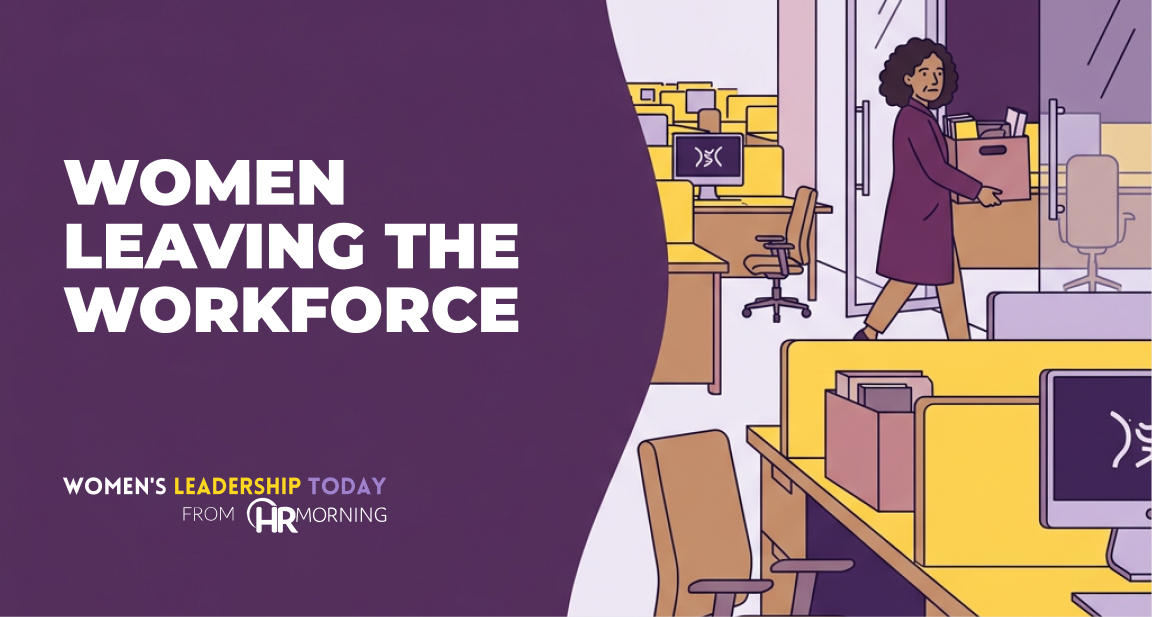
Women are leaving the workforce more than their male counterparts, resulting in the underrepresentation of women in the workplace. Different industries can present specific challenges, and many women are leaving due to the roadblocks they encounter. Women in the workforce often lack the same encouragement, opportunities, and resources that are available to their male counterparts.

The Challenges

Women often have fewer opportunities than men at work, particularly in male-dominated industries, such as technology. Additionally, women who do progress often have a more challenging experience.

The way women are treated at work also influences whether they stay or go. Unpleasant or hostile environments are not uncommon, and many women are still dealing with sexism, discriminatory practices, misogyny, and harassment. Moreover, women are often outnumbered by male workers in many industries, their knowledge is questioned, and their roles are overlooked.

Women have high aspirations in their professional lives, but the journey to the top is riddled with obstacles Women are more likely to seek higher-level roles but only average about 38% of top management roles. Women leaders find that they do not receive the same encouragement and acknowledgment as men when expressing their goals to their bosses.

As women strive to move up the corporate ladder, many express the belief that women in their organizations are given fewer opportunities to progress than men. Female managers also feel less included in business affairs and events within their professional networks than male managers.

Internal job openings tend to present male workers with a greater advantage than women. Research shows that women are 8% less likely to be promoted internally than men and 8% less likely to claim that their teams have been sufficiently informed of a new opening.

Disruptions in the professional landscape also tend to affect women more significantly than men. For example, the recent COVID-19 pandemic altered the way we live, learn, and work. When it comes to managers who had to juggle caregiving responsibilities, only 26% of men in management experienced pandemic-related career setbacks compared to 35% of women in management.

Furthermore, senior leaders in the workplace don’t always promote diverse, equitable, and inclusive leadership in equal numbers. Only 52% of HR professionals feel that the leaders of their organization are held accountable for ensuring gender equality at work. Women contend with being harassed, not taken seriously at work, and presented with less equitable access to advancement opportunities they’re qualified for.

The Impact

It’s incredibly challenging to progress when the odds are stacked against you. Many women are exhausted and fed up with the obvious differences between their efforts and those of men in the workplace. Working twice as hard for half the credit, respect, and recognition is frustrating. Instead of suffering quietly, many professional women are taking action, and leaving organizations that fail to provide them with the opportunities they deserve.

The Solution

It’s time to reevaluate what no longer works. To better support women professionals, organizations can:

  1. Implement Inclusive Hiring and Promoting: By hiring more qualified women for roles in your organization and promoting women internally, you can better avoid gender inequality. And having more women in leadership will only benefit the organization. Studies continuously show that having women in leadership roles increases productivity and profitability, collaboration and flexibility, and even organizational loyalty.
  2. Implement Accountability: Create safe spaces for women to work. Do not wave off a complaint or minimize harassment. Take the time to ask what challenges the women in your organization are facing, and really listen to the feedback. Call out negative behavior. Address it, manage it, and ensure that it’s corrected so all your employees can feel safe at work.
  3. Enhance Career Planning: Conduct regular career planning sessions and make these opportunities well-known. Women tend to get overlooked in the office – these career planning sessions will not only keep the women on your team visible to leadership but also give them an encouraging space to discuss their professional goals.
  4. Offer Parent Resources: Moreso than men, women are expected to work and provide childcare without resources, help, or time off from either of these obligations. By providing childcare resources such as daycare options or referrals to high-quality sitters, employers may be able to help reduce some of the strain.
  5. Reduce Unpaid Labor: In offices that allow work-from-home options or keep office hours relatively open, many women feel pressured or expected to complete more work than their male counterparts in order to make positive impressions. Discourage over-dedication, and structure policies to ensure employees do not exhaust themselves working through personal time.

Addressing the challenges that women face in the workplace is crucial for promoting gender equality and creating a more diverse and inclusive environment. Creating safe and equitable work environments is not only the right thing to do, but it also makes good business sense. When women are able to pursue the opportunities they have struggled to approach in the past, they can bring their unique perspectives, skills, and experiences to the table, which can lead to innovation, growth, and improved performance. Creating a workplace culture that values and supports women is a win for everyone.

Filed under
WLT Logo
  • Leadership & Strategy
  • Share on

Get the HRMorning Newsletter

With HRMorning arriving in your inbox, you will never miss critical stories on labor laws, benefits, retention and onboarding strategies.

  • This field is for validation purposes and should be left unchanged.
  • This field is hidden when viewing the form
  • This field is hidden when viewing the form
  • This field is hidden when viewing the form
  • This field is hidden when viewing the form
  • This field is hidden when viewing the form
  • This field is hidden when viewing the form
  • This field is hidden when viewing the form
  • This field is hidden when viewing the form
  • This field is hidden when viewing the form
  • This field is hidden when viewing the form
  • This field is hidden when viewing the form
  • This field is hidden when viewing the form
  • This field is hidden when viewing the form
  • This field is hidden when viewing the form
  • This field is hidden when viewing the form
  • This field is hidden when viewing the form
  • This field is hidden when viewing the form
  • This field is hidden when viewing the form
  • This field is hidden when viewing the form
  • This field is hidden when viewing the form
  • This field is hidden when viewing the form
  • This field is hidden when viewing the form
  • This field is hidden when viewing the form
  • This field is hidden when viewing the form
  • This field is hidden when viewing the form
  • This field is hidden when viewing the form
  • This field is hidden when viewing the form
  • This field is hidden when viewing the form
  • This field is hidden when viewing the form
  • This field is hidden when viewing the form
  • This field is hidden when viewing the form
  • This field is hidden when viewing the form
  • This field is hidden when viewing the form
  • This field is hidden when viewing the form
  • This field is hidden when viewing the form
  • This field is hidden when viewing the form
  • This field is hidden when viewing the form
  • This field is hidden when viewing the form
  • This field is hidden when viewing the form
  • This field is hidden when viewing the form
  • This field is hidden when viewing the form
  • This field is hidden when viewing the form
  • This field is hidden when viewing the form
  • This field is hidden when viewing the form
  • This field is hidden when viewing the form
  • This field is hidden when viewing the form
  • This field is hidden when viewing the form
  • This field is hidden when viewing the form
  • This field is hidden when viewing the form
  • This field is hidden when viewing the form
  • This field is hidden when viewing the form
  • This field is hidden when viewing the form
  • This field is hidden when viewing the form
  • This field is hidden when viewing the form
  • This field is hidden when viewing the form
  • This field is hidden when viewing the form

Free Training & Resources

White Papers

Uncovering the Real Value of Discount Shopping Programs

Provided by PerkSpot

White Papers

Your guide to navigating CFO benefits questions

Provided by Maven Clinic

Webinars

Smarter Hiring: Data-Driven Recruiting and Inclusive Talent Strategies

Provided by Asure

Webinars

2022 Labor Law Poster Compliance

SPONSORED CONTENT

HR Technology

sponsored content
The Best AI Software for HR Automation

Courtesy of G-P

Talent Management

sponsored content
Powerful Employee Retention Strategies for 2025: How to Keep Your Best People

Courtesy of PEOPLEGURU

Benefits

Health Care

Wellness

sponsored content
Proven Results: 5 Ways Teladoc Health Chronic Condition Management Transforms HR Outcomes

Courtesy of TELADOC HEALTH

Further Reading

  • Leadership & Strategy
Become a Top-Notch Manager: 6 Skills to Hone

Stepping into a managerial role is a rewarding milestone in any career, but making the shift to manager requires more than just doing a go...

  • Leadership & Strategy
Leading the Way: Influencing Others Without Formal Authority

Leadership and authority do not have the same meaning, although they often coincide in business practices. Individuals with high levels of a...

  • Leadership & Strategy
The Power of Resolve: 7 Ways to Make This Trait Work Better for You

From subtle biases to outright discrimination, women leaders often face obstacles their male counterparts do not. Cultivating an unshakable...

  • Leadership & Strategy
Emotional Intelligence: A Key Ingredient for Great Leadership

Emotional Intelligence (EI) also known as Emotional Quotient (EQ) is the ability to understand your own and others’ emotions and how they...

  • Leadership & Strategy
Debunking the Confidence Myths

Confidence is a highly sought-after quality that many believe is the key to success and happiness. However, several persistent myths su...

  • Leadership & Strategy
Unleashing Your Inner Leader: Insights from the Barbie Movie  

As an undeniable “Barbie Girl,” my childhood was filled with an abundance of Barbies — more than any little girl could ne...

Get the latest from HRMorning in your inbox PLUS immediately access 10 FREE HR guides.

I WANT MY FREE GUIDES
HR Morning Logo
  • Facebook
  • Linked In
  • ABOUT HRMORNING
  • ADVERTISE WITH US
  • WRITE FOR US
  • CONTACT
  • Employment Law
  • Benefits
  • Recruiting
  • Talent Management
  • Performance Management
  • HR Technology
  • Leadership & Strategy
  • Compensation
  • Policy & Procedures
  • Wellness
  • Staff Departure
  • HR Career & Self-Care
  • Health Care
  • Retirement Plans
  • DEI

HRMorning, part of the Rover Insights Network, provides the latest HR and employment law news for HR professionals in the trenches of small-to-medium-sized businesses. Rather than simply regurgitating the day's headlines, HRMorning delivers actionable insights, helping HR execs understand what HR trends mean to their business.

Powered By Rover Insights
Privacy Policy | Terms of Service
Copyright© 2026 Rover Insights
HRMorning Logo

WELCOME BACK!

Enter your username and password below to log in

Forget Your Username or Password?

Reset Password

Lost your password? Please enter your username or email address. You will receive a link to create a new password via email.

Log In

Why do we need your credit card for a free trial?

We ask for your credit card to allow your subscription to continue should you decide to keep your membership beyond the free trial period.  This prevents any interruption of content access.

Your card will not be charged at any point during your 21 day free trial
and you may cancel at any time during your free trial.

During your free trial, you can cancel at any time with a single click on your “Account” page.  It’s that easy.